How to Get Your Holiday Cactus to Bloom Again This Fall
How to Get Your Holiday Cactus to Bloom Again This Fall
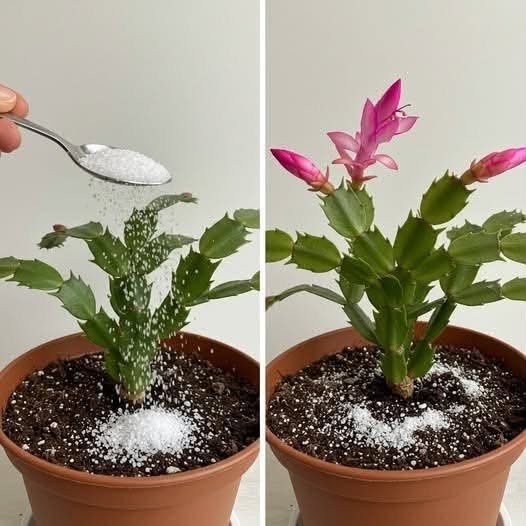
The plant in your photo looks like a Thanksgiving or Christmas cactus, a popular houseplant that blooms in fall and winter. The “little secret” is usually a pinch of Epsom salt or fertilizer, but light and timing matter more. Here’s how to prepare the plant, trigger buds, and care for it once blooms appear.
(Note: The post doesn’t name the secret. The white crystals look like Epsom salt, but they could be fertilizer granules or perlite. Epsom salt has little proven effect on blooming, so I’ve put the proven steps first.)
Step 1 — Give It the Dark Nights It Needs
What to do: Mimic the short days of autumn so the plant sets buds.
How to do it: Holiday cacti form buds when nights are long and cool. From early fall, give the plant 12 to 14 hours of uninterrupted darkness each night, for about 4 to 6 weeks. Keep it in a spot with no lamps or streetlights at night, with nighttime temperatures around 50 to 60°F (10 to 15°C). During the day, give it bright, indirect light.
Common mistake to avoid: Leaving it near a room light that turns on in the evening. Even a short light interruption can delay or prevent buds.
Step 2 — Water and Feed Carefully
What to do: Keep the soil lightly moist, and add a gentle boost if needed.
How to do it: Water when the top inch of soil feels dry, and let excess drain away. Stop feeding in late summer and early fall, since too much nitrogen favors leaves over flowers. If you want to try the “secret,” dissolve about 1 teaspoon of Epsom salt in a gallon of water and use it once a month in place of a regular watering. A balanced, diluted houseplant fertilizer once a month in spring and summer does more for long-term health. Don’t sprinkle dry crystals on the soil, as in the photo, because they can build up and burn roots.
Common mistake to avoid: Overwatering. Soggy soil leads to root rot, which is the most common reason these plants decline.