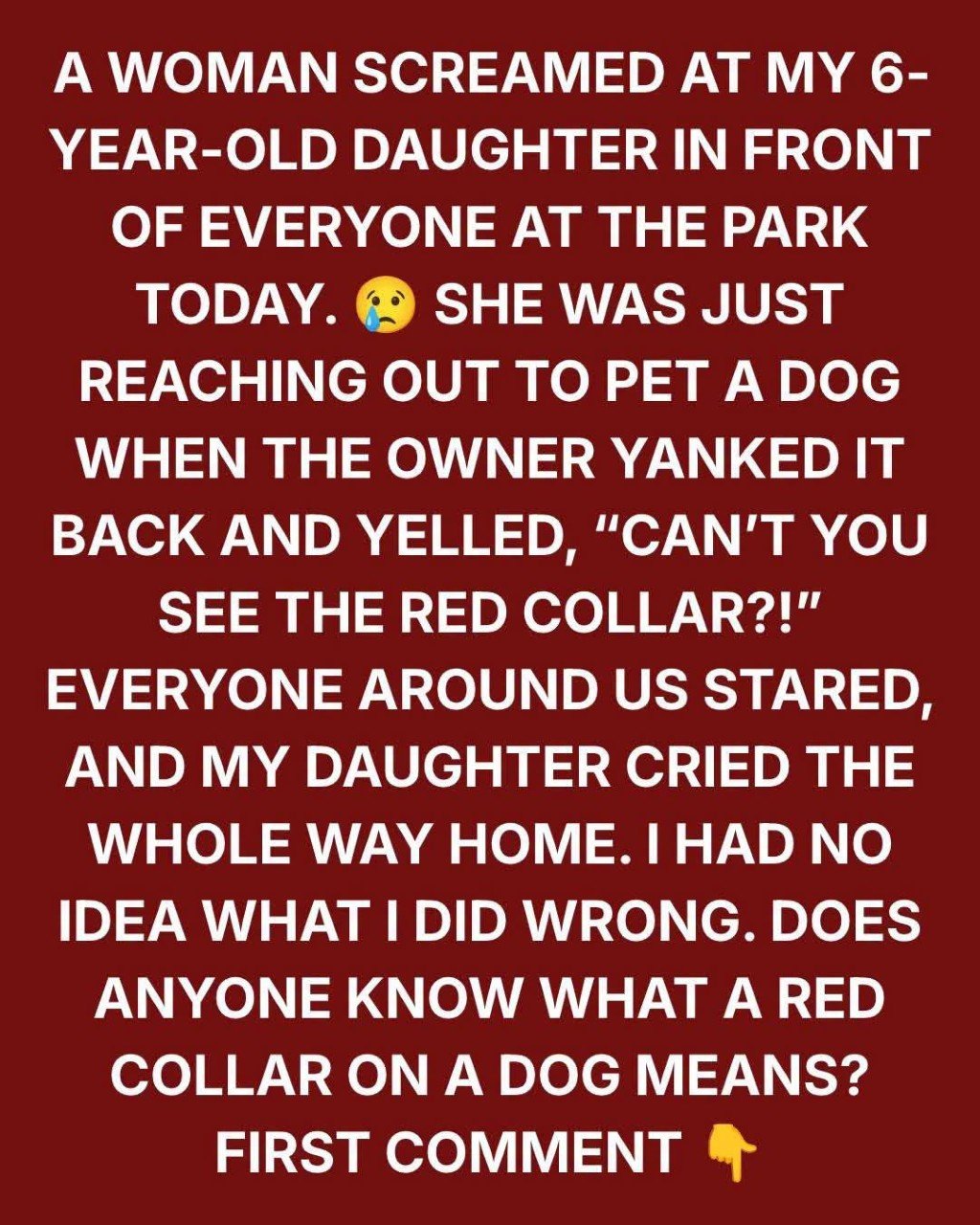
What Does a Red Collar on a Dog Mean?
What Does a Red Collar on a Dog Mean?
If a dog owner has ever snapped at you or your child over a red collar, you’re not alone, and you didn’t do anything unforgivable. Red often signals “give this dog space,” but there’s no universal rule. Here’s what red collars usually mean, how to react around them, and how to ask owners politely when you’re unsure.
(Note: Colors are not standardized. Meanings come from informal community conventions and vary by owner, trainer, and region.)
Step 1 — Learn What Red Usually Signals
What to do: Treat a red collar, leash, or bandana as a “please keep your distance” message.
How to do it: Many owners and trainers use red to flag dogs that are reactive, nervous, in training, recovering from surgery, or simply not friendly with strangers. Related signals include yellow (“needs space”), a “DO NOT PET” patch, or an orange ribbon on the leash. Because these systems are informal, read the whole picture: leash, vest, patches, and the owner’s body language.
Common mistake to avoid: Assuming every red collar means “aggressive.” Many dogs wearing red are just fearful, anxious, or in rehab, and the owner is trying to protect both the dog and strangers.
Step 2 — Always Ask Before Approaching Any Dog
What to do: Make asking a habit, whatever color the collar is.
How to do it: Teach children a simple routine: stop, ask the owner “May I pet your dog?”, and wait for a clear yes. If the answer is no, say thanks and step back. If yes, let the dog sniff your hand first and pet the shoulder or chest rather than reaching over the head.
Common mistake to avoid: Reaching out first and asking second. Even a friendly dog can react if surprised, and a child’s face is at bite height.
Step 3 — Handle the Aftermath Calmly
What to do: Reassure your child and, if appropriate, de-escalate with the owner.
How to do it: Tell your daughter she did nothing wrong, since she didn’t know the signal. Explain it in simple terms: “Some dogs need space, so we always ask first.” If the owner was harsh, you don’t need to argue. A brief “We didn’t know, thanks for letting us know” is enough, and walking away is fine.
Common mistake to avoid: Escalating the confrontation in front of the child. A sudden yank by the owner was probably fear, not malice, though it was still unkind to shout at a six-year-old.