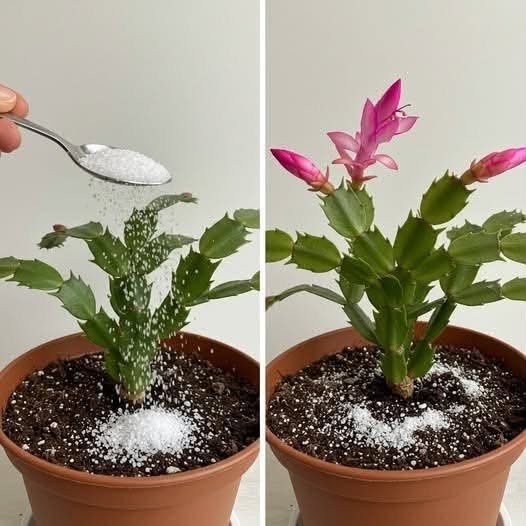
How to Get Your Holiday Cactus to Bloom Again This Fall
Step 3 — Protect the Buds Once They Form
What to do: Keep conditions steady so the buds open instead of dropping.
How to do it: When small pink buds appear, stop moving or turning the pot. Keep the temperature steady, away from drafts, heaters, and cold windows. Keep watering consistently, and move the plant back to normal room light once the buds are well formed.
Common mistake to avoid: Moving the plant around. Sudden changes in light, temperature, or position are the main cause of bud drop.
Tips for Better Results
- Tip 1: Use a pot with drainage holes and a light, well-draining mix.
- Tip 2: Keep the plant slightly root-bound, since it blooms better in a snug pot.
- Tip 3: Avoid direct afternoon sun, which can scorch the leaf segments.
- Tip 4: Raise humidity with a pebble tray if your home is dry.
- Tip 5: Prune or pinch off a few segments after blooming for a bushier plant.
- Tip 6: Repot only every 2 to 3 years, after flowering.
- Tip 7: Check leaves for pests such as mealybugs, which look like white cotton.
- Tip 8: Keep it away from pets, though holiday cacti are generally considered non-toxic.
FAQ
What is the best way to make a holiday cactus bloom?
Long, dark nights, cool temperatures, and steady care in early fall.
How often should I feed it?
Monthly in spring and summer, and not at all while it sets buds.
Can I use Epsom salt at home?
Occasionally, diluted in water. It can supply magnesium, but it isn’t a proven bloom booster.
What should I avoid?
Overwatering, moving the pot once buds form, and piling dry crystals on the soil.
Conclusion
A holiday cactus blooms best when it gets long nights, cool air, and steady watering, with Epsom salt as an optional extra at most. Start the dark routine early, avoid disturbing the plant once buds appear, and you’ll likely see colorful flowers in a few weeks. Next, read our guide to holiday cactus care year-round.