Why Aluminum Foil Has a Shiny Side and a Dull Side—and Which One You Should Actually Use
Why Aluminum Foil Has a Shiny Side and a Dull Side—and Which One You Should Actually Use
Aluminum foil is one of the most useful items in an American kitchen. Whether you’re wrapping leftovers, covering a casserole, roasting vegetables, or preparing food for the grill, this simple kitchen essential makes cooking and cleanup easier.
But there’s one small detail that has confused home cooks for generations.
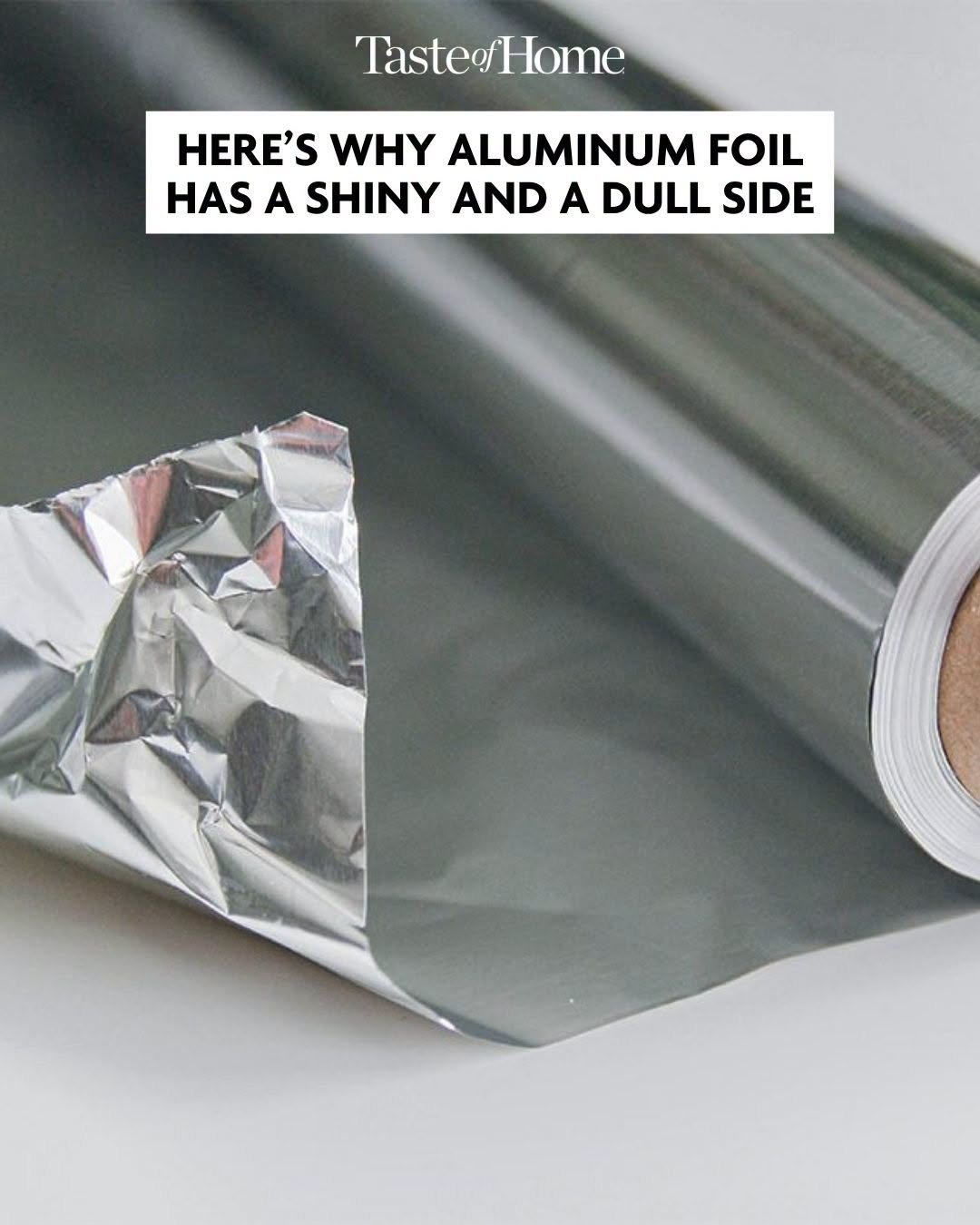
When you pull a sheet of aluminum foil from the roll, one side looks smooth and shiny, while the other has a dull, matte appearance.
This difference has inspired countless kitchen debates.
Some people insist that the shiny side should face food because it reflects heat. Others believe the dull side is better for cooking.
So, which side is actually correct?
The surprising answer is that, with regular aluminum foil, both sides work essentially the same way.
However, there is one important exception that every home cook should understand.
Why Does Aluminum Foil Have Two Different Sides?
The difference between the shiny and dull surfaces is not the result of a special cooking feature.
Instead, it comes from the manufacturing process.
Aluminum foil begins as much thicker sheets of metal that are gradually rolled into extremely thin layers.
During production, the aluminum passes through heavy steel rollers that compress and stretch it.
As the sheets become thinner, manufacturers use a technique that involves rolling two layers together during the final stages.
This process helps produce foil thin enough for everyday household use.
The Manufacturing Secret
During the final rolling stage, two layers of aluminum are pressed together.
The outside surfaces come into direct contact with the highly polished steel rollers.
These surfaces develop a smoother, shinier finish.
Meanwhile, the surfaces facing each other do not contact the polished rollers directly.
They retain a duller appearance.
Once the layers are separated, each sheet has one shiny surface and one matte surface.
The two finishes are simply a result of how the foil is manufactured.
They are not intentionally created to serve different cooking purposes.
Does the Shiny Side Reflect More Heat?
One of the most persistent kitchen myths is that the shiny side reflects heat better and should therefore face a particular direction.
There is a small scientific truth behind this idea.
Shiny metallic surfaces can reflect thermal radiation differently from rougher surfaces.
However, the practical effect in ordinary cooking with standard household aluminum foil is generally negligible.
Most oven cooking involves a combination of conduction, convection, and radiation.
Heat moves through the surrounding air, the baking pan, and the food itself.
The slight difference in surface appearance does not produce a meaningful improvement in cooking performance.
According to Reynolds Brands, the manufacturer of Reynolds Wrap, regular aluminum foil can be used with either side facing the food.
That means you do not need to carefully position the shiny side every time you prepare dinner.
Which Side Should Face the Food?
For standard aluminum foil, either side is acceptable.
You can place the shiny side against the food or turn it outward.
The same applies to conventional heavy-duty foil.
Whether you’re wrapping baked potatoes, covering a baking dish, or storing leftovers, the direction of the foil generally does not matter.
What About Baking?
When lining a baking pan with regular foil, you can use either surface.
The important factors are the recipe, oven temperature, cooking time, and proper preparation of the pan.
If the food is likely to stick, you may need an appropriate nonstick surface or another preparation method.
Simply turning standard foil over will not transform it into nonstick foil.
What About Roasting Vegetables?
The same rule applies when roasting vegetables.
The shiny side does not automatically create crispier potatoes or better caramelization.
More important factors include using the correct oven temperature, avoiding overcrowding, and allowing moisture to escape.
For some roasting recipes, placing vegetables directly on a suitable baking sheet may produce better browning than covering the pan with foil.