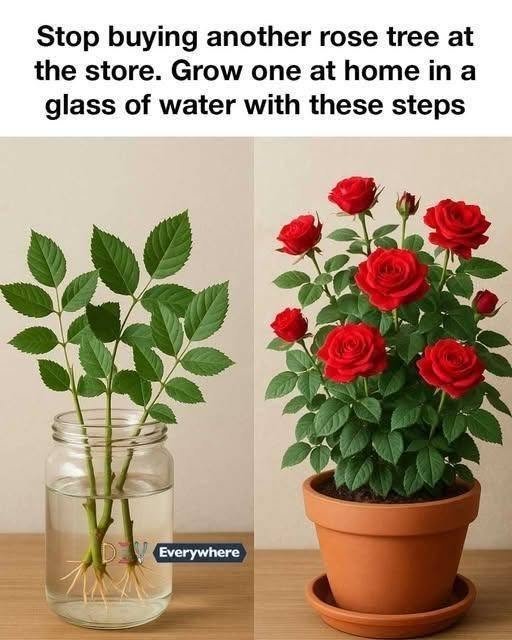
Stop Buying New Rose Bushes: How to Grow Roses From Cuttings in a Glass of Water
Step 6: Keep the Water Fresh
Water quality is important when attempting to root cuttings.
Replace the water regularly, particularly if it becomes cloudy.
Rinse the container before refilling it.
Remove any fallen leaves or decaying plant material.
If the submerged stem becomes soft, black, or foul-smelling, the cutting may be rotting.
Discard badly deteriorated cuttings rather than leaving them in the container.
Step 7: Watch for Signs of Root Development
Root development can take several weeks, and some cuttings may never form roots.
You might notice pale tissue developing around the base before recognizable roots appear.
However, swelling or callus formation does not guarantee successful rooting.
Avoid repeatedly removing the cutting from the water, as unnecessary handling may damage delicate new tissue.
Step 8: Transfer the Cutting to Soil
If healthy roots develop, the cutting will eventually need a suitable growing medium.
Prepare a small pot with drainage holes and a moist, well-draining potting mix.
Carefully transfer the rooted stem without bending or breaking the roots.
Fill the soil gently around the base.
Water lightly to settle the growing medium.
Keep the newly potted cutting in bright indirect light while it adapts.
Because roots formed in water may differ from roots developed in soil, the transition can be challenging.
Watch for wilting and avoid both excessive drying and waterlogging.
The More Reliable Alternative: Rooting Roses Directly in Potting Mix
Although the glass-of-water method is appealing because you can watch the roots develop, horticultural guidance often favors rooting roses in a suitable growing medium.
This approach provides moisture while allowing oxygen to reach developing roots.
How to Root a Rose Cutting in Soil
Prepare a small container filled with a moist mixture of potting medium and perlite.
Remove the lower leaves from a healthy cutting.
If desired, apply a rooting hormone according to its product instructions.
Insert the lower portion of the cutting into the medium, ensuring at least one or two nodes are buried.
Gently firm the mixture around the stem.
Place the pot in bright indirect light.
Maintain consistent moisture without saturating the soil.
A clear cover may help maintain humidity, but it should not touch the leaves and must allow some ventilation.
This method often provides a smoother transition because the roots develop directly in the medium where the young plant will initially grow.
Common Mistakes That Prevent Rose Cuttings From Rooting
Using Old or Weak Stems
Stems that are diseased, damaged, or excessively woody may struggle to develop roots.
Leaving Too Many Leaves
A cutting without roots cannot replace moisture as efficiently as an established plant.
Excessive foliage can increase water loss.
Placing Cuttings in Direct Sunlight
Strong sunlight can cause overheating, wilting, and additional stress.
Neglecting Water Changes
Stagnant water and decaying plant material may encourage undesirable microbial growth.
Transplanting Too Roughly
New roots are delicate.
Handle them carefully and avoid compacting the soil excessively.
How Long Does It Take to Grow a Rose Bush?
Growing a rose bush from a cutting requires patience.
Under favorable conditions, some cuttings may begin rooting within several weeks.
Others take longer.
Even after roots develop, the new plant needs time to establish itself.
It may take several months to produce strong growth, and flowering can take longer depending on the variety and growing conditions.
Don’t expect a small cutting to become a mature, heavily flowering rose bush immediately.
Healthy root development is the first priority.
Caring for Your New Rose Plant
Once your cutting has established roots and begins producing healthy growth, gradually introduce it to suitable outdoor conditions.
Sunlight
Most garden roses perform best with several hours of direct sunlight daily.
However, a newly rooted cutting should be acclimated gradually to stronger light.
Watering
Keep the soil evenly moist during establishment.
Avoid allowing the pot to remain constantly waterlogged.
Drainage
Good drainage helps protect developing roots.
Always use containers with adequate drainage holes.
Fertilizer
Wait until the young plant is actively growing and sufficiently established before introducing fertilizer.
Follow the product instructions and avoid excessive feeding.
Outdoor Transplanting
Move the rose to its permanent location when it has a stronger root system and weather conditions are suitable.
Avoid transplanting during extreme heat or freezing conditions.
Frequently Asked Questions
Can You Grow a Rose From a Store-Bought Bouquet?
Sometimes, but success is often less predictable.
Commercial cut flowers may have been stored or transported under conditions that reduce their ability to form roots.
Fresh stems from healthy garden plants are generally preferable.
Do Rose Cuttings Need Rooting Hormone?
Not always.
Some varieties can root without it.
However, rooting hormone may improve success with certain cuttings.
Can I Leave a Rose Cutting in Water Permanently?
For ordinary garden roses, water is generally best treated as a temporary propagation environment.
Once suitable roots develop, transferring the cutting to an appropriate growing medium is recommended.
Will Every Cutting Become a Rose Bush?
No.
Propagation success depends on variety, stem health, environmental conditions, and technique.
Preparing several cuttings can improve the chances of obtaining at least one healthy plant.
Final Thoughts
Growing roses from cuttings is a rewarding way to expand your garden while learning more about plant propagation.
The glass-of-water technique offers an interesting opportunity to observe root development, but it isn’t guaranteed to succeed.
For many rose varieties, rooting directly in a moist, well-draining propagation medium offers a more dependable alternative.
The most important factors are choosing a fresh, healthy cutting, maintaining suitable moisture and light, and handling new roots carefully.
With patience and proper care, a small piece of an existing rose bush may eventually become a beautiful new plant.
And watching that tiny cutting develop into a flowering rose can be one of the most satisfying experiences in home gardening.