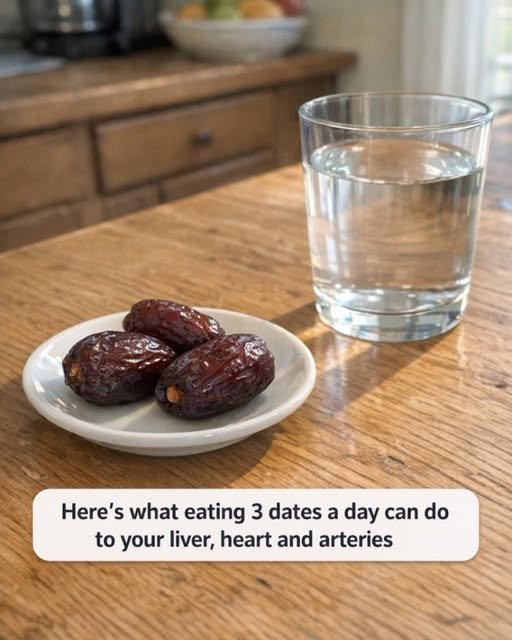
What Happens When You Eat 3 Dates a Day? The Potential Benefits for Your Liver, Heart, and Arteries
What Happens When You Eat 3 Dates a Day? The Potential Benefits for Your Liver, Heart, and Arteries
Dates are naturally sweet fruits that have been enjoyed for thousands of years, particularly in the Middle East and North Africa. Their soft texture, caramel-like flavor, and impressive nutritional profile make them a popular alternative to processed sweets.
Recently, eating three dates a day has attracted attention as a simple habit that may support overall health.
Some online articles even claim that this small daily serving can transform the health of your liver, heart, and arteries.
But what does scientific research actually reveal?
Dates contain fiber, potassium, and natural plant compounds that can contribute to a balanced diet. However, eating three dates daily has not been proven to cleanse the liver, unblock arteries, or prevent heart disease.
Understanding their real nutritional benefits can help you enjoy them without unrealistic expectations.
Why Are Dates Considered Nutritious?
Dates are the fruit of the date palm, scientifically known as Phoenix dactylifera.
They grow in warm climates and are available in several varieties, including Medjool and Deglet Noor.
Although their size and texture vary, most dates provide carbohydrates, fiber, and small amounts of important minerals.
Unlike many highly processed sweet snacks, whole dates retain naturally occurring plant compounds.
Important Nutrients Found in Dates
Dates provide:
- Dietary fiber.
- Potassium.
- Magnesium.
- Copper.
- Small amounts of other vitamins and minerals.
- Naturally occurring polyphenols.
They also contain substantial amounts of natural sugars, primarily glucose and fructose.
This combination makes dates a concentrated source of dietary energy.
How Many Calories Are in Three Dates?
The nutritional content depends on the variety and size.
A large Medjool date weighing approximately 24 grams contains around 66 calories.
Three large Medjool dates therefore provide approximately:
| Nutrient | Approximate amount |
|---|---|
| Calories | 200 |
| Carbohydrates | 54 g |
| Natural sugars | 48 g |
| Fiber | 4.8 g |
| Potassium | 500 mg |
These are approximate figures based on standard food composition data.
Three smaller Deglet Noor dates would provide considerably fewer calories and carbohydrates.
This distinction matters, especially for people monitoring their energy or sugar intake.
1. Dates Provide Nutrients That Support Heart Health
The heart depends on a continuous supply of nutrients to function normally.
Dates contain potassium, an essential mineral involved in regulating fluid balance, nerve signaling, and muscle contraction.
Potassium also contributes to normal blood pressure regulation.
Why Potassium Matters
Higher dietary potassium intake, particularly as part of an overall healthy eating pattern, can help support blood pressure management in some individuals.
However, this does not mean that three dates can treat high blood pressure.
The overall diet matters much more than a single food.
Regular physical activity, appropriate sodium intake, weight management when relevant, and prescribed treatments also play important roles.
What About Cholesterol?
Researchers have investigated whether eating dates influences blood cholesterol levels.
Some small studies have reported favorable changes in certain cholesterol measurements.
Other clinical studies have found little or no significant effect.
Therefore, current evidence is not strong enough to conclude that eating three dates daily reliably lowers cholesterol or prevents cardiovascular disease.
2. Can Dates Help Keep Your Arteries Healthy?
Arteries carry oxygen-rich blood from the heart to different parts of the body.
Maintaining healthy arteries is important for long-term cardiovascular well-being.
Dates contain fiber and plant compounds that researchers have studied for potential effects on cardiovascular risk factors.
The Role of Dietary Fiber
Fiber is an important component of a heart-healthy eating pattern.
Certain types of soluble fiber can help reduce cholesterol absorption.
However, the amount and type of fiber in a particular food determine its effects.
Dates contribute some dietary fiber, but they should not be considered a substitute for other fiber-rich foods such as oats, beans, vegetables, and whole grains.
Can Dates Remove Plaque From Arteries?
No reliable clinical evidence demonstrates that eating dates removes existing plaque from arterial walls.
Atherosclerosis is a complex condition involving cholesterol accumulation, inflammation, and changes within blood vessels.
Its prevention and management require established medical and lifestyle approaches.
Dates can be part of a nutritious eating pattern, but they do not act as a treatment for blocked arteries.
3. What Do Dates Do for Your Liver?
The liver performs numerous essential functions.
It helps process nutrients, metabolize medications, produce important proteins, and regulate various substances in the bloodstream.
Because dates contain polyphenols and other plant compounds, researchers have explored their possible effects on oxidative stress and liver-related processes.
However, much of this research has involved laboratory experiments or animal models.
Can Dates Cleanse the Liver?
The idea that particular foods can cleanse or detoxify the liver is often misleading.
The liver already performs the body’s normal processing and detoxification functions.
There is no convincing human clinical evidence that consuming three dates daily removes toxins from the liver or reverses liver disease.
People with fatty liver disease or other liver conditions should follow evidence-based medical guidance.
A balanced diet, appropriate physical activity, and management of relevant metabolic conditions are more important than any single fruit.