6 Common Household Items You Should Never Plug Into an Extension Cord
Step 4 — Avoid Connecting Air Conditioners to Ordinary Extension Cords
Air conditioners can require substantial electrical power.
An ordinary household extension cord may not be designed for the appliance’s current requirements.
What to do: Use the correct electrical outlet and follow the manufacturer’s instructions. If a special cord or installation is required, have it handled by a qualified electrician.
Step 5 — Don’t Connect High-Power Kitchen Appliances Without Checking Their Ratings
Electric kettles, toasters, toaster ovens, and other heating appliances can draw considerable power.
Connecting several of them to the same extension cord may overload it.
What to do: Check each appliance’s power requirements and the cord’s rating. Avoid operating multiple high-power appliances on one extension cord.
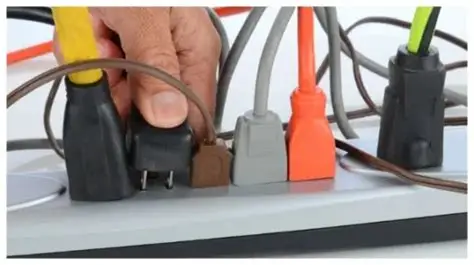
Step 6 — Never Daisy-Chain Extension Cords or Power Strips
Connecting one extension cord to another, or plugging a power strip into another power strip, can increase the risk of overload and overheating.
It may also create messy cables that are easy to damage.
What to do: Use a properly located wall outlet and have additional outlets installed by a qualified electrician if needed.
Tips for Better Results
- Check the amperage and wattage ratings before using an extension cord.
- Use cords that are approved for the intended purpose.
- Never use damaged, frayed, or unusually warm cords.
- Keep extension cords away from water.
- Do not run cords under rugs or carpets.
- Avoid plugging several high-power appliances into one cord.
- Follow the appliance manufacturer’s instructions.
FAQ
1. Can an extension cord cause a fire?
Yes. An overloaded, damaged, or incorrectly used extension cord can overheat and create a fire hazard.
2. Can I plug a phone charger into an extension cord?
A properly rated and undamaged extension cord or power strip can generally handle a standard phone charger.
3. Is it safe to plug a TV into an extension cord?
It can be safe when the cord is in good condition and appropriately rated for the equipment.
4. Why do extension cords become hot?
They may become hot because of excessive electrical load, poor connections, damage, or an unsuitable cord.
5. Can I connect two extension cords together?
It is best to avoid doing this. Use one correctly rated cord of the appropriate length instead.
Conclusion
Extension cords can make everyday life easier, but using them incorrectly can create serious electrical hazards. High-power appliances such as space heaters, microwaves, refrigerators, and air conditioners often require special attention. Always check the manufacturer’s instructions and the electrical ratings before connecting anything. A few simple precautions can help keep your home and family safer.