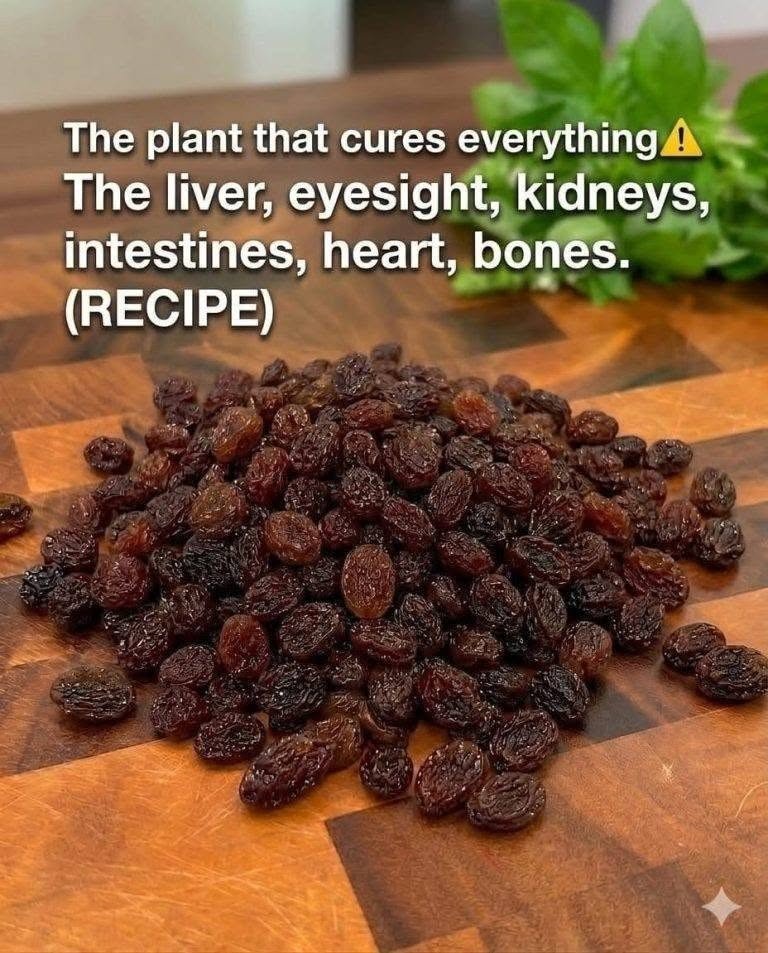
Raisins: How This Everyday Plant Supports Your Liver, Eyesight, Gut, Heart, and Bones (Recipe)
Raisins: How This Everyday Plant Supports Your Liver, Eyesight, Gut, Heart, and Bones (Recipe)
While no single food literally cures everything, dark raisins—dried grapes—have earned viral fame for supporting total-body wellness. Packed with polyphenols, potassium, fiber, and boron, this humble pantry staple nourishes your heart, bones, digestion, eyesight, and overall vitality. In this guide, you will learn the traditional soaked-raisin recipe, how it supports key organs, and smart precautions to follow.
Step 1 — Choose and Rinse Unsulfured Dark Raisins
What to do: Pick pure, dark, unsulfured raisins without added oils or refined sugars, and wash them well.
How to do it: Measure out half a cup (about 75 grams) of organic black or dark brown raisins. Rinse them thoroughly under cool running water for 30 seconds, then drain.
Short practical explanation: Dark raisins preserve higher concentrations of grape-skin antioxidants like resveratrol and polyphenols, while rinsing removes surface dust, natural waxes, or packing residues before soaking.
Step 2 — Prepare the Classic Overnight Soaked Raisin Recipe
What to do: Steep the washed raisins in clean water overnight to release water-soluble nutrients and soften the fruit.
How to do it: Bring 2 cups of filtered water to a gentle boil, remove from heat, and stir in the rinsed raisins. Cover the bowl or glass jar and let them steep for 8 to 12 hours overnight. In the morning, strain and save both the infused water and the plump raisins.
Common mistake to avoid: Do not use bright golden raisins treated with sulfur dioxide if you are sensitive to sulfites, and never soak raisins in sugary fruit juices that overload the recipe with extra fructose.
“Read the Next Page for More Details”
Pages: 1 2