Why Your Ground Beef Is Red on the Outside and Grey on the Inside (And Is It Safe to Eat?)
Why Your Ground Beef Is Red on the Outside and Grey on the Inside (And Is It Safe to Eat?)
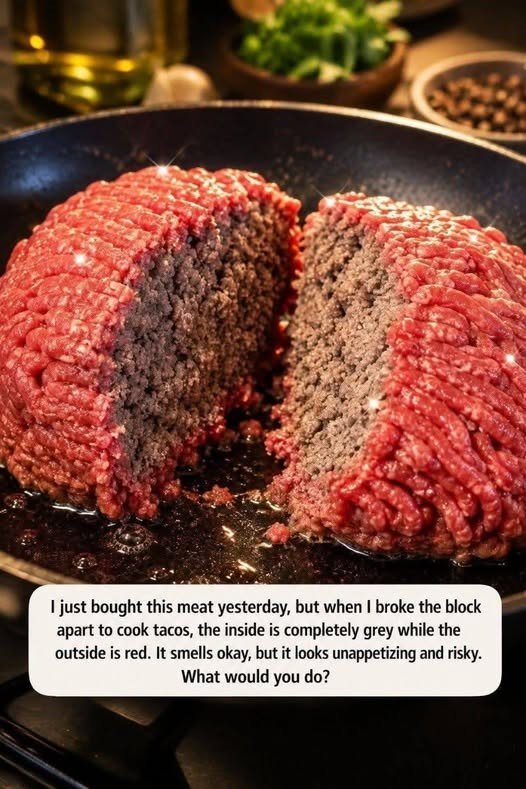
Breaking open a fresh block of ground beef only to find a bright red exterior hiding a dull grey core can feel alarming—especially right before taco night. Before you toss perfectly good groceries in the trash, it helps to understand the simple food science behind meat pigments and oxygen exposure. In this guide, you’ll learn how to tell harmless color changes apart from true spoilage and how to handle your beef safely.
Step 1 — Check the Smell, Texture, and Expiration Date
Color alone is never a reliable indicator of freshness in ground beef; your senses of smell and touch tell the real story.
What to do: Perform a quick three-point safety inspection on the raw meat before heating the pan.
How to do it: Bring the meat close to detect any sour, ammonia-like, or putrid odors, press the surface with clean fingers to check for sliminess or stickiness, and verify the “use or freeze by” date on the wrapper.
Short practical explanation: Fresh meat has a mild, slightly metallic scent and a firm, crumbly texture; if it smells clean and was kept refrigerated below 40°F (4°C), a grey interior is completely normal.
Step 2 — Understand the Oxygen and Myoglobin Reaction
Once you confirm the meat isn’t spoiled, you can cook with confidence knowing why that two-tone color happens.
What to do: Expose the grey center to the open air for a few minutes or break it directly into your preheated skillet.
How to do it: Use a wooden spatula to crumble the dense block apart evenly in the pan so air and heat circulate through the interior strands.
Common mistake to avoid: Do not assume grocery stores dye the outside of beef red; the bright cherry-red outer layer comes from myoglobin (a natural protein in muscle tissue) reacting with oxygen in the packaging, while the tightly packed interior lacks oxygen and naturally stays greyish-brown.
“Read the Next Page for More Details”
Pages: 1 2