African Violets Can Bloom Year-Round: How to Encourage Continuous Flowers
African Violets Can Bloom Year-Round: How to Encourage Continuous Flowers
Nothing brightens a windowsill faster than an African violet bursting with velvety purple blooms—yet many plants produce one flush of flowers and then stay stubbornly green for months. Getting these classic houseplants to bloom year-round comes down to three simple habits: proper light, gentle feeding in airy soil, and smart watering. Below, you will learn exactly how to trigger nonstop buds at home.
Step 1 — Give Bright, Filtered Light Every Day
What to do: Position your African violet where it gets steady, bright indirect light without harsh direct afternoon sunbeams.
How to do it: Place the pot near an east- or bright north-facing window, or set it slightly back from a south- or west-facing window behind a sheer curtain. Aim for 8 to 12 hours of bright light daily (supplementing with a small LED grow light in winter), followed by roughly 8 hours of nighttime darkness, and turn the pot a quarter-turn each week.
Short practical explanation: Too little light is the number-one reason African violets stop blooming, while a steady light-and-dark cycle signals the crown to keep pushing up fresh flower stalks year-round.
Step 2 — Feed Gently and Use Airy, Fast-Draining Soil
What to do: Supply light, consistent nutrients that support bud formation and keep the potting mix loose with plenty of perlite.
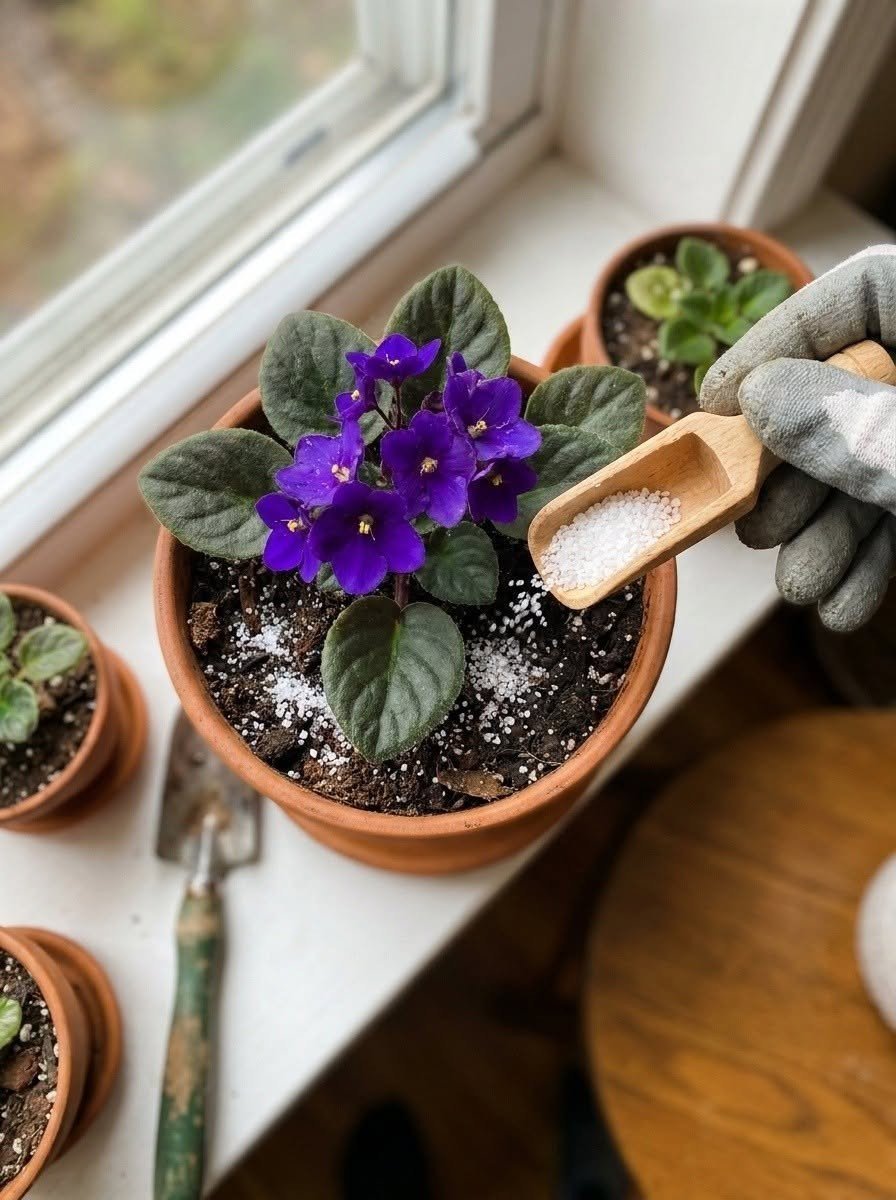
How to do it: Pot your violet in an airy African violet mix enriched with extra perlite for oxygen and drainage. Feed lightly and regularly—either by sprinkling a small measured pinch of gentle slow-release houseplant granules along the soil rim away from the leaves, or by mixing quarter-strength liquid African violet fertilizer into your watering routine.
Common mistake to avoid: Never dump concentrated dry fertilizer onto bone-dry soil or let granules rest against the fuzzy crown and leaves. Excess fertilizer salts burn delicate roots and foliage quickly—always water well after applying dry granules, or stick to heavily diluted liquid plant food.
Step 3 — Bottom-Water With Room-Temperature Water and Deadhead Spent Blooms
What to do: Water from below using lukewarm water and remove faded blossoms as soon as they wilt.
How to do it: Set the pot in a shallow saucer of room-temperature water for 20 to 30 minutes until the surface feels lightly damp, then empty any leftover water so the roots never sit soggy. Gently pinch or snip spent flower stems right at the base once petals fade.
Short practical explanation: Bottom-watering keeps cold water off fuzzy leaves (preventing permanent pale ring spots and crown rot), while deadheading channels energy straight into new flower buds.
“Read the Next Page for More Details”
Pages: 1 2