Which Baby Is a Girl? This Fun Picture Challenge Has Everyone Guessing
Which Baby Is a Girl? This Fun Picture Challenge Has Everyone Guessing
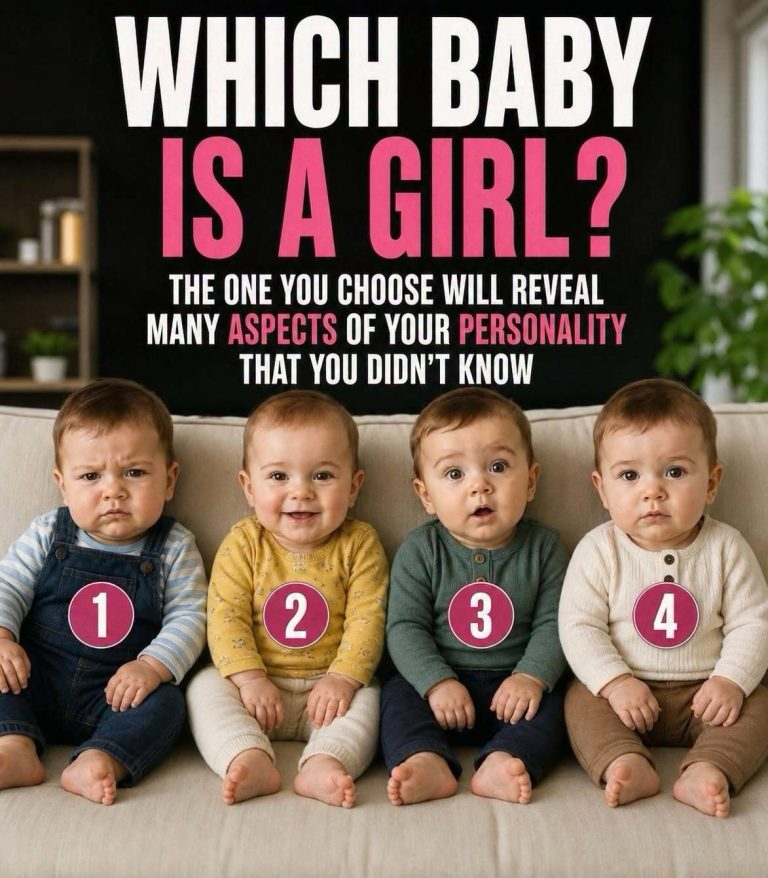
Four adorable babies are sitting side by side on a couch. Each has a different facial expression, a different outfit, and a personality that seems to shine through the photograph.
But there’s one question that makes this simple picture surprisingly entertaining:
Which baby is the girl — number 1, 2, 3, or 4?
At first glance, the answer might seem obvious. Perhaps you’ve already made your choice.
But before you decide, there’s something fascinating about how our brains interpret faces, clothing, colors, and expressions.
This playful challenge isn’t just about choosing a number. It also offers an opportunity to explore the assumptions we make when looking at other people.
1. Take a Closer Look at the Four Babies
Let’s examine what makes each baby stand out.
Baby Number 1: The Serious Little Thinker
The first baby wears blue overalls over a striped shirt and has a wonderfully serious expression.
With slightly furrowed eyebrows and a focused gaze, this little one looks as though something important is on their mind.
Some viewers might immediately assume that number 1 is a boy because of the clothing and expression.
But can an outfit or facial expression actually tell us whether a baby is a girl or a boy?
Not reliably.
Baby Number 2: The Happy, Smiling Baby
Baby number 2 wears a yellow top and has a cheerful smile.
The expression gives the impression of a friendly, playful little personality.
Some people may choose this baby because of the softer facial appearance or bright clothing.
Others might make a completely different guess.
And that’s what makes the challenge interesting: people often interpret the same visual information in different ways.
Baby Number 3: The Curious Explorer
The third baby wears a green top and appears surprised, with wide eyes and a slightly open mouth.
It’s almost as though something unexpected has just happened outside the camera’s view.
Some viewers might associate this expression with curiosity or sensitivity.
But facial expressions reveal momentary emotions rather than a baby’s sex or gender identity.
Baby Number 4: The Calm Observer
The fourth baby wears a light-colored sweater and has a calm, attentive expression.
With a direct gaze toward the camera, this little one seems to be quietly observing everything happening nearby.
Some people may choose number 4 based on facial features, hairstyle, or clothing.
But those details don’t provide a dependable answer either.
2. Why Is It So Difficult to Tell?
One reason this picture challenge works is that babies often share many similar facial characteristics.
Young infants commonly have rounded cheeks, small noses, soft facial contours, and relatively large-looking eyes.
These features can make visual judgments particularly uncertain.
As children grow, their facial appearance changes considerably.
However, even in adults, appearance alone doesn’t provide complete information about someone’s identity.
With babies, clothing and hairstyles often influence people’s guesses more than they realize.
3. How Colors Influence Our Choices
Have you ever wondered why people often associate pink with girls and blue with boys?
Today, those color associations are familiar in many Western societies.
But they aren’t universal biological rules.
Color preferences and clothing traditions have changed across different historical periods and cultures.
For example, yellow, green, cream, and other neutral colors are frequently chosen for babies regardless of sex.
In this picture, the babies wear blue, yellow, green, and white.
These choices may influence our impressions, but they don’t establish which baby is a girl.
A yellow outfit doesn’t make a baby female, just as blue overalls don’t establish that a baby is male.