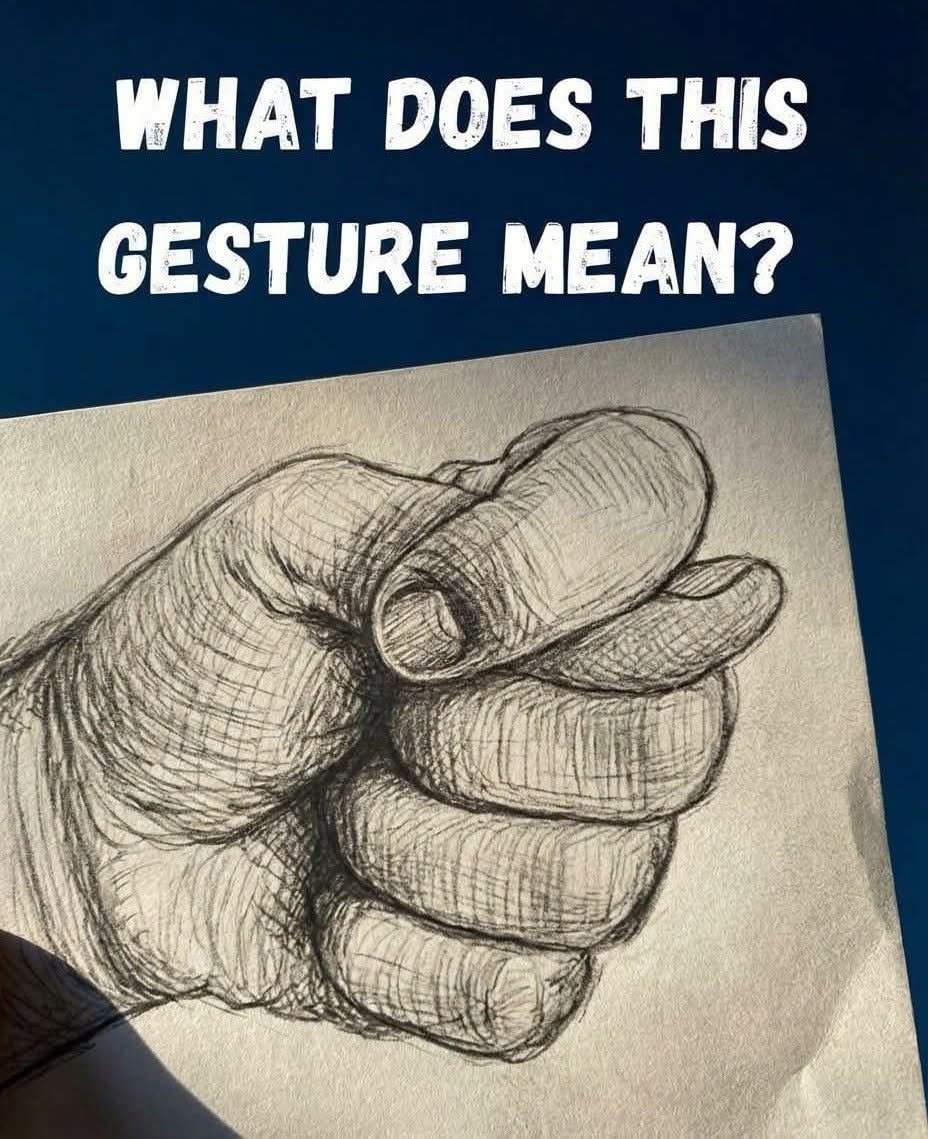
The Hidden Meaning Behind One of History’s Oldest Hand Gestures – What This Strange Fist Really Means
5. The Fig Sign in Slavic Traditions
In parts of Eastern Europe, similar gestures have been used to express refusal or rejection.
In Russian, for example, the gesture is commonly associated with the term kukish.
It can communicate an emphatic refusal or suggest that someone won’t receive what they’re requesting.
Depending on the context, it may be playful, mocking, or deliberately rude.
This is another example of how a simple hand position can develop different meanings over time.
6. Why Did People Use Hand Gestures Instead of Words?
Throughout history, body language has played an important role in communication.
A raised hand could signal a greeting.
A clenched fist might represent determination.
An open palm could express peace or reassurance.
Gestures were especially useful in situations where speaking openly was difficult or inappropriate.
They allowed people to communicate emotions, intentions, and cultural messages quickly.
The fig sign became part of this broader tradition of symbolic communication.
7. Why the Same Gesture Means Different Things
Cultural meaning isn’t determined by the physical movement alone.
Instead, people learn to interpret gestures through family traditions, social customs, and historical experiences.
A particular movement may begin as a religious or protective symbol and later become associated with humor or insult.
Migration and cultural exchange can also introduce gestures to new communities.
Over time, their meanings may change.
That’s why understanding the surrounding context matters more than assuming every gesture has one universal definition.
Can the Fig Sign Be Offensive Today?
Yes, depending on where it’s used.
Someone familiar with the gesture as a good-luck charm might see nothing unusual about it.
Another person may interpret the same movement as an insult.
If you’re traveling or interacting with people from different cultural backgrounds, it’s helpful to remember that hand gestures don’t always translate directly.
When uncertain, avoid using unfamiliar signs in situations where they might cause misunderstanding.
Is the Fig Sign Still Used?
Yes.
Although the gesture may be less familiar to younger generations in some places, it continues to appear in cultural traditions, jewelry, folk art, and everyday expressions.
Vintage protective amulets featuring the sign are also collected for their historical and decorative value.
In some communities, older relatives still recognize the movement immediately because they encountered it during childhood.
Frequently Asked Questions
What Does a Fist With the Thumb Between Two Fingers Mean?
It’s commonly called the fig sign. Depending on the culture, it can symbolize protection, luck, refusal, or insult.
Is the Fig Sign an Ancient Gesture?
Yes. Related symbolism is documented in ancient Mediterranean traditions, although its precise origin remains uncertain.
Is It Good Luck or Bad Luck?
In some cultures, it’s a good-luck symbol. In others, it’s considered offensive.
What Is a Figa Amulet?
It’s a charm shaped like the fig gesture, traditionally associated with protection and good fortune.
Is the Gesture Used Everywhere?
No. Its familiarity and meaning vary between countries, communities, and generations.
Final Thoughts
The fig sign is a fascinating example of how a small hand movement can carry centuries of history.
What appears to be a simple fist with the thumb tucked between two fingers has represented protection, fertility, good luck, defiance, and insult across different societies.
Its story reminds us that body language isn’t universal and that cultural context matters.
The next time you see this unusual gesture, remember that its meaning may be far more complicated than it first appears.