The Dishwasher Mistake Almost Everyone Makes – How Loading Your Plates Wrong Could Be Costing You Money
The Dishwasher Mistake Almost Everyone Makes – How Loading Your Plates Wrong Could Be Costing You Money
You load the dishwasher, add detergent, press start, and expect everything to come out sparkling clean.
But when the cycle ends, you discover cloudy glasses, plates with dried food, and utensils that still look dirty.
Sound familiar?
The problem might not be your dishwasher or detergent. It could be the way you’re arranging your dishes.
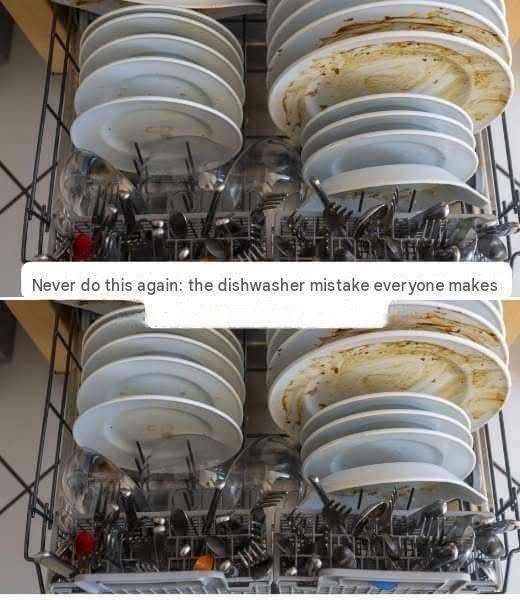
One of the most common dishwasher mistakes involves placing plates at the wrong angle or packing them so tightly that water cannot reach their surfaces.
This simple habit can lead to repeated wash cycles, wasted detergent, and unnecessary electricity and water consumption.
Here’s how to avoid it and get better results from every wash.
1. The Biggest Mistake: Loading Plates Incorrectly
Dishwashers rely on rotating spray arms that distribute water and detergent around the machine.
For effective cleaning, water must reach the dirty surfaces of your dishes.
If plates overlap or face away from the spray, they can block one another.
The result is uneven cleaning.
The Correct Way to Load Plates
Place dinner plates in the designated slots on the lower rack.
Position them so their dirty surfaces face toward the main spray area, usually the center of the dishwasher.
Keep them upright or slightly angled according to the rack design.
Avoid overlapping plates or pressing them tightly together.
The goal is simple: water must circulate freely around every plate.
2. Why Overloading the Dishwasher Doesn’t Save Money
It’s tempting to squeeze in one more plate, bowl, or pan.
After all, running a full dishwasher is generally more efficient than washing several tiny loads.
However, there’s a difference between a full load and an overloaded machine.
When dishes are crowded together, they may prevent water and detergent from reaching certain surfaces.
This can leave food residue behind and force you to wash items again.
A Better Approach
Fill the racks efficiently without blocking water circulation.
Use the slots and holders designed for your dishwasher model.
A properly loaded machine can clean more effectively without requiring an additional cycle.
3. The Silverware Basket Mistake
Forks, spoons, and knives can also cause problems when loaded incorrectly.
If several spoons nest together, water may struggle to reach their inner surfaces.
Forks pressed tightly against one another can create similar issues.
How to Arrange Utensils
Mix compatible utensils in the basket to reduce nesting.
Avoid stuffing too many into one compartment.
If your dishwasher has a separate cutlery tray, use its designated spaces.
For safety, load sharp knives with their points facing downward and follow your appliance manufacturer’s instructions.
4. Don’t Block the Spray Arms
Large cutting boards, baking sheets, and oversized pans can interfere with the dishwasher’s moving parts.
If a spray arm cannot rotate properly, the entire load may receive inadequate cleaning.
Before starting the machine, check that the spray arms can move freely.
Also make sure tall utensils or pan handles aren’t extending into their path.
This quick inspection can prevent disappointing results.