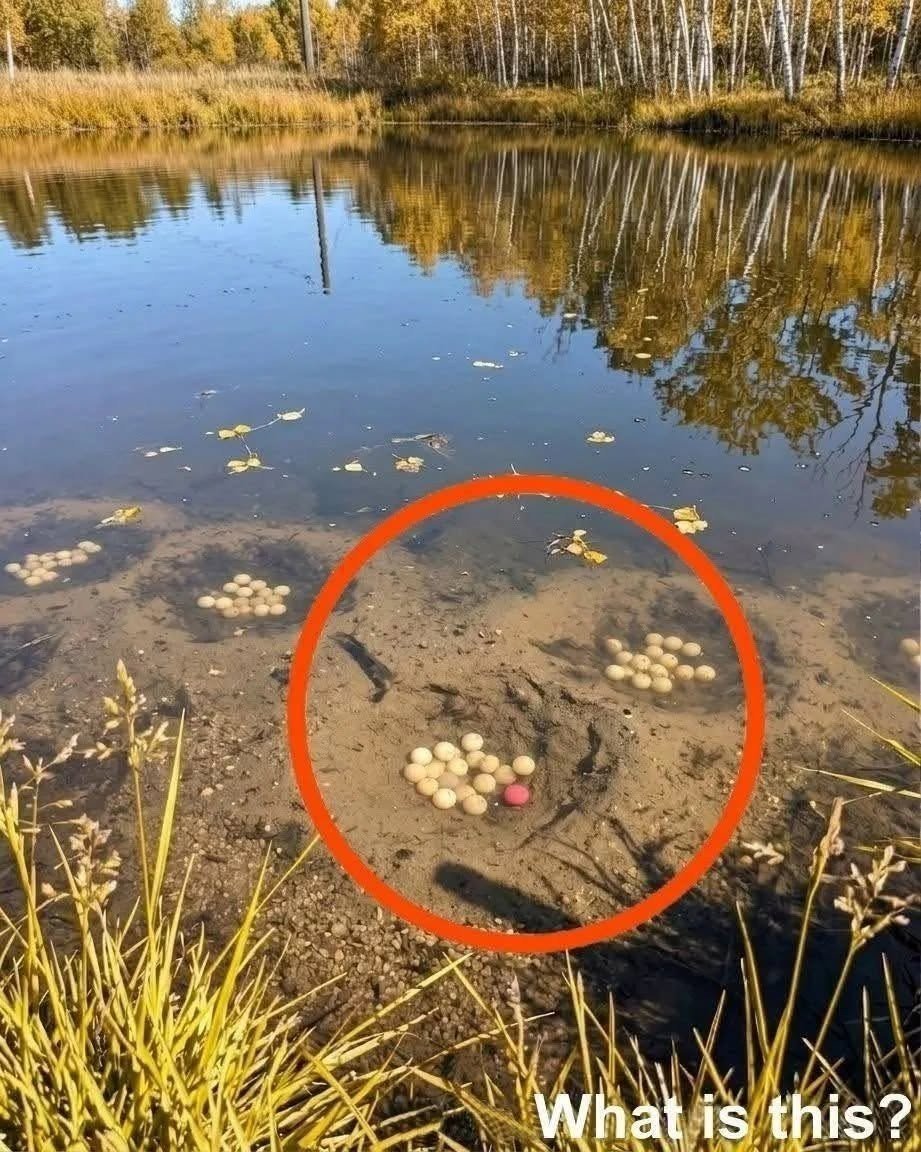
Mystery Eggs in the Lake: Are They Real or Something Else?
Step 3 — Verify Local Wildlife Signs
If you encounter genuine nests near a pond or lake in the future, check the surrounding shoreline for authentic wildlife tracks.
What to do: Scan the mud and grass just above the waterline.
How to do it: Look for webbed footprints, tail drags, or dug-up soil on dry land, as freshwater turtles bury their eggs in soil above the water rather than underwater, where embryos would drown.
Tips for Better Results
Tip 1: Keep it simple by checking if the objects dissolve or crumble in water, which confirms they are dough-based fishing baits rather than calcified shells.
Tip 2: Choose to observe from the bank without disturbing the water; if it is an active fishing spot, wading in will spook feeding carp.
Tip 3: Avoid touching or removing the spheres if you suspect an angler is actively fishing nearby, as hidden hooks may be buried in the bait.
Tip 4: Try watching the shallows early in the morning or at dusk, when bottom-feeding fish like carp actively root in the silt and create feeding craters.
Tip 5: For a better result when identifying real wildlife eggs, always note whether they are submerged (amphibians/fish) or buried on dry land (turtles/birds).
FAQ
What is the best way to tell fishing boilies apart from real eggs? Look for uniform spherical shapes, unnatural colors (like bright pink, orange, or yellow), and a dense, doughy texture rather than a hard or leathery shell.
How often do turtles or fish lay eggs like this? Never—turtles lay leathery eggs in underground nests on dry land, while fish and frogs lay tiny, jelly-like eggs in masses or strings, not large opaque balls.
Can I use this trick to spot carp feeding areas at my local lake? Yes. Looking for freshly cleared, circular depressions in shallow, muddy bottoms is one of the best ways to locate where carp have been actively feeding.
What should I avoid when finding strange clusters in a lake? Avoid reaching directly into bait piles with your bare hands, as anglers often hide sharp hooks and rigs right inside the center of baited spots.
Conclusion
Identifying mysterious lakeside discoveries becomes much easier once you know the difference between natural spawning beds and angler bait. By spotting telltale clues like bright pink boilies and feeding craters, you can quickly solve shoreline puzzles without disturbing local wildlife or ruining someone’s fishing spot. Next time you walk past the water, scan the shallows for feeding depressions to see what is lurking beneath the surface—and check out our guide on How to Spot Freshwater Turtle Nests Safely to learn what real lakeside eggs look like.