Mystery Eggs in the Lake: Are They Real or Something Else?
Mystery Eggs in the Lake: Are They Real or Something Else?
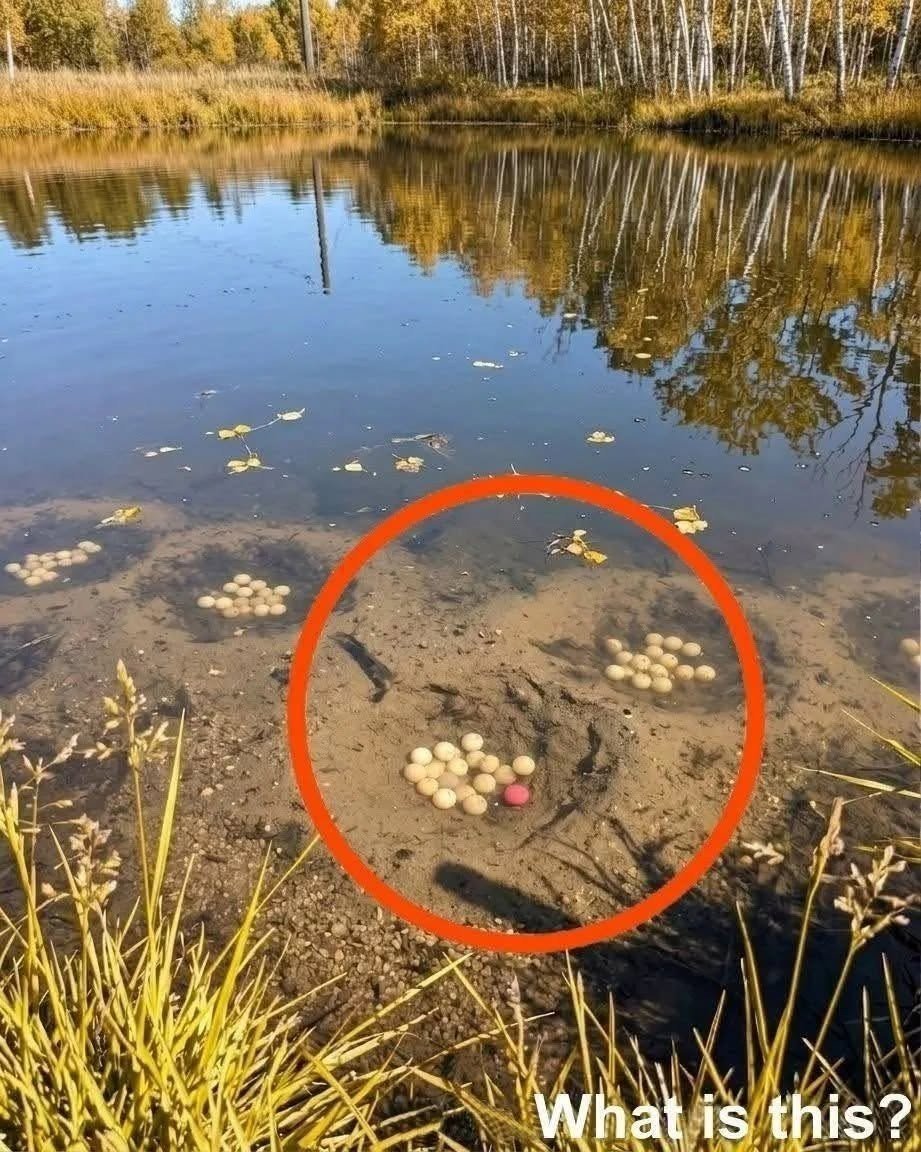
Spotting strange, crater-like holes filled with egg-shaped spheres along the shallow edge of a local lake is enough to puzzle any nature walker. Before jumping to conclusions about rare aquatic reptiles or amphibians, a closer look at the photo reveals a surprising twist. In this guide, you will learn how to identify what is actually sitting in those shallow depressions—and why one bright pink sphere gives the whole mystery away.
Step 1 — Inspect the “Eggs” and the Pink Clue
Look closely at the cluster circled in red. While the pale, round objects resemble reptile or bird eggs, one of them is bright pink.
What to do: Zoom in on the shape, color uniformity, and surface texture of the spheres.
How to do it: Compare the size and roundness of the pale spheres against the bright pink sphere resting in the exact same nest.
Practical explanation: No aquatic animal lays a single neon-pink egg alongside a clutch of beige ones. These spheres are actually fishing boilies (or dough/corn baits)—spherical, flavored baits used by carp anglers—which are often sold in bright “pop-up” colors like pink alongside standard neutral tones.
Step 2 — Examine the Underwater Craters
Understanding why the baits are sitting in neat, bowl-shaped depressions solves the second half of the puzzle.
What to do: Observe the sandy lakebed surrounding each cluster.
How to do it: Notice how the silt is cleared away in distinct, circular bowls around each pile of bait.
Common mistake to avoid: Do not assume an animal dug these holes to lay eggs. While fish like bluegill, bass, or carp fan out depressions (redds) for spawning, eggs laid by freshwater fish are tiny, translucent, and gelatinous—never large, opaque balls. Instead, carp and bottom-feeding fish create these feeding craters by rooting through the mud to suck up bait, or anglers deliberately place baited rigs in shallow, visible spots to attract fish. (Additionally, this widely circulated internet photo shows staged bait piles—or a heavily edited image—rather than a natural animal nest).
“Read the Next Page for More Details”
Pages: 1 2