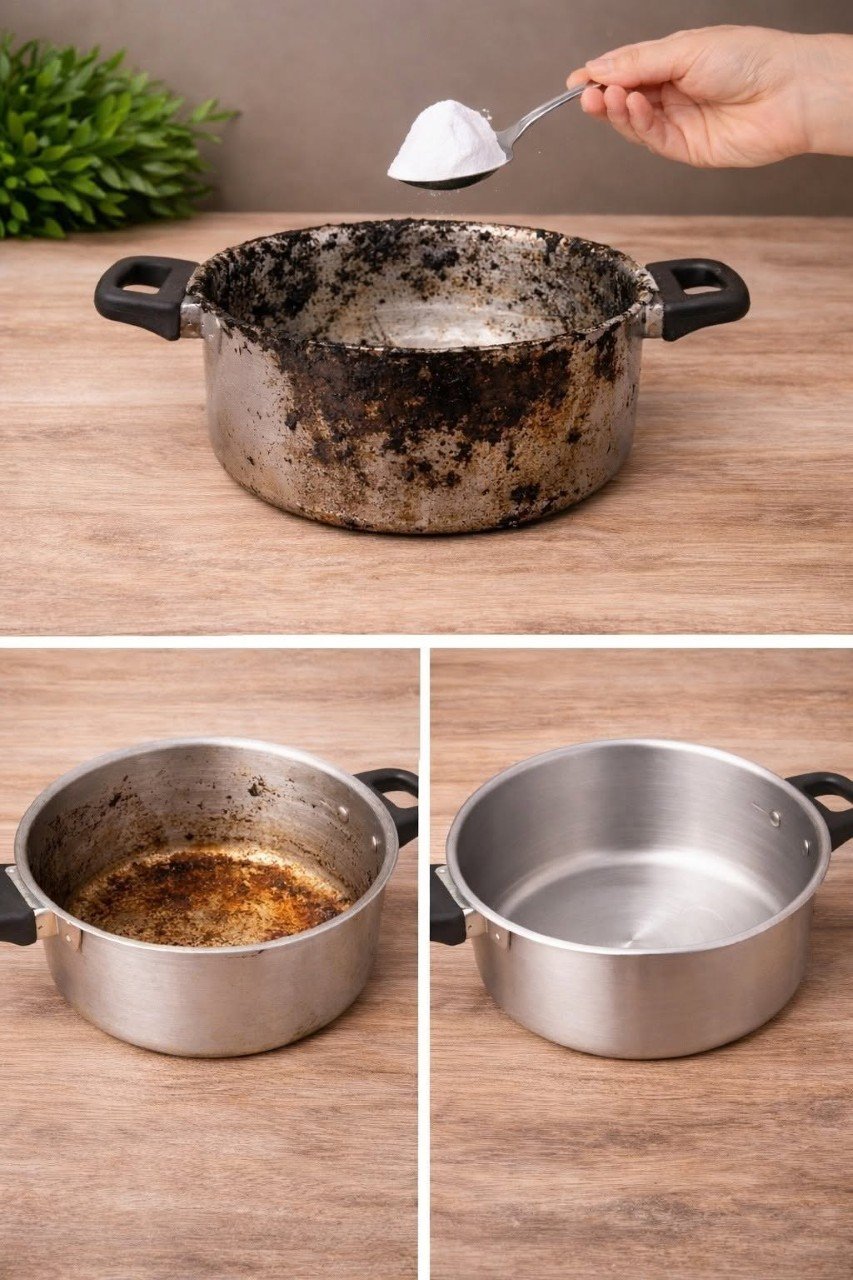
How to Clean Dirty, Burnt Pots and Pans Naturally (Using Baking Soda)
Step 3 — Rinse, Polish With Vinegar, and Buff Dry
What to do: Remove any remaining chalky film or water spots so the metal shines cleanly.
How to do it: Wash the pot thoroughly with warm, soapy water and rinse well. If stainless steel still looks slightly cloudy, wipe the interior with a splash of white vinegar on a soft cloth, rinse once more, and dry immediately with a clean microfiber towel.
Tips for Better Results
Tip 1: Keep it simple by treating mild scorch marks right away while the pan is still warm (never plunge a blazing-hot pan into cold water, which can warp the metal).
Tip 2: Choose a non-scratch nylon scrub pad, natural bristle brush, or soft sponge so baking soda does the polishing without scratching.
Tip 3: Avoid long baking soda soaks on bare aluminum cookware, as strong alkaline solutions can darken aluminum—use simmered lemon juice or cream of tartar instead.
Tip 4: Try sprinkling coarse salt onto stubborn grease alongside baking soda if you need a touch more scrubbing grit on stainless steel or cast iron.
Tip 5: For a better result on heavy exterior grime, place the coated pot inside a large sink or over newspaper and wrap the pasted areas with a damp paper towel so the paste stays moist while working.
Tip 6: Repeat once if needed—severely charred pans with years of buildup may need a second 15-minute paste treatment to lift the final shadows.
FAQ
What is the best way to clean a badly burnt stainless steel pot naturally?
Simmer water with 2 to 3 tablespoons of baking soda inside the pot for 10 to 15 minutes, then scrub remaining spots with a thick baking soda paste.
How often should I deep-clean the outside of pots and pans?
Give your cookware a quick baking soda paste polish every few weeks—or right after any major spillover—before grease bakes into thick carbon layers.
Can I do this at home?
Yes—all you need is ordinary baking soda, tap water, dish soap, and a non-scratch sponge.
What should I avoid?
Avoid plunging hot pans into cold water, soaking bare aluminum in baking soda for hours, or using steel wool on nonstick coatings and mirror-finish cookware.
Conclusion
You do not need toxic fumes or endless elbow grease to rescue heavily burnt cookware. By simmering baking soda in water to lift scorched food and using a thick paste to polish away exterior grime, even blackened pots can look nearly new again. Grab a spoonful of baking soda and test this natural method on your toughest pan tonight. Related: [How to Remove Rainbow Stains From Stainless Steel Pans Naturally]