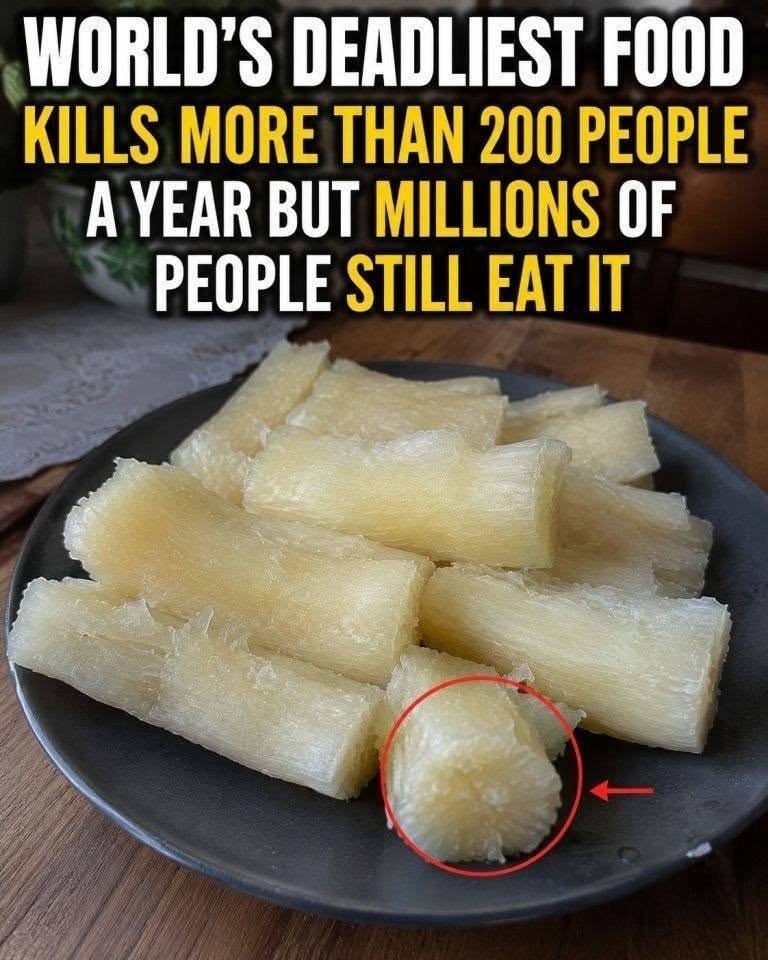
Why Cassava Is Called the “World’s Deadliest Food”—And How to Prepare It Safely
Why Cassava Is Called the “World’s Deadliest Food”—And How to Prepare It Safely
You might recognize this starchy white root as yuca or tapioca, yet headlines call cassava the “world’s deadliest food.” When eaten raw or improperly processed, cassava releases natural compounds that convert into cyanide. Still, half a billion people eat it safely every day. In this guide, you will learn how to identify, peel, and cook cassava properly so you can enjoy it with zero worry.
Step 1 — Choose Sweet Cassava and Peel It Completely
What to do: Buy fresh “sweet” cassava (commonly sold as yuca in grocery stores) and strip off both the rough brown bark and the thin pinkish-white layer just underneath.
How to do it: Cut off both ends, slice the root into 3-inch cylinders, stand each piece upright, and slide a sharp chef’s knife downward between the flesh and the thick peel. Rinse the peeled white flesh thoroughly under cold water.
Practical explanation: Most of the cyanogenic glycosides (compounds that form cyanide) are concentrated in the outer peel and skin, so removing every bit of the rind dramatically lowers any risk before cooking even begins.
Step 2 — Boil Uncovered in Plenty of Water and Discard the Liquid
What to do: Cook the peeled cassava thoroughly in a generous pot of boiling water until tender, rather than steaming lightly or eating it raw.
How to do it: Place the peeled chunks in a large pot, cover completely with fresh water and a pinch of salt, and boil uncovered for 20 to 30 minutes until a fork slides easily into the center and the flesh turns slightly translucent (as shown on the plate). Drain the pot completely and throw away the cooking water.
Common mistake to avoid: Never eat raw cassava, undercook it until the center is still chalky and hard, or reuse the boiling water in soups or stews—heat and open boiling break down and release volatile toxins into the air and discarded water.
“Read the Next Page for More Details”
Pages: 1 2