Have You Ever Tried This Cracked Heel Remedy? What Really Works for Dry, Rough Feet
Have You Ever Tried This Cracked Heel Remedy? What Really Works for Dry, Rough Feet
Cracked heels are a common problem that can make your feet look dry, rough, and uncomfortable.
Sometimes, the skin becomes so thick and hardened that small cracks appear around the edges of the heels. In more severe cases, those cracks can become painful or even bleed.
Social media is full of homemade remedies promising soft, smooth feet overnight.
But can a simple home treatment really repair cracked heels, or are some of these popular claims exaggerated?
The good news is that mild cracked heels often improve with consistent moisturizing and gentle skincare.
Here’s what you should know.
Why Do Heels Become Dry and Cracked?
The skin on your heels naturally experiences considerable pressure.
Walking, standing for long periods, and wearing certain shoes can contribute to thickened skin.
When this skin becomes excessively dry, it loses flexibility.
Pressure then causes the hardened skin to split, creating small cracks called heel fissures.
Several factors can contribute to the problem:
- Dry skin
- Prolonged standing
- Open-back shoes or sandals
- Excessive callus formation
- Cold or dry weather
- Certain skin conditions
- Diabetes or other medical conditions
Understanding the cause is important because different situations may require different treatments.
1. Petroleum Jelly: A Simple Home Treatment
One of the most practical approaches for dry heels is applying petroleum jelly before bedtime.
Petroleum jelly forms a protective barrier that reduces moisture loss from the skin.
How to Use It
- Wash your feet gently with lukewarm water.
- Pat them dry with a clean towel.
- Apply a generous layer of plain petroleum jelly to the dry heel skin.
- Put on clean cotton socks.
- Leave the moisturizer on overnight.
Repeat regularly.
This treatment may gradually improve dryness, but it won’t necessarily repair deep cracks immediately.
2. Urea Cream Can Help Soften Thick Skin
For thick, rough heels, a moisturizing cream containing urea may be especially useful.
Urea helps attract moisture and, at certain concentrations, can soften hardened skin.
Creams containing approximately 10–25% urea are commonly recommended for dry, callused heels.
However, higher-strength preparations may sting when applied to open cracks.
Follow product instructions and avoid applying strong exfoliating treatments to broken or infected skin without medical advice.
3. Gentle Exfoliation May Improve Rough Heels
When heel skin becomes thick, removing some of the excess dead skin can help improve its appearance.
A pumice stone or foot file may be useful for mild calluses.
A Safer Approach
After a brief warm shower or bath, gently rub thickened skin with a pumice stone.
Avoid aggressive scrubbing.
Apply moisturizer afterward.
Never use razors, scissors, or sharp blades to cut away calluses at home.
People with diabetes, poor circulation, reduced foot sensation, or open wounds should seek professional advice before filing their feet.
4. Why Harsh Homemade Remedies Can Make Things Worse
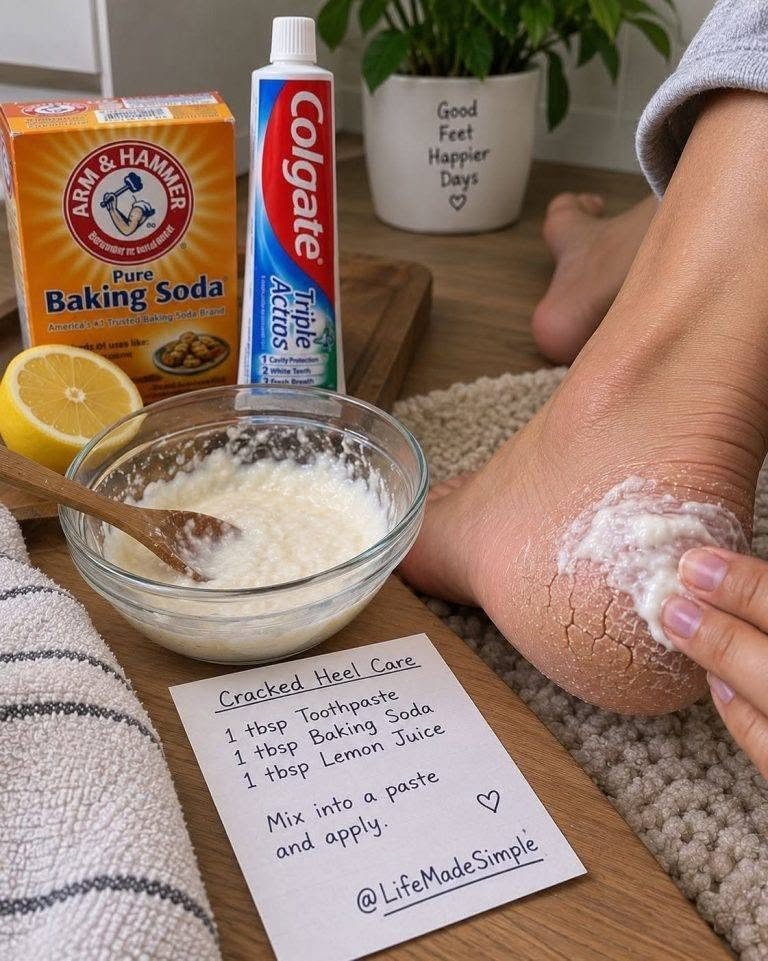
Some viral foot-care videos recommend mixtures containing lemon juice, baking soda, vinegar, or other household products.
Although these ingredients may seem inexpensive and natural, they aren’t necessarily suitable for irritated skin.
Acidic substances can cause stinging, while excessive scrubbing may damage the skin barrier.
A damaged barrier can increase discomfort and make healing more difficult.
Natural doesn’t always mean safe, especially when the skin is already cracked.