Italian Boiled Chestnuts Recipe: Soft, Fragrant, and Easy to Peel
Italian Boiled Chestnuts Recipe: Soft, Fragrant, and Easy to Peel
Boiled chestnuts are one of the simplest and most comforting treats of the autumn and winter seasons. With their naturally sweet flavor, tender texture, and delicate aroma, they have been enjoyed in Italian homes for generations.
Known in Italy as castagne bollite, these traditional chestnuts are prepared by gently cooking fresh chestnuts in water until they become soft and easy to eat.
Unlike roasted chestnuts, which develop a slightly smoky flavor, boiled chestnuts have a moist, creamy interior and a mild sweetness.
The recipe requires only a few ingredients, making it perfect for anyone who appreciates traditional homemade food.
With fresh chestnuts, water, a pinch of salt, and a few aromatic ingredients, you can prepare a delicious seasonal snack without complicated techniques.
Why You’ll Love This Italian Boiled Chestnuts Recipe
Boiled chestnuts are incredibly versatile.
You can enjoy them warm as a snack, serve them after a family meal, or use them in sweet and savory recipes.
They are naturally gluten-free and contain fiber, complex carbohydrates, and several essential nutrients.
Another advantage is that boiling doesn’t require added oil or butter.
The chestnuts cook gently in water, allowing their natural flavor to shine.
Recipe Overview
- Preparation time: 15 minutes
- Cooking time: 35–45 minutes
- Total time: Approximately 50–60 minutes
- Servings: 4
- Difficulty: Easy
- Cuisine: Traditional Italian
- Cooking method: Boiling
Ingredients for Italian Boiled Chestnuts
This recipe uses just a few simple ingredients.
Main Ingredients
- 1 pound (450–500 g) fresh edible chestnuts
- Enough water to cover the chestnuts completely
- 1 teaspoon salt
- 2 bay leaves
- 1 small cinnamon stick, optional
- 1 teaspoon fennel seeds, optional
Optional Aromatic Ingredients
For a slightly different flavor, you can add a strip of orange peel or a small sprig of rosemary.
These ingredients are optional, but they can give the cooking water a pleasant fragrance.
Use only chestnuts sold as edible food. Horse chestnuts, which come from a different tree, are toxic and must never be used.
How to Make Perfect Boiled Chestnuts
Step 1: Choose Fresh Chestnuts
Begin by selecting chestnuts with firm, shiny shells.
Avoid chestnuts that have visible holes, mold, cracks exposing damaged flesh, or an unpleasant smell.
Fresh chestnuts should feel relatively heavy for their size.
If they feel unusually light or hollow, they may have dried out.
Choosing good-quality chestnuts is important because it directly affects both the flavor and texture of the finished dish.
Step 2: Wash the Chestnuts
Place the chestnuts in a large bowl and rinse them thoroughly under cool running water.
Gently rub the shells to remove dirt or debris.
Discard any chestnuts showing signs of spoilage.
You can also soak the chestnuts in cool water for approximately 10–15 minutes before cooking.
This optional step helps loosen surface dirt, but it is not a reliable test of whether every chestnut is safe to eat.
Step 3: Score the Shells
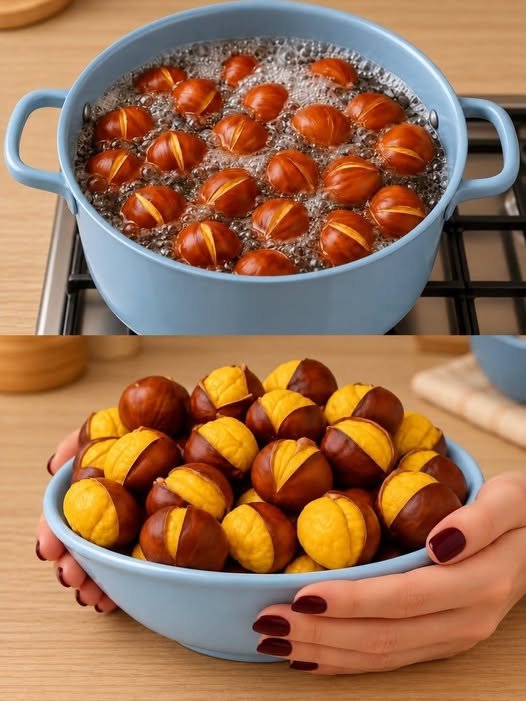
Using a small, sharp knife, carefully make a shallow cut across the rounded side of each chestnut.
The cut should penetrate the outer shell and preferably the thin inner skin without deeply slicing the flesh.
Place the chestnut securely on a stable cutting surface and keep your fingers away from the blade.
Scoring is particularly important for roasting, but it can also make boiled chestnuts easier to open.
Step 4: Prepare the Cooking Water
Place the chestnuts in a large saucepan.
Add enough cold water to cover them by approximately 1–2 inches.
Add the salt and bay leaves.
If desired, include the cinnamon stick or fennel seeds.
These ingredients provide a gentle aroma without overpowering the natural sweetness of the chestnuts.
Step 5: Boil Until Tender
Bring the water to a boil over medium-high heat.
Once boiling, reduce the heat and allow the chestnuts to simmer gently.
Cook for approximately 35–45 minutes.
Smaller chestnuts may become tender sooner, while larger ones may require additional time.
To check for doneness, carefully remove one chestnut, allow it to cool enough to handle, and test the flesh.
It should feel soft and tender rather than hard or chalky.