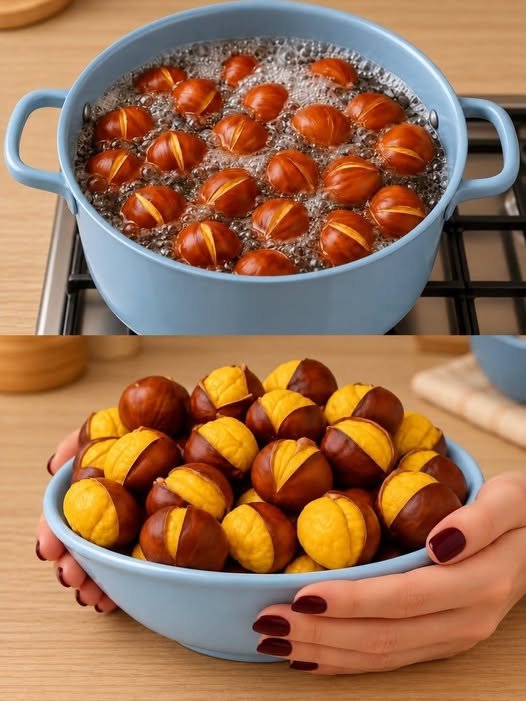
Italian Boiled Chestnuts Recipe: Soft, Fragrant, and Easy to Peel
Step 6: Drain and Peel the Chestnuts
Once the chestnuts are fully cooked, remove the saucepan from the heat.
Drain most of the water, keeping the chestnuts warm.
Peel them carefully while they are still warm enough for the inner skin to loosen, but cool enough to handle safely.
Remove both the hard outer shell and the thin brown skin beneath it.
If the chestnuts cool completely, peeling may become more difficult.
For this reason, it is useful to work in small batches.
The Secret to Soft and Easy-to-Peel Chestnuts
One of the most common difficulties with chestnuts is removing their shells.
Even after cooking, the thin inner skin can cling tightly to the flesh.
Fortunately, several simple techniques can help.
Choose Fresh Chestnuts
Fresh chestnuts generally provide better results than chestnuts that have been stored for too long.
Older chestnuts may become dry and harder to peel.
Don’t Rush the Cooking Time
Chestnuts need sufficient time to soften completely.
Undercooked chestnuts can remain firm and may be difficult to separate from their inner skins.
Peel Them While Warm
Warm chestnuts are often easier to peel because the shells and inner skins have not yet tightened around the flesh as they cool.
Keep the remaining chestnuts in warm water while working.
Avoid Overcooking
Although chestnuts need enough time to become tender, excessive boiling can cause them to break apart.
Begin checking their texture near the end of the recommended cooking time.
What Do Boiled Chestnuts Taste Like?
Boiled chestnuts have a gentle sweetness and a soft, slightly starchy texture.
Their flavor is sometimes compared with sweet potatoes, although chestnuts have their own distinctive nutty character.
Unlike almonds, walnuts, and many other nuts, chestnuts contain relatively little fat and a higher proportion of carbohydrates.
This gives them a different texture and nutritional profile.
When properly cooked, their flesh becomes pleasantly tender and creamy.
Are Boiled Chestnuts Nutritious?
Chestnuts provide carbohydrates, fiber, and several vitamins and minerals.
They contain nutrients such as potassium, copper, and manganese.
They can also contribute vitamin C, although cooking reduces some of their original vitamin content.
A Source of Dietary Fiber
Fiber supports normal digestive function and contributes to a balanced eating pattern.
Chestnuts contain fiber that can help make a snack more satisfying.
Naturally Lower in Fat Than Many Nuts
Compared with almonds or walnuts, chestnuts contain much less fat.
However, they are also richer in carbohydrates.
People monitoring carbohydrate intake, including those managing diabetes, should consider portion size.
Naturally Gluten-Free
Plain chestnuts do not contain gluten.
They can be included in a gluten-free diet when prepared without gluten-containing ingredients or cross-contact.
Delicious Ways to Serve Boiled Chestnuts
Boiled chestnuts are wonderful on their own, but there are several other ways to enjoy them.
Serve Them Warm
Place the peeled chestnuts in a small serving bowl and enjoy while warm.
Their natural sweetness makes additional sugar unnecessary.
Add Them to Soups
Chopped boiled chestnuts can be added to creamy vegetable soups for extra texture.
They pair particularly well with pumpkin, mushrooms, and winter vegetables.
Use Them in Stuffing
Chestnuts are a traditional ingredient in some holiday stuffing recipes.
Their mild sweetness complements herbs, onions, and savory ingredients.
Make Chestnut Purée
Blend cooked, peeled chestnuts with a little warm milk or water until smooth.
The resulting purée can be used in both sweet and savory preparations.
Common Mistakes to Avoid
Using Poor-Quality Chestnuts
Old, moldy, or damaged chestnuts can produce unpleasant flavors and textures.
Always inspect them before cooking.
Not Cooking Them Long Enough
If the centers remain hard, continue simmering and test again.
Cooking time depends on chestnut size and freshness.
Letting Them Cool Before Peeling
Cold chestnuts may be harder to peel.
Working while they are warm generally makes the process easier.
Adding Too Many Strong Spices
Chestnuts have a delicate natural flavor.
A small amount of bay leaf, cinnamon, or fennel is usually enough.
How to Store Leftover Boiled Chestnuts
Because cooked chestnuts contain moisture, they should be stored properly.
In the Refrigerator
Allow the chestnuts to cool promptly.
Place them in an airtight container and refrigerate within two hours of cooking.
For best quality, use within 3–4 days.
In the Freezer
Peel the cooked chestnuts and allow them to cool.
Transfer them to freezer-safe containers or bags.
Freeze for up to 2–3 months for best quality.
How to Reheat
Warm refrigerated chestnuts in a saucepan with a little water or use a microwave-safe container.
Heat until thoroughly warmed.
Avoid prolonged reheating, which may dry out the flesh.
Frequently Asked Questions
Do I Need to Peel Chestnuts Before Boiling?
No. Chestnuts are generally boiled with their shells intact.
Peeling is usually easier after cooking.
Can I Boil Chestnuts Without Salt?
Yes. Salt is optional and mainly enhances flavor.
Can I Eat Chestnut Skin?
The hard outer shell should always be removed.
The thin inner skin is usually peeled away because it can be bitter and unpleasant to chew.
Can I Make This Recipe Without Aromatic Herbs?
Absolutely. Water and chestnuts are sufficient.
Bay leaves and other aromatics simply add flavor.
Final Thoughts
Italian boiled chestnuts are a wonderful example of traditional cooking at its simplest.
With a few fresh ingredients and gentle simmering, you can prepare a delicious seasonal snack with a naturally sweet flavor and creamy texture.
They are easy to enjoy on their own and versatile enough to use in soups, stuffing, purées, and other homemade dishes.
If you’re looking for a comforting autumn or winter treat, soft Italian boiled chestnuts are an excellent recipe to try.
Serve them warm, enjoy their delicate aroma, and bring a little Italian tradition into your kitchen.