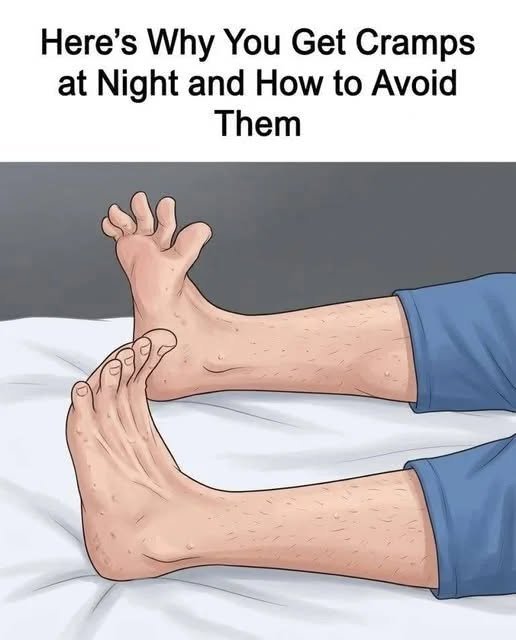
Why Your Legs Feel Restless at Night and What May Help You Sleep Better.
## Tips for Better Results
**Tip 1: Stretch regularly.** Gentle calf stretches before bedtime may help reduce the frequency of cramps for some people.
**Tip 2: Stay hydrated.** Drink fluids regularly, especially after exercise or sweating.
**Tip 3: Avoid sudden intense exercise.** Increase your physical activity gradually to give your muscles time to adapt.
**Tip 4: Wear comfortable footwear.** Choose shoes that provide suitable support during the day.
**Tip 5: Pay attention to your sleep position.** If you often experience calf cramps, try keeping your feet in a relaxed, neutral position rather than pointing your toes downward for long periods.
**Tip 6: Eat a balanced diet.** Include foods containing potassium, magnesium, and calcium, such as bananas, leafy greens, dairy products, beans, and nuts.
**Tip 7: Keep track of recurring cramps.** Write down when they happen, which muscles are affected, and whether anything seems to trigger them.
**Tip 8: Be careful with supplements.** Do not start magnesium, potassium, or other supplements without medical advice. They are not proven to help everyone and may be harmful in certain situations.
## FAQ
**What is the fastest way to stop a nighttime leg cramp?**
Gently straighten the affected leg and pull your toes toward your face if your calf is cramping. Gentle massage and standing carefully may also help.
**Why do leg cramps happen mostly at night?**
The exact reason is not always clear. Muscle fatigue, prolonged positions, and other factors may contribute to nighttime cramps.
**How often should I stretch my legs?**
Gentle stretching every day, particularly before bedtime, may help some people who experience frequent cramps.
**Can I stop leg cramps naturally at home?**
Often, yes. Gentle stretching, massage, warmth, and maintaining good hydration may help relieve occasional cramps.
**Should I take magnesium for nighttime leg cramps?**
Not automatically. Magnesium supplements do not reliably prevent cramps in everyone. Ask a healthcare professional before taking them.
**When should I see a doctor?**
Seek medical advice if cramps happen frequently, disturb your sleep regularly, or are accompanied by muscle weakness, numbness, or swelling. If one leg becomes suddenly swollen, red, warm, or painful, seek urgent medical assessment. Chest pain or sudden difficulty breathing requires emergency medical attention.
## Conclusion
Nighttime leg cramps can be uncomfortable, but understanding their possible causes can help you manage them more effectively. Gentle stretching, regular movement, adequate hydration, and healthy daily habits may reduce the frequency of some cramps. If the problem keeps returning or comes with unusual symptoms, speak with a healthcare professional to identify the cause. Better muscle care can help support more comfortable nights.