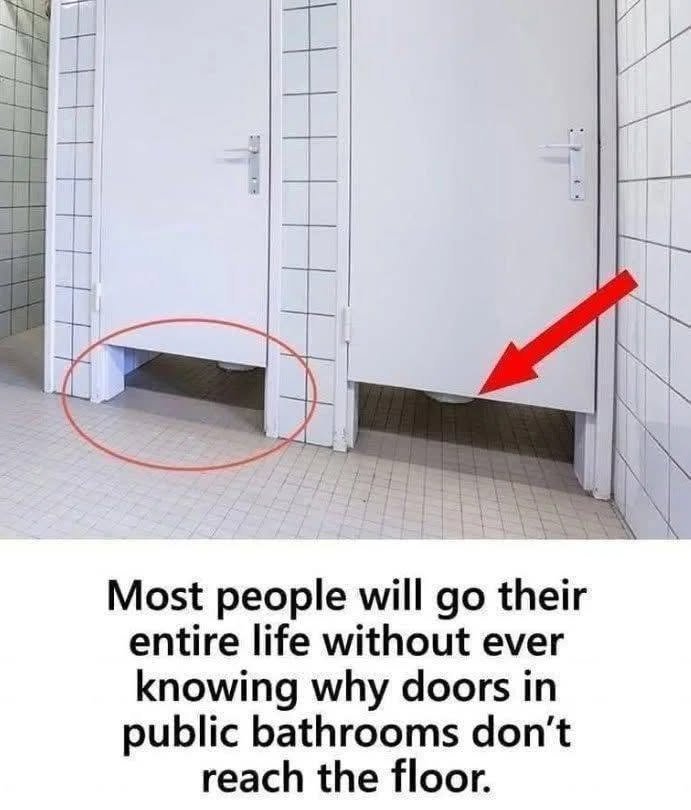
Why Public Bathroom Stall Doors Stop So Far Above the Floor
4. Step 3 — Supporting Airflow and Reducing Construction Costs
The gap can also serve two additional purposes.
Better airflow: An opening beneath the door can help air move through the stall, especially when combined with the restroom’s ventilation system. Research published in Building and Environment found that a gap beneath a cubicle door can help remove unpleasant air from the stall.
Lower construction costs: Shorter doors require less material than full-height doors. Standardized partitions can also be simpler to manufacture, install, and maintain.
However, the exact benefits depend on the building’s design. A gap alone cannot replace proper ventilation or guarantee a safer restroom.
5. Tips for Understanding Public Bathroom Design
- Tip 1: Remember that the gap is often intentional, not necessarily a construction mistake.
- Tip 2: Notice how public restrooms balance privacy, safety, and maintenance.
- Tip 3: Look for ventilation systems, which are essential for controlling odors.
- Tip 4: Avoid assuming that every restroom follows the same design standards.
- Tip 5: Choose a clean, well-maintained stall whenever possible.
- Tip 6: If someone appears to be in distress inside a locked stall, alert restroom staff or emergency services.
- Tip 7: Remember that full-height bathroom stalls are also possible, particularly in facilities that prioritize greater privacy.
6. FAQ
Why do public bathroom stall doors have gaps at the bottom?
Mainly to make cleaning and maintenance easier, support airflow, and improve visibility during emergencies.
Does the gap help with ventilation?
Yes. It can help air move beneath the door, although proper mechanical ventilation is still important.
Can the gap help during a medical emergency?
Yes. It may allow people outside to notice signs of distress and help assess the situation.
Are all public bathroom stalls designed this way?
No. Some modern restrooms use full-height or high-privacy partitions.
Does the gap mean the bathroom is poorly designed?
Not necessarily. It is a common design choice with practical advantages, although it can reduce privacy.
7. Conclusion
The gap beneath public bathroom stall doors may look like an unusual design choice, but it serves several useful purposes. It helps cleaning staff maintain busy restrooms, supports airflow, can improve emergency visibility, and may reduce construction costs. Although it can make people feel less comfortable, the design reflects a balance between practicality, safety, and privacy. Next time you notice one, you will know there is more to it than meets the eye.
Suggested internal link: Why Public Restrooms Have Such Unusual Design Features