What the Fuzzy White Coating on Baby Carrots Really Is (And When You Should Throw Them Away)
6. What About the Claim That White Carrots Are Covered in Chlorine?
Another common rumor suggests that the white coating on baby carrots is leftover chlorine from industrial washing.
This claim is misleading.
Fresh-cut vegetables may be washed using carefully controlled sanitizing processes to reduce microbial contamination.
In some facilities, this can involve chlorinated wash water used in accordance with applicable food-safety requirements.
But the familiar white blush isn’t evidence of chlorine residue.
Its development is associated primarily with dehydration and changes in exposed carrot tissue.
Health Canada has addressed misconceptions surrounding baby carrots, including claims connecting their whitish appearance with chlorine.
The scientific explanation is far less alarming than the rumors circulating online. <Cite refs={[“turn257247search23″,”turn257247search24”]}/>
7. Why Do Some Carrots Have Tiny White Hairs?
This is where the situation becomes a little more complicated.
Whole carrots sometimes develop small root hairs or fine root-like structures.
These are associated with the carrot’s natural growth and may be more noticeable under certain storage conditions.
Root hairs aren’t the same thing as fungal mold.
However, true baby-cut carrots that have been peeled and shaped are different from whole, immature carrots.
A fuzzy-looking coating on a bag of processed baby carrots should not automatically be identified as harmless root hairs.
The carrot’s appearance, processing history, storage conditions, and the nature of the growth all matter.
If you cannot confidently distinguish normal plant structures from mold, avoid eating the questionable produce.
It’s always better to use caution than to guess.
8. When Should You Throw Baby Carrots Away?
There are situations where discarding the carrots is clearly the better choice.
Be especially cautious if you notice:
- Visible fluffy or cotton-like mold growth.
- A slimy or sticky surface.
- Significant softening or mushy areas.
- An unpleasant sour or rotten smell.
- Leaking, swollen, or damaged packaging accompanied by signs of deterioration.
- A history of improper refrigeration.
The USDA provides guidance allowing small moldy areas to be removed from certain large, firm vegetables, including whole carrots, by cutting at least one inch around and below the affected spot.
However, that guidance doesn’t mean a bag of small, ready-to-eat baby carrots covered in suspicious fuzz should be salvaged.
For visibly moldy baby-cut carrots, discarding the affected package is the more cautious approach. <Cite refs={[“turn257247search25″,”turn257247search4″,”turn257247search9”]}/>
9. How to Store Baby Carrots So They Stay Fresh Longer
Proper storage can help preserve their texture, flavor, and appearance.
Baby carrots should be kept refrigerated according to the package instructions.
If the original bag is resealable, close it securely after removing the amount you need.
Otherwise, transfer the carrots to a clean, food-safe container with a suitable lid.
This helps reduce unnecessary moisture loss.
Avoid leaving carrots exposed to the air in the refrigerator for extended periods.
Also, keep them away from raw meat, poultry, and seafood to minimize cross-contamination.
If you use a container of water to help keep peeled carrots crisp, use clean drinking water, refrigerate the container, and replace the water regularly.
Follow the package’s use-by instructions where applicable.
Never assume that refrigerated carrots will remain safe indefinitely.
10. Should You Wash Packaged Baby Carrots Before Eating Them?
Many commercially packaged baby carrots are marketed as ready-to-eat products.
Check the packaging to determine whether the manufacturer recommends additional washing.
For produce that requires washing, use clean running water.
The FDA advises against washing fruits and vegetables with soap, detergent, or household cleaning products.
These products aren’t intended to be consumed and may leave unwanted residues.
For ordinary carrots, gentle rinsing is usually sufficient to remove surface dirt.
But remember that washing doesn’t guarantee the removal of every harmful microorganism.
It also doesn’t make visibly moldy or spoiled carrots suitable for consumption.
11. Are Baby Carrots as Nutritious as Regular Carrots?
Baby-cut carrots are made from the same vegetable as their larger counterparts.
They provide nutrients such as beta-carotene, which the body can convert into vitamin A.
They also contain dietary fiber and contribute to the variety of vegetables in a balanced diet.
Their convenient size makes them popular for lunchboxes, snacks, and quick meals.
They can be served with hummus, added to salads, or cooked in soups and stews.
Processing and storage can influence the quality of fresh-cut vegetables, but baby carrots remain a practical option for people who want to eat more vegetables.
The important thing is to choose carrots that have been stored and handled safely.
12. Why Are People So Alarmed by the White Coating?
Food appearance strongly influences how we judge freshness.
Bright orange carrots look appealing, while pale or fuzzy-looking carrots may immediately raise concerns.
This reaction is understandable.
We rely on our senses every day to decide which foods seem suitable to eat.
But our eyes don’t always tell us the full story.
Some harmless changes look unpleasant.
Meanwhile, certain foodborne pathogens may be present without causing visible spoilage.
That’s why understanding the difference between normal quality changes and potential contamination is so useful.
It helps us make decisions based on food-safety knowledge rather than appearances alone.
13. What Should Parents Know Before Serving Baby Carrots?
Parents may be especially concerned when unfamiliar changes appear on foods intended for children.
The safest approach begins with careful inspection and proper storage.
If the carrots have ordinary white blush, remain firm, and have been safely refrigerated, the white discoloration itself generally isn’t a reason for concern.
But if the coating looks truly fuzzy or mold-like, discard the questionable carrots.
There’s also another important safety issue to consider.
Whole baby carrots can be a choking hazard for young children.
For infants and younger toddlers, carrots should be prepared in an age-appropriate texture, often cooked until soft and cut or mashed as appropriate for the child’s developmental abilities.
Hard, round, or thick pieces of raw carrot should not be given to young children who cannot safely chew them.
Food safety includes both preventing contamination and reducing choking risks.
14. Does White Blush Mean the Carrots Are Expired?
Not necessarily.
White blush can appear because of surface dehydration, even when carrots are still within their recommended storage period.
However, that doesn’t mean the date printed on the package should be ignored.
A best-by date often relates to expected product quality, while other labels may carry different meanings depending on the product and local regulations.
Always follow the storage and handling instructions.
If the package has been opened, its contents may have a shorter usable storage period.
And when carrots show signs of spoilage, the printed date doesn’t make them safe.
15. The Most Important Lesson About White Coatings on Carrots
The biggest mistake is assuming that every white substance on carrots has the same explanation.
A dry, chalky film may be harmless carrot blush.
Fine structures on some whole carrots may be natural root hairs.
But raised, fuzzy growth may indicate mold, and the difference isn’t always obvious from a photograph.
That’s why the safest response depends on what you’re actually seeing.
When the discoloration is clearly ordinary white blush and the carrots are otherwise fresh and properly stored, there may be no reason to throw them away.
When there’s genuine uncertainty about possible mold, particularly on ready-to-eat baby carrots, discarding them is a sensible precaution.
Final Thoughts: Don’t Panic, but Don’t Ignore the Warning Signs
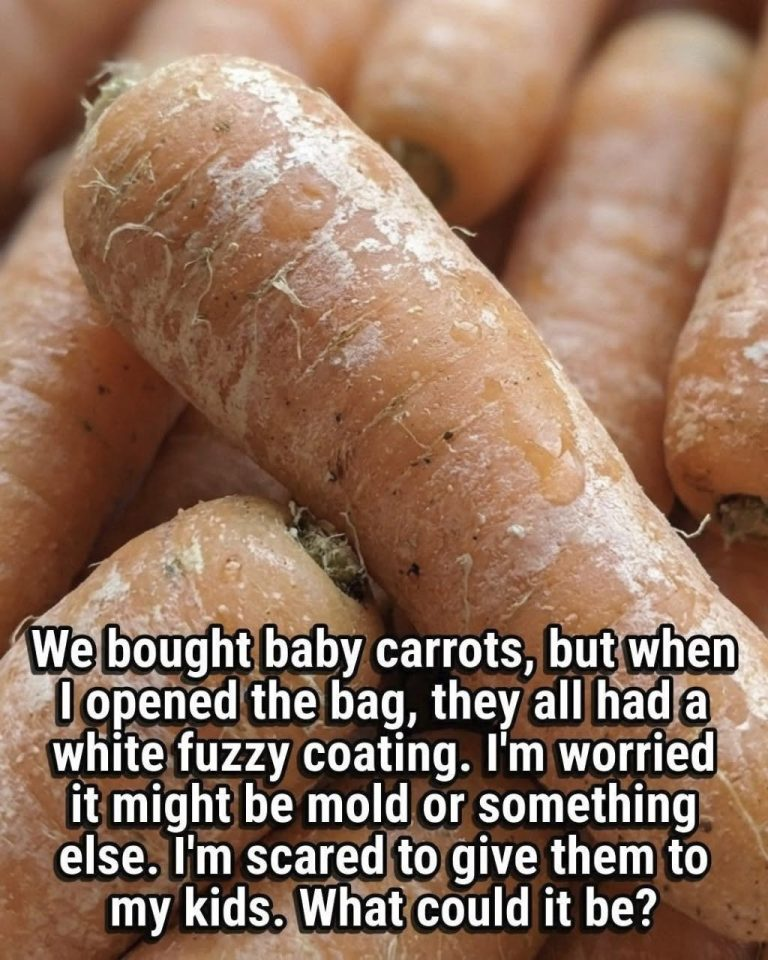
Finding white material on baby carrots doesn’t automatically mean they’re spoiled.
In many cases, the familiar chalky coating is simply carrot blush, a harmless change associated with dehydration.
It’s common, well documented, and not evidence of a dangerous chemical residue.
However, genuine fuzzy growth is different from ordinary white blush and should never be dismissed without good reason.
A few moments spent checking the carrots’ condition and storage history can help you make a safer decision.
The goal isn’t to throw away every carrot that looks slightly different.
It’s to understand when a harmless change is just a cosmetic issue and when caution is necessary.
Have You Ever Opened a Bag of Baby Carrots and Found This?
Did you throw them away immediately, rinse them, or wonder whether the white coating was mold?
Share your experience in the comments. It’s a common kitchen mystery, and knowing the difference between carrot blush and possible spoilage could help other families make safer decisions.