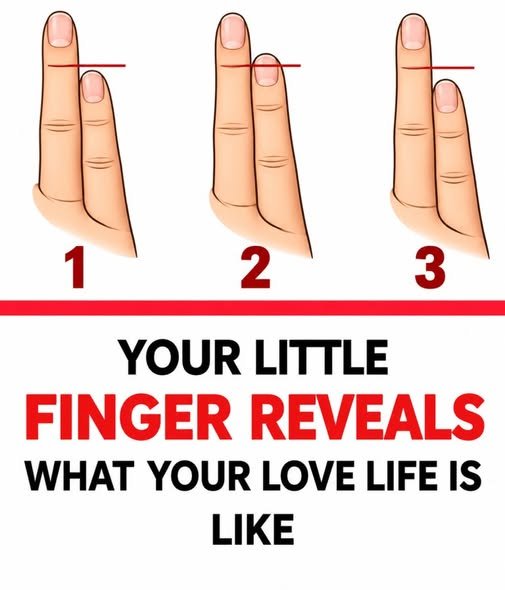
What Does Your Pinky Finger Look Like? Discover What It Might Say About Your Approach to Love
Type C: The Quiet, Loyal, and Deeply Caring Romantic
If your pinky ends below the upper crease of your ring finger, you belong to Type C.
This category is often associated with sensitivity, thoughtful behavior, and a preference for meaningful emotional connections.
You Take Your Time to Trust
According to the popular interpretation, Type C individuals may be cautious when beginning new relationships.
They might prefer observing someone’s behavior before becoming emotionally vulnerable.
Trust is especially important in this description.
Once a strong connection develops, loyalty and emotional closeness become central.
You Express Love Through Actions
Not everyone communicates affection through dramatic words.
The Type C personality description emphasizes practical expressions of care.
Preparing a favorite meal, offering encouragement, or remembering a small detail can communicate affection.
These thoughtful actions may mean more than elaborate romantic gestures.
Your Romantic Strength
The strength associated with Type C is attentiveness.
You may identify with being someone who notices changes in a loved one’s mood or remembers the little things that make them happy.
However, sensitivity and loyalty are human characteristics, not measurable consequences of pinky length.
Can Finger Length Really Reveal Your Love Personality?
Although the test is entertaining, there is no reliable scientific evidence that pinky finger length predicts romantic behavior, loyalty, emotional sensitivity, or compatibility.
Finger proportions are influenced by biological development and genetic factors.
They are not established measures of a person’s ability to maintain healthy relationships.
The descriptions in viral personality tests often contain broad, positive qualities that many people recognize in themselves.
This helps explain why the results can feel surprisingly accurate.
Why Do Personality Tests Feel So Personal?
Psychologists have studied a phenomenon commonly called the Barnum effect.
It describes the tendency for people to perceive general personality statements as uniquely applicable to themselves.
For example, a description might suggest that you appreciate love and loyalty but sometimes struggle to express your feelings.
Many individuals could recognize themselves in that statement.
The description feels personal, even though it applies broadly.
This does not mean personality games cannot be enjoyable.
It simply means their results should not be treated as scientific conclusions.
What Actually Influences Our Approach to Love?
Romantic behavior develops through a combination of personal experiences, communication habits, values, and social influences.
Childhood and Early Experiences
Early relationships can influence expectations about trust, affection, and emotional support.
However, these experiences do not permanently determine someone’s romantic future.
People can develop healthier relationship patterns throughout life.
Communication Skills
The ability to express feelings, listen carefully, and discuss disagreements is important in romantic relationships.
Partners who communicate respectfully may find it easier to address misunderstandings.
Personal Values
Some people prioritize stability and routine.
Others enjoy spontaneity and adventure.
Neither preference automatically makes someone a better romantic partner.
Compatibility often depends on how individuals understand and accommodate their differences.
Emotional Awareness
Recognizing personal feelings and responding thoughtfully to a partner’s emotions can support stronger connections.
These abilities can develop through experience, reflection, and practice.
Can Your Pinky Finger Predict Relationship Compatibility?
No scientific evidence supports using pinky measurements to determine whether two people are romantically compatible.
A healthy relationship depends on much more than physical characteristics.
Shared expectations, mutual respect, trust, communication, and willingness to resolve disagreements all matter.
Two people with different preferences can build a satisfying relationship.
Likewise, people who appear similar may still experience challenges.
Finger length cannot replace meaningful conversations about expectations and goals.
Why These Visual Tests Are So Popular
Part of the appeal is their simplicity.
Unlike detailed questionnaires, a finger-length test takes only a few seconds.
It also creates an opportunity for interaction.
Friends can compare their hands, share results, and discuss which descriptions they find relatable.
Couples may enjoy comparing their supposed romantic personalities.
The most valuable part of the activity may be the conversation it inspires rather than the result itself.
Questions That Reveal More Than Finger Length
If you’re curious about your approach to love, consider reflecting on a few meaningful questions.
What makes you feel appreciated in a relationship?
Do you prefer expressing affection through words, actions, or shared experiences?
How do you usually respond to disagreements?
What qualities help you feel secure with someone?
Are you comfortable communicating your needs?
These questions can encourage genuine self-awareness.
Unlike finger measurements, your answers relate directly to your values and behavior.
Final Thoughts: What Does Your Pinky Finger Say About You?
The pinky finger personality test is a lighthearted way to explore popular ideas about romance.
Type A is traditionally associated with balance and loyalty.
Type B represents enthusiasm and emotional expression.
Type C highlights sensitivity and thoughtful affection.
These descriptions can be fun to compare, but they are not scientifically validated personality categories.
The way you love is shaped by your choices, experiences, values, and relationships—not the length of your little finger.
Still, there’s nothing wrong with enjoying an entertaining visual challenge.
Take another look at your hand and choose the type that matches your pinky.
Are you Type A, Type B, or Type C? And does the playful description sound anything like your approach to love?