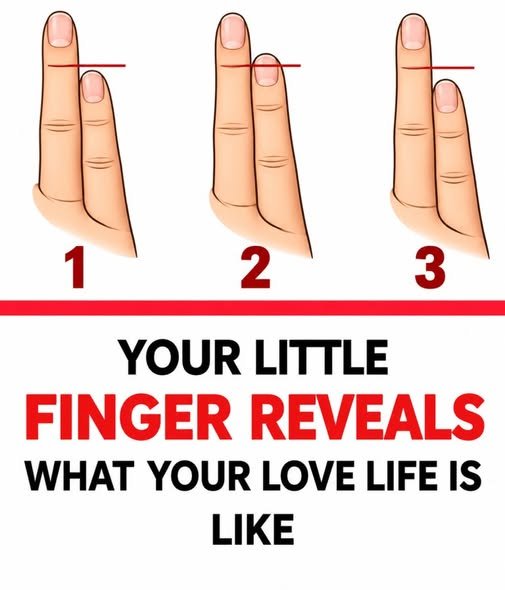
What Does Your Pinky Finger Look Like? Discover What It Might Say About Your Approach to Love
What Does Your Pinky Finger Look Like? Discover What It Might Say About Your Approach to Love
Have you ever looked at your hands and wondered whether the length of your fingers could reveal something about your personality?
A popular visual personality test circulating online suggests that your pinky finger, also known as your little finger, may offer clues about how you approach love, trust, and relationships.
The test is simple: compare the length of your pinky finger with the upper crease of your ring finger.
Depending on where your pinky reaches, you fall into one of three categories: A, B, or C.
Each category is associated with a different romantic personality in this playful interpretation.
But before discovering your result, remember that finger length cannot scientifically determine your personality or romantic future. This is an entertainment-based activity, not a psychological assessment.
Still, it can be an interesting way to reflect on your feelings and start conversations about relationships.
How to Take the Pinky Finger Personality Test
You don’t need special equipment to participate.
Simply look at one of your hands with your fingers extended naturally.
Focus on your pinky and the ring finger immediately beside it.
Pay attention to where the tip of your pinky reaches compared with the upper crease of your ring finger.
The Three Pinky Finger Types
- Type A: Your pinky reaches approximately the same level as the upper crease of your ring finger.
- Type B: Your pinky extends above that crease.
- Type C: Your pinky ends below that crease.
Choose the description that most closely matches your hand.
Now let’s explore the traditional personality interpretations associated with each type.
Type A: The Balanced and Thoughtful Romantic
If your pinky reaches approximately the upper crease of your ring finger, you fall into Type A.
In popular versions of this personality game, Type A is associated with emotional balance, loyalty, and a thoughtful approach to relationships.
You Value Stability in Love
According to the playful interpretation, Type A individuals prefer relationships built on mutual understanding.
Rather than rushing into romantic commitments, they may appreciate getting to know someone gradually.
They often value consistency over dramatic declarations of love.
Small gestures, honest conversations, and dependable behavior may feel more meaningful than extravagant surprises.
You Believe Communication Matters
Type A is also associated with the idea of discussing problems calmly.
In this interpretation, you may prefer resolving disagreements through conversation rather than allowing misunderstandings to grow.
You recognize that healthy relationships require effort from both partners.
Your Romantic Strength
The strength traditionally assigned to Type A is reliability.
You may see love as something demonstrated through everyday actions.
Remembering important details, keeping promises, and being present during difficult moments can feel especially meaningful.
Of course, these qualities are not determined by finger measurements.
They represent relationship values that anyone can develop.
Type B: The Passionate and Expressive Romantic
If your pinky extends above the upper crease of your ring finger, your result is Type B.
Popular versions of the test associate this category with confidence, emotional openness, and enthusiasm.
You Enjoy Expressing Affection
According to the entertainment-based description, Type B personalities are comfortable showing how much they care.
They may enjoy romantic gestures, meaningful conversations, and spontaneous experiences.
For them, love is something to celebrate openly rather than hide.
You Appreciate Excitement
Type B is often linked with a desire for variety and shared adventures.
Trying new activities, planning surprises, or exploring unfamiliar places with a partner may fit this romantic style.
However, excitement alone does not create a lasting relationship.
Trust, respect, and emotional security remain essential.
Your Romantic Strength
The traditional Type B interpretation emphasizes enthusiasm.
People who identify with this description may enjoy making their partners feel appreciated and emotionally connected.
They may also value direct communication.
But being expressive does not necessarily mean being more loving than someone who communicates affection quietly.
Everyone has different ways of showing care.