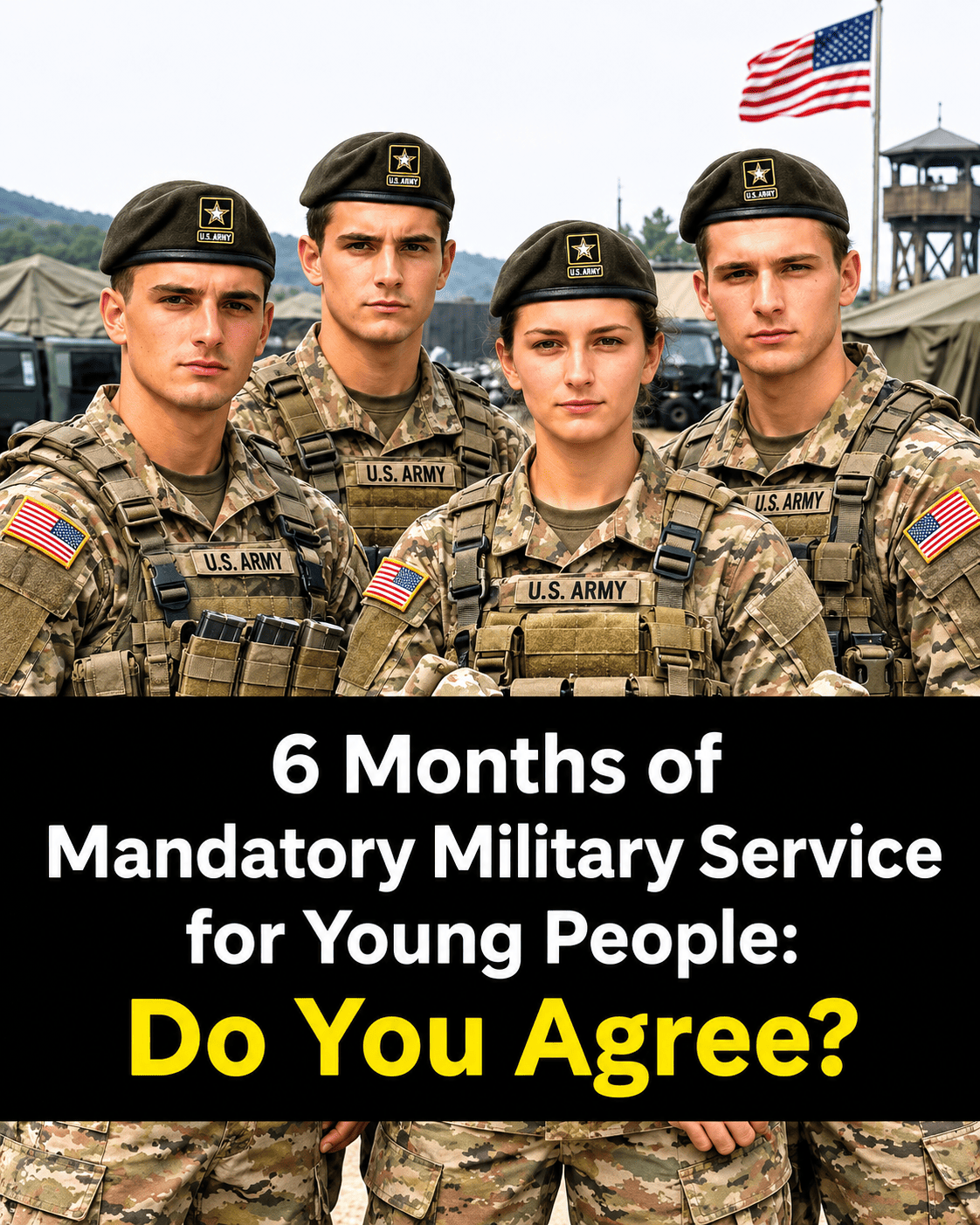
Six Months of Mandatory Military Service for Young People: Would You Support the Idea?
Arguments Against Mandatory Military Service
Critics raise concerns about individual rights, economic consequences, and the practical effectiveness of compulsory programs.
Personal Freedom
A major objection is that young adults should be free to decide whether they want to enter military service.
Critics argue that compulsory participation could conflict with personal beliefs, educational plans, or career ambitions.
Questions about conscientious objection and alternatives for those unwilling to undertake military duties would therefore be important.
Disruption to Education and Employment
Six months can represent a significant period for someone entering university, beginning vocational training, or accepting a first job.
Mandatory service could delay educational progress or professional development.
Any proposal would need to address how these interruptions would be managed.
Financial Costs
Creating a nationwide service program would require substantial public resources.
Expenditure could include training facilities, personnel, transportation, accommodation, equipment, healthcare, and administration.
Critics question whether those resources could achieve greater benefits through other public programs.
Unequal Effects on Young People
A uniform service requirement could affect individuals differently depending on their health, family responsibilities, financial circumstances, and educational opportunities.
Fair exemptions and accessible alternatives would be essential considerations.
Mandatory Service Versus Voluntary Service
One of the central questions is whether national service should be compulsory or voluntary.
A mandatory model requires eligible individuals to participate, subject to applicable exemptions.
A voluntary model allows people to decide whether to enroll.
Both approaches involve trade-offs.
Mandatory programs may produce a larger pool of participants but require extensive administration and enforcement.
Voluntary programs may attract more motivated applicants, although recruitment numbers depend on incentives and public interest.
Countries considering national service must also decide whether military and civilian programs should be connected or operated separately.
What Are Other European Countries Doing?
European countries have adopted different approaches to military recruitment.
Finland maintains a conscription system, while Sweden uses a selective model involving military obligations for eligible individuals.
Germany suspended compulsory service in 2011 and has since pursued reforms intended to strengthen military recruitment through voluntary participation.
Austria continues to require eligible men to complete military service or an alternative civilian program.
These examples demonstrate that there is no single European approach.
National security circumstances, legal traditions, population size, and political priorities influence how individual countries organize military service.
Could Six Months Change a Young Person’s Life?
For some individuals, structured national service might provide opportunities to develop confidence, practical abilities, and new friendships.
Others might find the experience disruptive or inconsistent with their personal goals.
The effects would likely vary considerably.
A supportive training environment could create valuable learning opportunities.
An inadequately designed program, however, could create unnecessary stress or delay important life plans.
For this reason, evaluating such a policy would require more than assuming that military service automatically improves character.
The quality of the experience and its measurable outcomes would matter.
Important Questions Before Introducing Such a Law
Any serious proposal for mandatory national service would need to address several practical questions.
Who would be required to participate?
Would the program apply equally to men and women?
Would students receive deferments?
How would medical exemptions work?
Would participants receive compensation?
Would civilian service be available as an alternative?
Who would pay for accommodation, transportation, and training?
And how would authorities evaluate whether the program achieved its objectives?
These questions are essential because the details of implementation can significantly affect the consequences of a policy.
Final Thoughts: A Debate About Security, Freedom, and Responsibility
The possibility of introducing six months of mandatory military service raises important questions about the relationship between individuals and the state.
Supporters emphasize discipline, civic participation, social connection, and national preparedness.
Critics focus on personal freedom, educational disruption, financial costs, and the importance of voluntary participation.
Italy suspended ordinary compulsory military service in 2005, and discussions about introducing new service programs have not established a universal six-month obligation.
The central question is not simply whether military training can be useful, but whether making it compulsory would achieve its intended goals and how the consequences would be distributed across society.
A meaningful public debate requires considering both the potential benefits and the practical challenges.
And perhaps the most interesting question remains the one that started the discussion:
If young adults were required to complete six months of military or civilian national service, would you support the proposal, oppose it, or prefer a voluntary alternative?