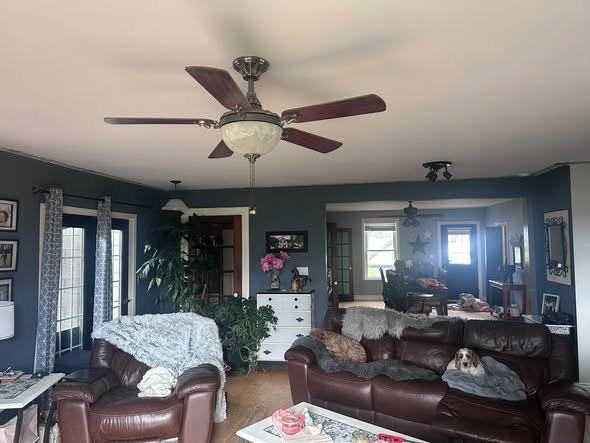
Should You Paint Your Ceiling Blue? How to Decide (and Get It Right)
Step 3 — Prep, Cut In Cleanly, and Paint With a Flat Finish
What to do: Once you pick your ideal blue—or decide to keep crisp white—use dead-flat ceiling paint and neat edge work for a professional look.
How to do it: Turn off the breaker and drop the ceiling fan canopy slightly out of the way, mask adjacent white trim or room headers with painter’s tape, cut in the edges with a 2-inch angled brush, and roll overlapping sections with a 3/8-inch nap roller while keeping a wet edge.
Short practical explanation: Flat ceiling paint absorbs glare from ceiling lights and spotlights, hiding surface flaws and giving blue ceilings a soft, velvety designer finish.
Tips for Better Results
Tip 1: Keep it simple—try a pale blue-gray if you want height and airiness. A subtle tint softens the stark white contrast while keeping an 8-foot ceiling feeling open.
Tip 2: Choose full color-drenching if you love a cozy lounge vibe. Painting the walls and ceiling the exact same deep blue blurs corners so the room feels enveloping—especially with warm floor and table lamps.
Tip 3: Avoid stopping ceiling paint mid-span in open layouts. Only change ceiling colors at a dropped header, beam, or distinct doorway transition.
Tip 4: Try adding simple crown molding instead. If you prefer keeping the ceiling white for brightness, crisp white crown molding bridges the contrast between dark blue walls and a white ceiling cleanly.
Tip 5: For a better result with dark blue overhead, warm up your lighting. Use warm 2700K LED bulbs in table lamps and fan fixtures to balance cool blue tones and complement brown leather.
Tip 6: Keep the ceiling trim and fan blades clean before painting. Dusting fan blades and vacuuming cobwebs along wall-ceiling corners ensures smooth, grit-free paint edges.
FAQ
What is the best way to decide between dark blue, light blue, or white for a ceiling?
Use dark blue (matching the walls) if you have good lighting and want a dramatic, cozy feel; choose a pale 50%-lighter blue to soften contrast while keeping height; or keep white if the room lacks natural daylight.
How often do painted blue ceilings need repainting compared to white ceilings?
Just like white ceilings, a quality flat-finish blue ceiling typically lasts 7 to 10 years or more without needing a fresh coat unless scuffs or water stains occur.
Can I paint a blue ceiling myself at home in one weekend?
Yes. A standard living room ceiling usually takes half a day to prep and cut in, plus two coats of flat paint with drying time in between—easily doable over a single weekend.
What should I avoid when painting a living room ceiling blue?
Avoid using satin or semi-gloss sheen overhead, skipping a primer if covering darker patches or stains, and forgetting to check how the color looks at night under artificial lighting.
Conclusion
Painting a ceiling blue can instantly elevate a living room—whether you choose a whisper-light sky tone to soften contrast or color-drench the room in deep slate blue for a cozy, designer look. Before grabbing a roller, tape large swatches near the ceiling, check your lighting morning and night, and plan clean room transitions. For more paint-color confidence, explore our guide on [How to Test Paint Swatches Without Ruining Your Walls].