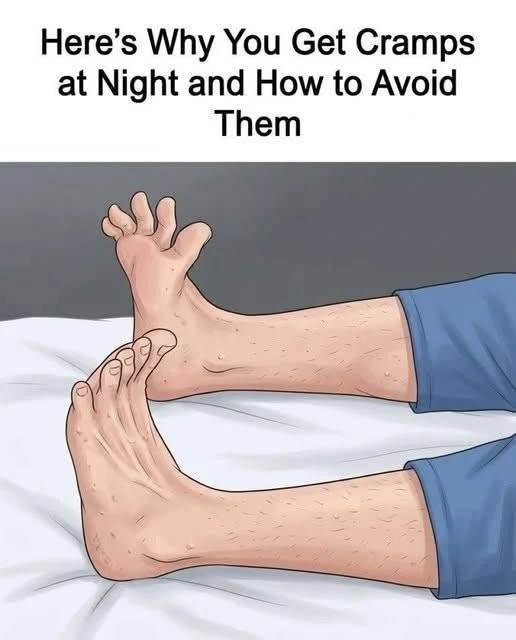
Nighttime Leg Cramps: 7 Common Causes and Natural Ways to Find Relief
5. Your Sleeping Position
The position of your feet during sleep may influence muscle tension.
For example, sleeping with your toes pointed downward keeps the calf muscles in a shortened position.
Tightly tucked blankets can sometimes encourage this posture.
What Can Help?
Keep bedding loose around your feet.
Try sleeping in a comfortable position that allows your ankles to relax.
Gentle calf stretches before bed may also help.
Avoid forcing your feet into uncomfortable positions.
6. Certain Medications
Some medications have been associated with muscle cramps.
These may include certain diuretics, cholesterol-lowering medications, and other prescription treatments.
If cramps started after a medication change, the timing may be worth discussing with your doctor.
What Can Help?
Keep a record of when your cramps occur and what medications you take.
Discuss recurring symptoms with your healthcare provider.
Never stop or change prescribed medication without medical guidance.
7. Aging, Pregnancy, and Underlying Health Conditions
Nighttime leg cramps become more common with age.
They can also occur during pregnancy, particularly in the later stages.
Occasionally, recurring cramps may be associated with conditions involving nerves, circulation, kidneys, or metabolism.
Examples include peripheral neuropathy, diabetes, and certain vascular disorders.
What Can Help?
Maintain regular physical activity appropriate for your health.
Attend routine medical appointments and seek assessment if symptoms become frequent or unusual.
Pregnant individuals should discuss persistent cramps with their maternity care professional.
How to Stop a Leg Cramp When It Happens
A sudden cramp can be painful, but several simple techniques may provide relief.
Step 1: Stretch the Muscle
If your calf cramps, straighten your leg and gently pull your toes toward your shin.
Hold the stretch until the muscle begins to relax.
Avoid painful or jerky movements.
Step 2: Stand or Walk Carefully
If you’re able, stand and place weight gently on the affected leg.
Walking slowly may help the muscle relax.
Step 3: Massage the Area
Gently massage the cramped muscle.
Step 4: Apply Warmth
A warm towel or heating pad may ease lingering muscle tightness.
Be careful to avoid burns, especially if you have reduced skin sensation.
Can Stretching Before Bed Prevent Leg Cramps?
Regular calf stretching is commonly recommended for people who experience nighttime leg cramps.
Although research results are mixed, some individuals find that stretching reduces discomfort or the frequency of episodes.
Try a gentle wall stretch:
- Stand facing a wall with your hands resting against it.
- Place one foot behind the other.
- Keep your back heel on the floor.
- Lean forward until you feel a gentle stretch in your calf.
- Hold for approximately 20–30 seconds, then switch legs.
Repeat a few times without bouncing.
When Should You See a Doctor?
Occasional leg cramps are usually not dangerous.
However, medical assessment is important if cramps repeatedly interrupt sleep, worsen, or occur with weakness or numbness.
Seek prompt medical care for unexplained swelling, redness, warmth, or persistent pain in one leg, as these can indicate a blood clot or another condition.
Sudden shortness of breath or chest pain alongside leg symptoms requires emergency medical attention.
Frequently Asked Questions
Why Do My Legs Cramp Only at Night?
Nighttime cramps may relate to muscle fatigue, reduced movement, sleeping posture, or other factors. Often, no specific cause is identified.
Does Drinking Water Prevent Leg Cramps?
Staying hydrated supports normal muscle function, but drinking more water won’t necessarily prevent cramps when dehydration isn’t the cause.
Do Bananas Help With Leg Cramps?
Bananas contain potassium, but there’s no strong evidence that eating a banana before bed prevents routine nighttime leg cramps.
Is Magnesium Good for Nighttime Cramps?
Magnesium may help when a deficiency exists, but supplementation isn’t consistently effective for ordinary nighttime cramps.
Are Nighttime Leg Cramps Dangerous?
Most are harmless, but frequent cramps or those accompanied by concerning symptoms warrant medical assessment.
Final Thoughts
Nighttime leg cramps can be uncomfortable and disruptive, but they don’t always indicate a serious health problem.
Muscle fatigue, prolonged sitting, dehydration, certain medications, sleeping posture, and underlying conditions can all play a role.
Gentle stretching, regular movement, adequate hydration, and balanced nutrition may help reduce recurring episodes.
If cramps persist or come with unusual symptoms, consult a healthcare professional to identify the cause and choose an appropriate treatment.
A few small changes to your daily habits may help you enjoy more comfortable, restful nights.