I Poured White Vinegar Into My Toilet Tank and Left It Overnight—Here’s What You Should Know Before Trying It
What Toilet Manufacturers Say About Tank Cleaning
Manufacturer guidance is especially important because not all toilets use identical components.
For example, TOTO advises against using descaling agents and harsh chemical cleaners inside toilet tanks because they can damage internal seals, valves, and other parts.
Other manufacturers provide model-specific cleaning instructions.
This means a method that appears harmless in one household may not be suitable for another toilet.
Before introducing vinegar or any cleaning product into the tank, check the manufacturer’s care recommendations.
If the manual prohibits acidic cleaners, follow that instruction.
A Safer Way to Clean Your Toilet Tank
You can often improve the appearance of a dirty toilet tank without leaving vinegar inside overnight.
The following approach focuses on gentle cleaning and careful inspection.
What You’ll Need
- Rubber cleaning gloves.
- A soft sponge or cloth.
- A soft-bristled brush.
- Mild dish soap, if permitted by the manufacturer.
- Clean water.
- An old towel.
Avoid abrasive metal brushes that could damage delicate components or surfaces.
Step 1: Inspect the Tank
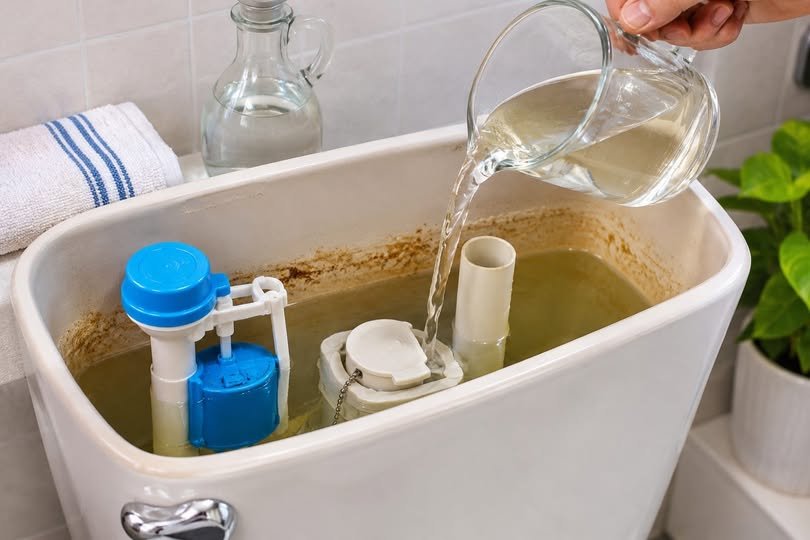
Carefully lift the toilet tank lid.
Place it on a stable surface where it cannot fall or crack.
Examine the inside of the tank.
Look for sediment, mineral deposits, discoloration, and visible damage.
Check whether any cleaning tablets are present.
Step 2: Turn Off the Water Supply
Locate the toilet’s water shutoff valve.
Turn it gently according to its design.
If the valve is stuck or leaking, do not force it.
A plumber may be needed.
Step 3: Empty the Tank
Flush the toilet to remove most of the water.
Some water may remain at the bottom.
Use a sponge or towel to absorb the remaining water if necessary.
Avoid pulling, bending, or disconnecting internal parts unnecessarily.
Step 4: Clean Gently
Using a soft cloth or brush and a manufacturer-approved cleaner, gently remove loose sediment and surface deposits.
Pay particular attention to the ceramic walls and bottom of the tank.
Avoid aggressive scrubbing around rubber seals and moving mechanisms.
Step 5: Rinse and Restore
Remove loosened debris and cleaning residue.
Turn the water supply back on.
Allow the tank to refill and flush several times as appropriate.
Check for leaks, unusual noises, and proper flushing.
If the toilet continues running or fails to refill correctly, inspect the mechanism or contact a qualified plumber.
Can Vinegar Be Used on Toilet Bowl Stains Instead?
In many cases, vinegar is more appropriate for cleaning mineral deposits on compatible toilet bowl surfaces than for soaking the internal tank mechanism.
However, even here, the manufacturer’s instructions matter.
Some ceramic fixtures can tolerate mild acidic cleaning products, while special coatings may require particular care.
Use cleaning products intended for your toilet’s surface and follow the recommended contact time.
Never assume that a cleaner suitable for porcelain is also suitable for rubber seals or metal fittings.
Never Mix Vinegar With Bleach
This is one of the most important household cleaning rules.
Never mix white vinegar with chlorine bleach or bleach-containing toilet cleaners.
Vinegar is acidic, and combining it with chlorine bleach can release dangerous chlorine gas.
Exposure can irritate the eyes and respiratory system and may cause serious breathing difficulties.
Before using a new cleaning product, check whether another product has already been added to the tank or bowl.
Do not pour vinegar into a tank containing a bleach-based cleaning tablet.
If you’re uncertain about existing chemical residues, avoid adding another cleaner.
Common Toilet Tank Cleaning Mistakes
Using Too Much Cleaner
Adding large quantities of a product does not necessarily improve cleaning.
It may increase exposure of internal components to chemicals.
Leaving Products Overnight Without Checking Instructions
Extended soaking times can be inappropriate for certain materials.
Always follow product and manufacturer guidance.
Using Abrasive Brushes
Hard scrubbing may damage delicate surfaces and fittings.
Choose softer cleaning tools.
Ignoring Running Water
If your toilet runs continuously, the problem may involve a worn flapper or malfunctioning fill valve.
Cleaning alone may not solve it.
Replacing a worn component could be necessary.
How Often Should You Clean a Toilet Tank?
There is no universal cleaning schedule for every household.
The need depends on water hardness, sediment levels, toilet design, and the condition of the internal components.
For many households, inspecting the tank occasionally is more useful than following an aggressive cleaning routine.
If the tank contains little visible buildup and the toilet works normally, extensive cleaning may not be necessary.
In areas with hard water, more frequent inspection may help identify mineral accumulation before it becomes severe.
Always prioritize proper maintenance over repeated chemical treatments.
Frequently Asked Questions
Does White Vinegar Remove Limescale?
Yes. White vinegar can help dissolve calcium carbonate deposits.
However, effectiveness depends on the type and thickness of the buildup.
Is It Safe to Leave Vinegar in a Toilet Tank Overnight?
Not universally. Prolonged exposure may be unsuitable for certain rubber, plastic, or metal components. Follow your toilet manufacturer’s instructions.
Will Vinegar Make My Toilet Flush Better?
Not necessarily. Mineral deposits can sometimes interfere with components, but flushing problems may also result from worn or damaged mechanisms.
Can Vinegar Replace Disinfectant?
No. Household vinegar is not a reliable substitute for a disinfectant when sanitation requires a product with proven antimicrobial effectiveness.
What Should I Do if My Toilet Tank Has Heavy Buildup?
Check the manufacturer’s maintenance instructions or consult a plumber, particularly if the deposits affect the flushing mechanism.
Final Thoughts: Is the Overnight Vinegar Trick Worth Trying?
White vinegar is a useful household ingredient, and its acidity can help loosen some mineral deposits.
That’s why it appears in so many traditional cleaning methods.
However, the toilet tank contains mechanical components that require more careful treatment than an ordinary ceramic surface.
Leaving vinegar inside overnight may expose seals, valves, and other fittings to conditions they weren’t designed to tolerate.
The best approach is to inspect the tank, follow manufacturer-approved cleaning methods, and avoid prolonged chemical soaking unless the toilet’s instructions specifically permit it.
Sometimes, the most effective household cleaning trick isn’t adding another ingredient.
It’s understanding what needs cleaning, choosing the appropriate method, and protecting the equipment you already have.
A properly maintained toilet tank can help keep your bathroom functioning reliably without unnecessary risks or expensive repairs.