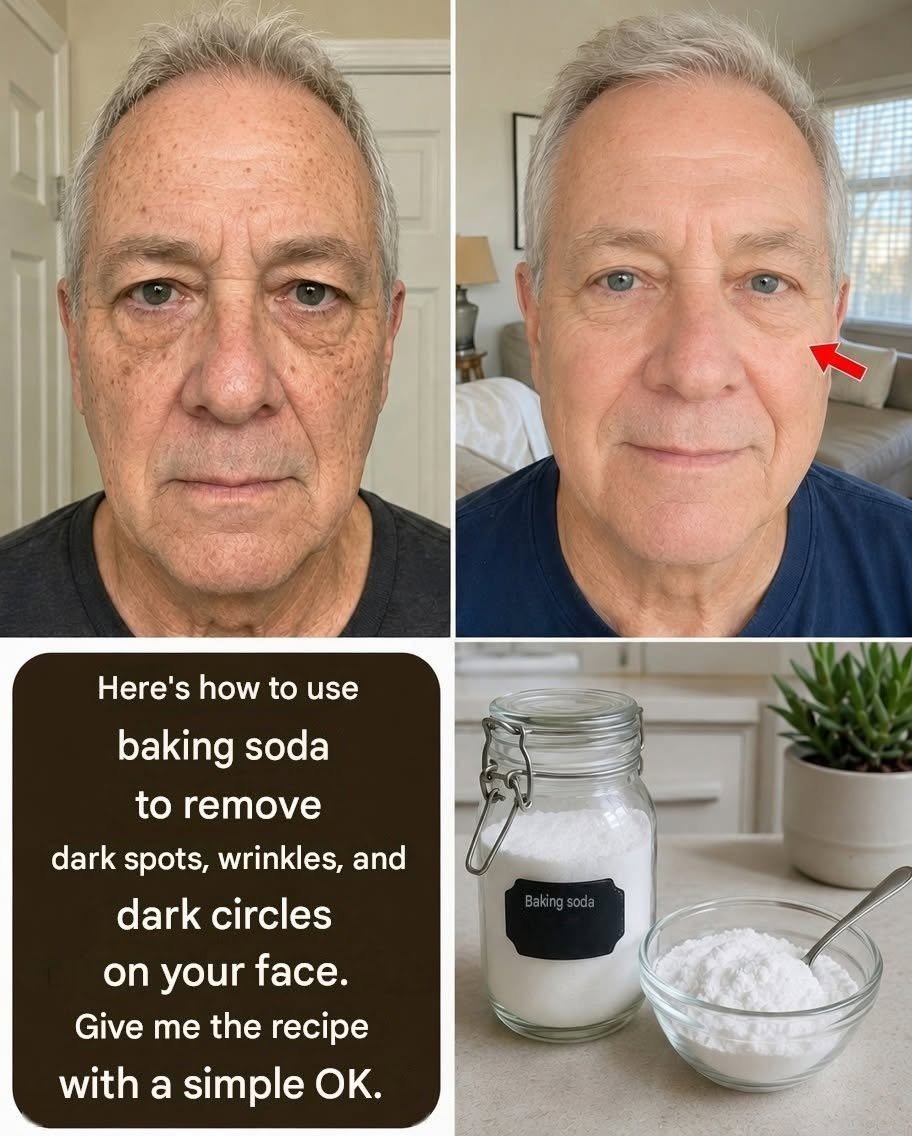
How to Use Baking Soda for Dark Spots, Wrinkles, and Dark Circles: What Really Works?
Tips for Better Results
- Tip 1: Wear sunscreen every day, even when it’s cloudy, and reapply if you’re outdoors.
- Tip 2: Introduce one new active ingredient at a time, and patch-test on your inner forearm first.
- Tip 3: Avoid scrubbing. Use fingertips and lukewarm water.
- Tip 4: Wear a wide-brimmed hat and sunglasses to protect your face and eye area.
- Tip 5: Moisturize while skin is slightly damp to lock in hydration.
- Tip 6: Sleep 7 to 8 hours and stay hydrated, which helps the under-eye area look fresher.
- Tip 7: Don’t use lemon juice, vinegar, or toothpaste on your face. These are also irritating and unproven.
- Tip 8: Be skeptical of dramatic before-and-after photos online, which can be edited, filtered, or AI-generated.
FAQ
Does baking soda remove dark spots or wrinkles?
No reliable evidence supports this. It can irritate skin and may make dark spots worse.
What is the best way to fade dark spots?
Daily sunscreen plus a proven ingredient such as vitamin C, niacinamide, azelaic acid, or a retinoid. Dermatologists can offer stronger treatments.
How often should I use active ingredients?
Start slowly, two or three times a week, and increase as your skin tolerates them.
Can I do this at home?
Yes, a gentle routine with sunscreen, moisturizer, and over-the-counter actives works well at home. Stronger treatments need a professional.
What should I avoid?
Avoid baking soda, harsh scrubs, lemon juice, and anything that burns or stings.
When should I see a dermatologist?
See one if a spot is new, growing, itchy, bleeding, has uneven color or irregular borders, or looks different from your other spots. These can be signs of skin cancer and shouldn’t be treated at home.
Conclusion
Baking soda isn’t a safe or effective fix for dark spots, wrinkles, or dark circles. Daily sunscreen, gentle care, and proven ingredients such as retinoids and vitamin C are far more reliable. Start with a simple routine and give it a couple of months. If a spot looks suspicious, see a dermatologist. Suggested internal link: “A Simple Anti-Aging Skincare Routine After 50.”