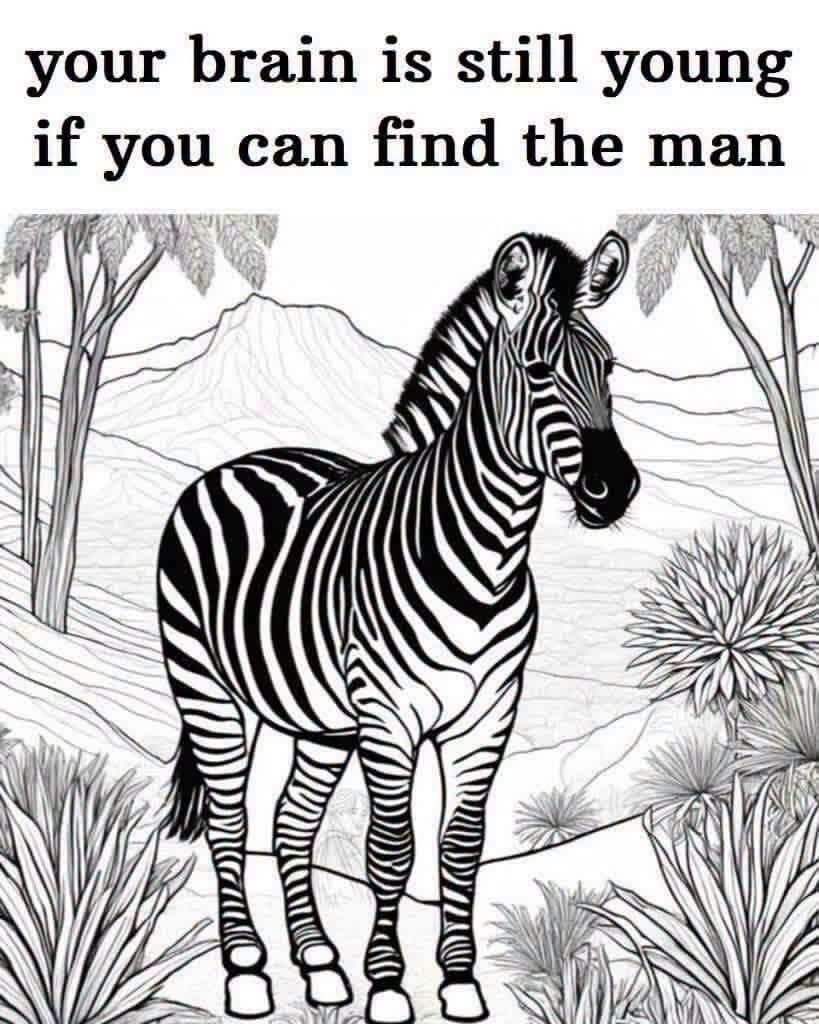
Find the Hidden Man in the Zebra Picture: Tips to Spot Him
Step 3: Zoom, Squint, or Flip the Image
What to do: Change how your eyes process the picture.
How to do it: Zoom in on one quadrant at a time. Squint to blur the fine detail, or turn the image upside down. Faint outlines often become easier to see when your brain stops reading the zebra and landscape the usual way.
Tips for Better Results
- Tip 1: Scan in a grid, top to bottom, instead of jumping around randomly.
- Tip 2: Look for faces, hats, or shoulders hidden in tree trunks, rocks, or plants.
- Tip 3: Increase your screen brightness or contrast to reveal faint lines.
- Tip 4: Zoom in on the lightest parts of the drawing.
- Tip 5: Try viewing the image from a distance or on a smaller screen.
- Tip 6: Take a short break and come back with fresh eyes.
- Tip 7: Ask a friend, since a second viewer often spots it instantly.
- Tip 8: Don’t jump to the comments for the answer, because the reveal is more satisfying after a real attempt.
FAQ
What is the best way to find the hidden man?
Ignore the zebra, scan the pale background areas, and zoom in on faint outlines.
How long should it take?
Anywhere from seconds to several minutes. Both are normal.
Can I do this at home?
Yes. It needs no equipment and works well as a screen-free-style activity if you print the image.
Does finding him mean my brain is young?
No. That’s a clickbait line. Spotting a hidden figure depends on attention, visual habits, screen quality, and luck, not brain age or any medical measure.
What should I avoid?
Avoid treating the puzzle as a cognitive test, and be wary of posts that push you to comment or click for the “answer.”
Conclusion
Hidden-figure puzzles are a fun way to practice patient, careful looking. Skip the zebra, check the faint areas, and use zoom and contrast to your advantage. It’s a lighthearted challenge, not a brain-age test. Enjoy the hunt and try a few more. For more, read our related guide on “Classic Optical Illusions and Brain Teasers to Try”