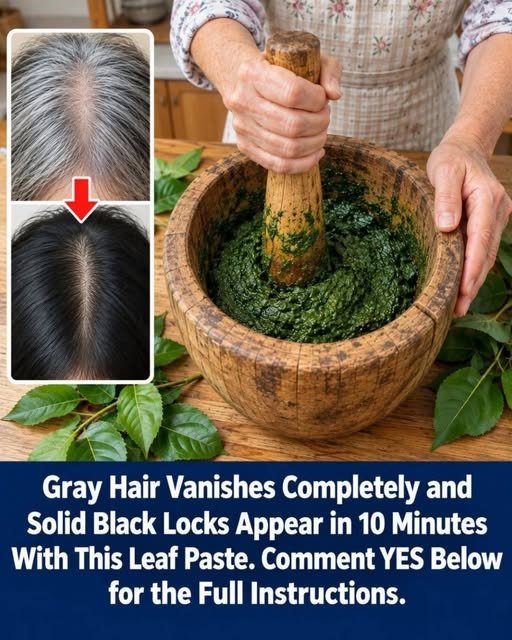
Can a Natural Leaf Paste Help Darken Gray Hair? Exploring Traditional Hair Care Remedies
Traditional Botanical Ingredients Used in Hair Care
Several plants appear in traditional hair care practices.
Their effects differ, and not all have been adequately evaluated in clinical studies.
1. Henna for Visible Hair Color
Henna is one of the most established plant-based coloring ingredients.
It can create long-lasting color on the hair shaft.
However, results vary considerably according to starting hair color, preparation, and product quality.
Pure henna does not normally produce a true jet-black result by itself.
2. Indigo for Darker Shades
Indigo is another important botanical ingredient in traditional hair coloring.
Used in suitable formulations, it may contribute darker-looking results.
Because indigo preparations vary, following instructions from a reputable manufacturer is preferable to improvising unfamiliar combinations.
3. Curry Leaves in Traditional Hair Care
Curry leaves have a long history of culinary and traditional cosmetic use.
They contain various naturally occurring plant compounds.
However, there is insufficient clinical evidence that applying curry leaf paste can reliably restore pigment to gray hair.
Claims that curry leaves permanently eliminate gray strands should therefore be treated cautiously.
4. Amla in Traditional Beauty Practices
Amla, also called Indian gooseberry, appears in many traditional hair care preparations.
It is used in oils, powders, and herbal mixtures.
Although researchers have explored its chemical composition, robust human evidence showing that topical amla reverses age-related gray hair is lacking.
Amla products may still be used for cosmetic purposes, but expectations should remain realistic.
A Simple Alternative: How to Use a Commercial Plant-Based Hair Dye Safely
If your objective is to darken gray hair, a properly labeled botanical hair-color product offers a more predictable approach than an unidentified homemade leaf paste.
What You’ll Need
- A reputable plant-based hair dye suitable for your desired shade
- A nonreactive mixing bowl, if required by the product
- Protective gloves
- An old towel
- A brush or applicator
- Water, according to the manufacturer’s instructions
Step 1: Read the Ingredient Label
Check the complete ingredient list.
Products marketed as natural may contain additional dyes, fragrances, or other substances.
Avoid assuming that every product labeled herbal is automatically safe.
Step 2: Perform an Allergy Test
Follow the product’s recommended allergy-alert or patch-testing instructions.
Even botanical ingredients can cause allergic reactions.
A previous history of using a product without problems does not eliminate the possibility of a later reaction.
Step 3: Test a Small Hair Section
Before coloring your entire head, try the preparation on a small section of hair.
This helps you evaluate the resulting shade and how your hair responds.
Step 4: Follow the Instructions Exactly
Mix and apply the product according to its labeling.
Do not increase the concentration or extend the application time in an attempt to produce a stronger result.
Step 5: Rinse and Condition
After the recommended processing time, rinse as directed.
Use a suitable conditioner if recommended.
The final shade may vary depending on the product, the initial hair color, and the hair’s porosity.
Why You Should Be Careful With Black Henna
One important safety concern involves products advertised as black henna.
Some contain para-phenylenediamine, commonly called PPD, which may trigger serious allergic skin reactions in susceptible individuals.
Pure henna typically produces reddish tones rather than an immediate intense black.
Products promising unusually fast black coloration should be examined carefully.
Avoid using unlabeled powders or mixtures from uncertain sources.
If you have previously reacted to hair dyes or temporary black henna tattoos, consult a healthcare professional before coloring your hair.
Other Ways to Make Gray Hair Look Healthier
Coloring is not the only option.
Gray hair can look beautiful with appropriate grooming and conditioning.
Use a Gentle Shampoo
Choose a shampoo suited to your hair and scalp.
Harsh cleansing or frequent washing with unsuitable products may increase dryness.
Condition Regularly
As hair ages, it may become drier or more fragile.
Conditioning can improve manageability and reduce friction between strands.
Limit Excessive Heat
Frequent use of very hot styling tools can contribute to hair damage.
Using moderate temperatures and suitable protective products may help maintain a smoother appearance.
Protect Hair From Environmental Damage
Sun exposure, pollution, and harsh styling practices can affect the condition of the hair shaft.
Simple protective habits can help preserve the appearance of both natural and colored hair.
Can Diet Help Prevent Gray Hair?
Nutrition supports normal hair growth and general health.
Protein, iron, vitamin B12, zinc, and other nutrients are important for various physiological functions.
However, eating a particular food or taking a supplement does not guarantee that gray hair will regain its original color.
If a medically significant deficiency contributes to hair changes, professional treatment may address the underlying problem.
People should avoid taking high-dose supplements without an established need.
Excessive intake of certain nutrients can have harmful effects.
Frequently Asked Questions
Can a Leaf Paste Turn White Hair Black Permanently?
Certain botanical dyes can darken the visible hair shaft, but they do not permanently restore natural pigment production inside the follicle.
New hair growth may still be gray.
How Long Does Natural Hair Color Last?
The duration varies depending on the plant dye, product formulation, hair condition, and washing habits.
Some botanical colors remain noticeable for several weeks or longer.
Are Homemade Leaf Pastes Safe for Everyone?
No. Plants can cause contact dermatitis, irritation, and allergic reactions.
Unknown or contaminated plant materials create additional risks.
Can Gray Hair Become Dark Again Naturally?
Occasional changes in pigmentation can occur in specific circumstances, but age-related graying is generally persistent.
Reliable methods for reversing ordinary age-related gray hair have not been established.
Final Thoughts
Natural leaf pastes are an interesting part of traditional hair care, and some plants have genuine hair-coloring properties.
Henna and indigo, for example, have long histories of use as botanical dyes.
Other ingredients, including curry leaves and amla, are popular in traditional beauty preparations, but evidence for their ability to reverse gray hair remains limited.
The most important distinction is that coloring gray hair does not mean restoring the natural production of melanin.
If you want darker hair, choose a suitable coloring method with clear ingredients and appropriate safety precautions.
If you prefer to embrace your gray strands, gentle cleansing, conditioning, and thoughtful styling can help them look healthy and beautiful.
Ultimately, there is no single correct way to approach gray hair.
Whether you choose natural silver tones or a darker shade, the best hair care routine is one that respects your preferences, protects your scalp, and maintains healthy-looking hair.