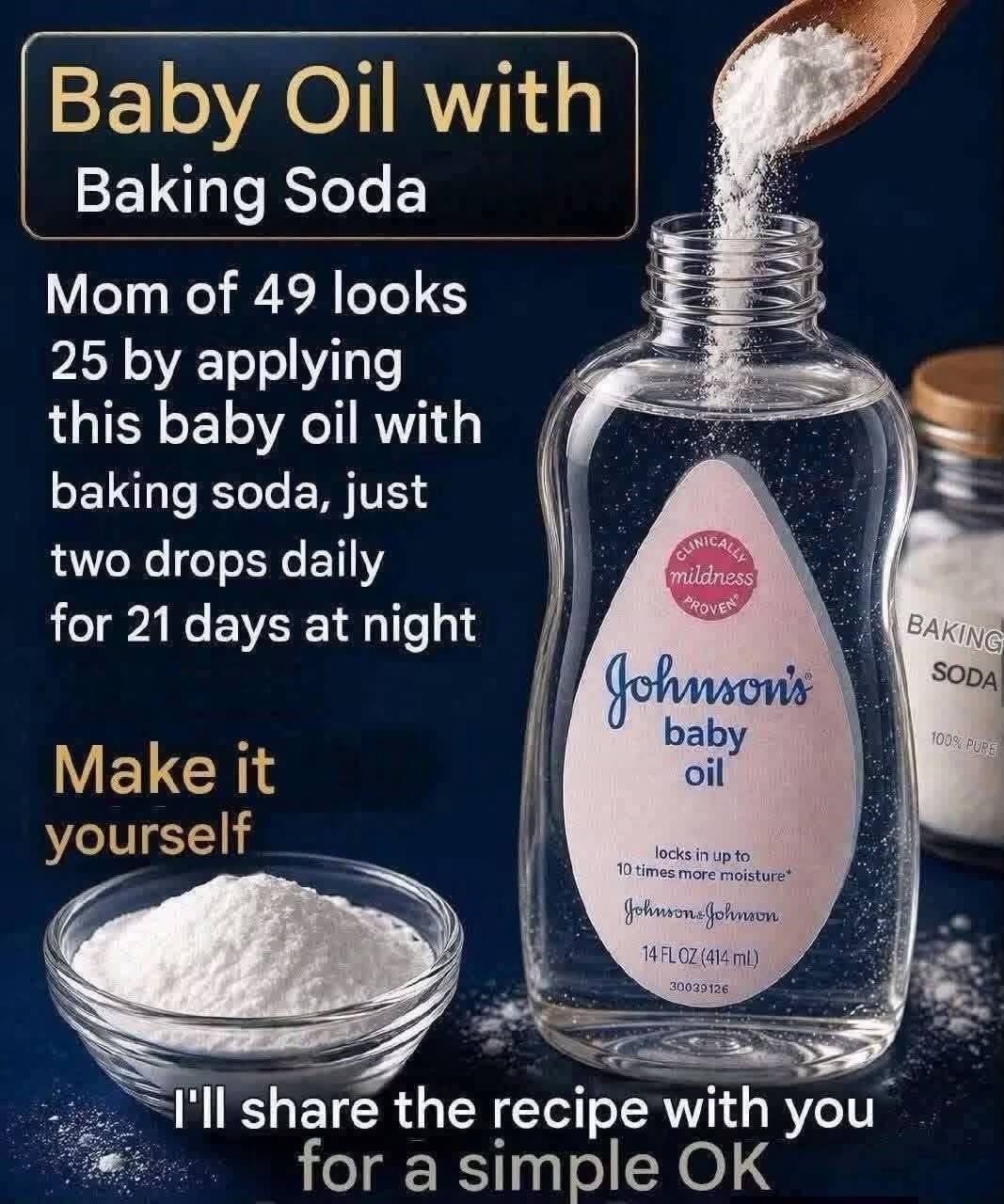
Baby Oil and Baking Soda Body Scrub: Does This Popular DIY Skincare Trick Really Work?
Is It Safe to Mix Baby Oil and Baking Soda?
Although the ingredients are familiar, mixing them does not guarantee a safe skincare product.
The main concern is baking soda.
Its alkaline nature may disrupt the skin’s protective acidic environment.
In addition, rubbing baking soda particles across the body may cause irritation, particularly if too much pressure is applied.
Possible reactions include redness, stinging, dryness, and increased sensitivity.
People with eczema, dermatitis, rosacea, or damaged skin should be especially cautious.
Dermatologists generally favor gentle, properly formulated exfoliating products over abrasive homemade baking soda scrubs.
For routine skincare, using baby oil or petroleum jelly separately as moisturizers is a more established approach.
Can This Mixture Remove Wrinkles?
Some online beauty claims suggest that combining household skincare ingredients can dramatically reduce wrinkles or make mature skin look decades younger.
There is no convincing scientific evidence supporting those promises.
Baby oil and petroleum jelly can temporarily improve the appearance of dryness by reducing moisture loss.
Well-hydrated skin may look smoother, making some fine lines less noticeable.
However, this does not mean the products reverse skin aging.
Baking soda has not been demonstrated to stimulate meaningful collagen production or eliminate wrinkles.
Skin aging involves multiple biological and environmental processes.
A homemade scrub cannot reproduce the effects of professionally administered cosmetic treatments.
A Safer Alternative for Soft, Smooth Skin
If your goal is softer skin, you can create a simple skincare routine without baking soda.
What You’ll Need
- A gentle, fragrance-free body cleanser
- A soft washcloth, if tolerated
- A fragrance-free body moisturizer
- A small amount of plain mineral oil or petroleum jelly, optional
Step 1: Cleanse Gently
Wash your skin with lukewarm water and a mild cleanser.
Avoid very hot water, which may contribute to dryness.
Step 2: Use a Soft Washcloth if Needed
For areas with mild surface roughness, a soft washcloth may provide gentle physical exfoliation.
Use minimal pressure.
Do not scrub irritated, broken, or inflamed skin.
Step 3: Moisturize While Skin Is Damp
After bathing, gently pat your skin dry.
Apply a fragrance-free moisturizer while the skin is still slightly damp.
This helps maintain hydration.
Step 4: Protect Very Dry Areas
For elbows, heels, or other dry patches, a thin layer of plain petroleum jelly may help retain moisture.
Avoid applying slippery oils to the soles of your feet immediately before walking.
What About Using Baby Oil Alone?
Baby oil can be useful as part of a moisturizing routine.
Mineral oil helps form a barrier that reduces water loss from the skin.
For best results, apply a small amount to slightly damp skin.
However, oils do not replace every function of a moisturizer.
Many moisturizing creams contain humectants, such as glycerin, that attract water, alongside other ingredients that help maintain the skin barrier.
A combination of suitable products may work better for persistently dry skin.
Choose fragrance-free formulations if you’re prone to irritation.
Common DIY Skincare Mistakes to Avoid
Scrubbing Too Aggressively
More pressure does not necessarily produce better results.
Excessive friction can cause redness and irritation.
Using Household Cleaning Ingredients
Products suitable for kitchen cleaning are not automatically appropriate for skin.
Baking soda is one example where household usefulness should not be confused with proven dermatological safety.
Applying Essential Oils Without Proper Dilution
Concentrated essential oils can cause allergic reactions or irritation.
Natural ingredients are not automatically harmless.
Ignoring Skin Reactions
Burning, persistent itching, swelling, or worsening redness are signs that a product may not be suitable.
Stop using the product and seek medical advice if symptoms are significant or persistent.
How Often Should You Exfoliate?
There is no universal exfoliation schedule that works for everyone.
Some people tolerate occasional gentle exfoliation, while others experience irritation even with infrequent use.
Skin type, age, existing conditions, and the products involved all influence tolerance.
If your skin is dry or easily irritated, reducing exfoliation may be more beneficial than increasing it.
People using prescription retinoids or other active skincare treatments should seek guidance before adding exfoliating products.
The goal is to maintain a healthy skin barrier, not to remove as much surface material as possible.
Frequently Asked Questions
Does Baby Oil Make Skin Softer?
Baby oil can help reduce moisture loss, which may make skin feel softer and smoother.
Can Baking Soda Remove Dark Spots?
There is insufficient evidence that baking soda safely treats hyperpigmentation.
Its irritating effects may even worsen discoloration in some individuals.
Does Petroleum Jelly Clog Pores?
Petroleum jelly is generally considered noncomedogenic, but individual tolerance varies. It may not be suitable for every acne-prone area.
Can This DIY Scrub Replace Professional Skincare?
No. A homemade mixture has not undergone the same formulation and safety testing as professionally developed skincare products.
Final Thoughts
The baby oil and baking soda body scrub has gained attention because it combines familiar, inexpensive ingredients.
Baby oil and petroleum jelly can help protect skin moisture, while baking soda provides a gritty texture intended for exfoliation.
However, the mixture has important limitations.
Baking soda’s alkalinity and abrasive properties may irritate the skin, and there is no reliable evidence that the combination removes wrinkles or produces dramatic anti-aging results.
For most people seeking softer skin, gentle cleansing, regular moisturizing, and suitable skincare products are more dependable choices.
Healthy-looking skin does not require complicated homemade treatments.
Sometimes, the simplest and most effective approach is to protect your skin barrier, avoid unnecessary irritation, and maintain a consistent routine.