What Doctors Say Eating Beets Actually Causes—And How to Eat Them Safely
What Doctors Say Eating Beets Actually Causes—And How to Eat Them Safely
You have probably seen headlines claiming doctors warn about what eating beets causes. The truth is both surprising and encouraging: beets trigger a natural surge in nitric oxide that supports healthy blood pressure and stamina—while occasionally turning your urine harmlessly pink. In this guide, you will learn what beets really do inside your body and how to prepare and enjoy them safely.
Step 1 — Recognize the Real Effects Inside Your Body
What to do: Learn the three main things eating beets causes so you know what to expect—improved blood flow, digestive fiber support, and potential beeturia (pink or red urine/stool).
How to do it: Start with a moderate ½-cup serving of cooked beets and pay attention to your energy and digestion over the next 24 hours.
Practical explanation: Beets are packed with natural dietary nitrates that your body converts into nitric oxide, relaxing blood vessels and supporting circulation. Meanwhile, their deep ruby betalain pigments are not always fully broken down in digestion, which explains the harmless temporary color change.
Step 2 — Cook Beets to Preserve Nutrients (Not Boil Them Away)
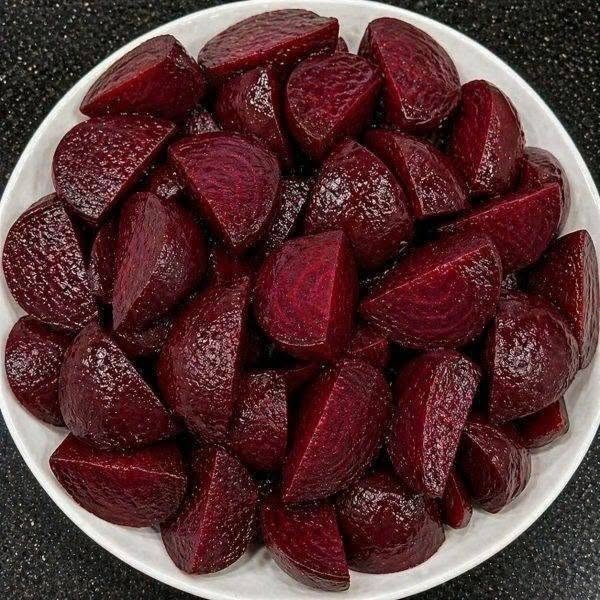
What to do: Roast or lightly steam quartered beets—just like the glossy wedges in the bowl—instead of boiling them in excess water.
How to do it: Scrub the beets clean, quarter them, toss lightly with olive oil and a pinch of salt, and roast wrapped in foil or on a lined tray at 400°F (200°C) for 35–45 minutes until fork-tender. Slip the skins off once cool enough to handle.
Common mistake to avoid: Do not aggressively boil peeled, chopped beets and dump the water down the drain—water-soluble betalains, vitamin C, and nitrates leach straight into the cooking pot. Also avoid eating huge servings right away if you have a sensitive stomach or a history of kidney stones.
Step 3 — Pair Them Smartly for Better Absorption and Balance
What to do: Combine roasted beets with healthy fats, citrus, or calcium-rich foods to round out the meal and reduce oxalate absorption.
How to do it: Drizzle warm beets with olive oil and lemon juice, or serve them alongside yogurt, feta, goat cheese, or toasted walnuts. If you take prescription blood pressure medication or have calcium oxalate kidney stones, check with your doctor before making daily beet juice a habit.
“Read the Next Page for More Details”
Pages: 1 2