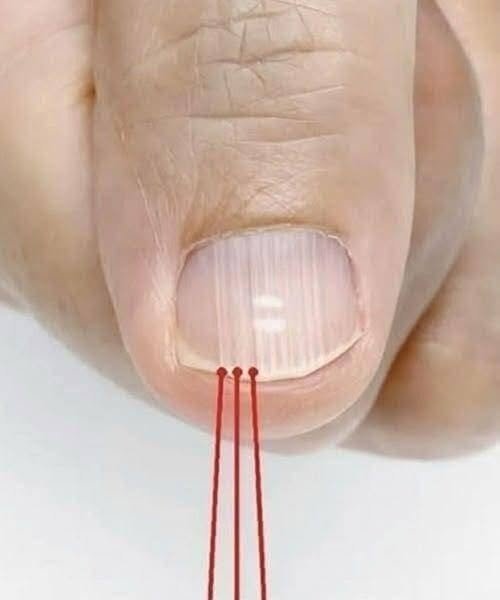
Doctor Uncovers a Telltale Sign in Your Fingernails That May Reveal Important Health Clues
Doctor Uncovers a Telltale Sign in Your Fingernails That May Reveal Important Health Clues
Your fingernails can reveal more about your health than you might imagine. Changes in their color, shape, thickness, or texture can sometimes provide clues about what is happening inside your body. Although no nail feature can accurately predict how long you will live, certain changes may be associated with underlying health conditions. Here’s what to look for and when you should consider speaking with a doctor.
Step 1 — Look for Changes in Your Nail Shape
One important change to pay attention to is called nail clubbing. It occurs when the fingertips become enlarged and the nails curve more than usual around the fingertips.
This change can sometimes be associated with certain lung conditions, heart problems, or other medical disorders.
What to do:
Look at your fingernails from the side.
Notice whether the tips of your fingers appear unusually enlarged.
Check whether your nails curve downward more than usual.
Compare changes over time rather than relying on one observation.
Nail clubbing is not a diagnosis by itself, but new or unexplained changes deserve medical attention.
Step 2 — Pay Attention to Nail Color
The color of your fingernails can sometimes provide useful health information.
Different changes may have different explanations:
Pale nails: Can sometimes be associated with anemia or other medical conditions.
Bluish nails: May indicate reduced oxygen levels or circulation problems.
Yellow nails: Can be caused by fungal infections or other conditions.
White lines or spots: May result from minor injuries or other causes.
Dark streaks: Sometimes result from injury, but a new or changing dark line should be examined by a doctor.
Common mistake to avoid: Assuming that every unusual nail color indicates a serious illness. Lighting, nail polish, injuries, and harmless changes can also affect appearance.
Step 3 — Understand What Your Nails Can and Cannot Tell You
Your fingernails grow slowly, which means changes can sometimes reflect events that happened weeks or months earlier.
However, they cannot reliably measure your life expectancy or determine exactly how healthy you are.
A doctor may examine your nails alongside other symptoms, medical history, and appropriate tests to understand whether a change is significant.
If you notice a new dark streak, unexplained nail separation, persistent discoloration, or unusual changes in several nails, arrange a medical examination.