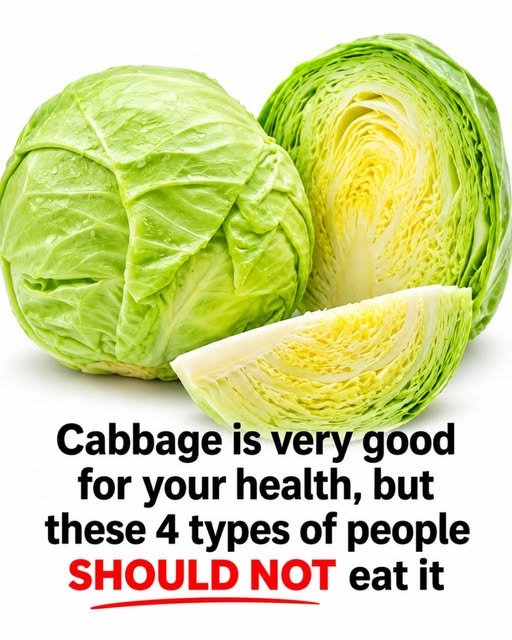
4 Types of People Who Should Be Careful About Eating Cabbage
4 Types of People Who Should Be Careful About Eating Cabbage
Cabbage is one of the most affordable and versatile vegetables available. Whether served raw in a crunchy salad, cooked in soup, or added to a homemade stir-fry, it offers a variety of nutrients that support a balanced diet.
This leafy vegetable belongs to the cruciferous family, alongside broccoli, cauliflower, kale, and Brussels sprouts.
Cabbage contains fiber, vitamin C, vitamin K, and naturally occurring plant compounds that have attracted scientific interest.
For most people, it is a healthy food that can be enjoyed regularly.
However, certain medical conditions, medications, and individual sensitivities can make cabbage less suitable in particular circumstances.
Four groups of people may need to limit, modify, or carefully monitor their cabbage consumption. But that doesn’t mean everyone in these groups must avoid it completely.
Understanding the difference can help you enjoy this nutritious vegetable without unnecessary restrictions.
Why Is Cabbage Considered a Healthy Vegetable?
Cabbage provides essential nutrients while being relatively low in calories.
One cup of chopped raw green cabbage contains approximately 22 calories, although nutritional values vary by variety and portion size.
It also provides dietary fiber, vitamin C, vitamin K, and folate.
Vitamin C
Vitamin C supports normal immune function and helps the body produce collagen, an important component of skin, blood vessels, and connective tissues.
It also acts as an antioxidant.
Vitamin K
Vitamin K is essential for normal blood clotting and contributes to bone-related processes.
However, its interaction with certain anticoagulant medications makes consistent intake particularly important for some individuals.
Dietary Fiber
Fiber contributes to normal digestive function and helps support a healthy eating pattern.
But consuming large amounts of fiber-containing vegetables can sometimes cause digestive discomfort, particularly when the body isn’t accustomed to them.
1. People Taking Warfarin or Similar Vitamin K–Sensitive Anticoagulants
The first group that should pay attention to cabbage consumption includes people taking warfarin.
Warfarin is an anticoagulant medication prescribed to reduce the risk of harmful blood clots in certain medical conditions.
Its effectiveness is influenced by vitamin K intake.
Because cabbage contains vitamin K, significant changes in how much cabbage someone eats can affect their response to warfarin.
Does This Mean You Must Stop Eating Cabbage?
No.
A common misconception is that people taking warfarin must completely avoid green vegetables.
In fact, healthcare professionals generally recommend maintaining a consistent vitamin K intake rather than eliminating nutritious foods.
If you normally eat cabbage regularly, abruptly stopping may affect your anticoagulation control.
Likewise, suddenly eating much larger quantities than usual can create problems.
The important principle is consistency.
What Should You Do?
If you take warfarin, speak with your healthcare provider before making major dietary changes.
Follow recommended blood-clotting monitoring, including INR testing when appropriate.
Do not stop eating vegetables or adjust medication doses independently.
Also remember that not all anticoagulants have the same relationship with dietary vitamin K.
The specific medication matters.
2. People With Sensitive Digestion or Irritable Bowel Syndrome
Cabbage is nutritious, but it can cause bloating and gas in some people.
This happens partly because of carbohydrates and fiber that can be fermented by bacteria in the digestive tract.
During fermentation, gas is produced.
For people with sensitive digestion, these effects may be uncomfortable.
Why Cabbage Can Trigger Bloating
Certain carbohydrates in cabbage can be difficult for some people to digest completely.
When these reach the large intestine, intestinal bacteria break them down.
This may lead to gas, abdominal pressure, or bloating.
People with irritable bowel syndrome, commonly known as IBS, may be particularly sensitive to these effects.
Are All Types of Cabbage Equally Difficult to Digest?
Not necessarily.
Tolerance depends on the cabbage variety, portion size, preparation method, and individual digestive response.
Some people tolerate small servings of cooked cabbage better than large portions of raw cabbage.
Cooking softens the vegetable’s texture, although it does not eliminate every fermentable carbohydrate.
How to Reduce Digestive Discomfort
Begin with small portions and observe how your body responds.
Cook cabbage until tender rather than eating large amounts raw.
Increase fiber intake gradually and drink sufficient fluids.
If digestive symptoms are frequent or severe, a registered dietitian or healthcare professional can help identify appropriate dietary adjustments.