Baby Oil and Baking Soda Body Scrub: Does This Popular DIY Skincare Trick Really Work?
Baby Oil and Baking Soda Body Scrub: Does This Popular DIY Skincare Trick Really Work?
Homemade beauty treatments have become increasingly popular, especially those that use affordable ingredients already found around the house.
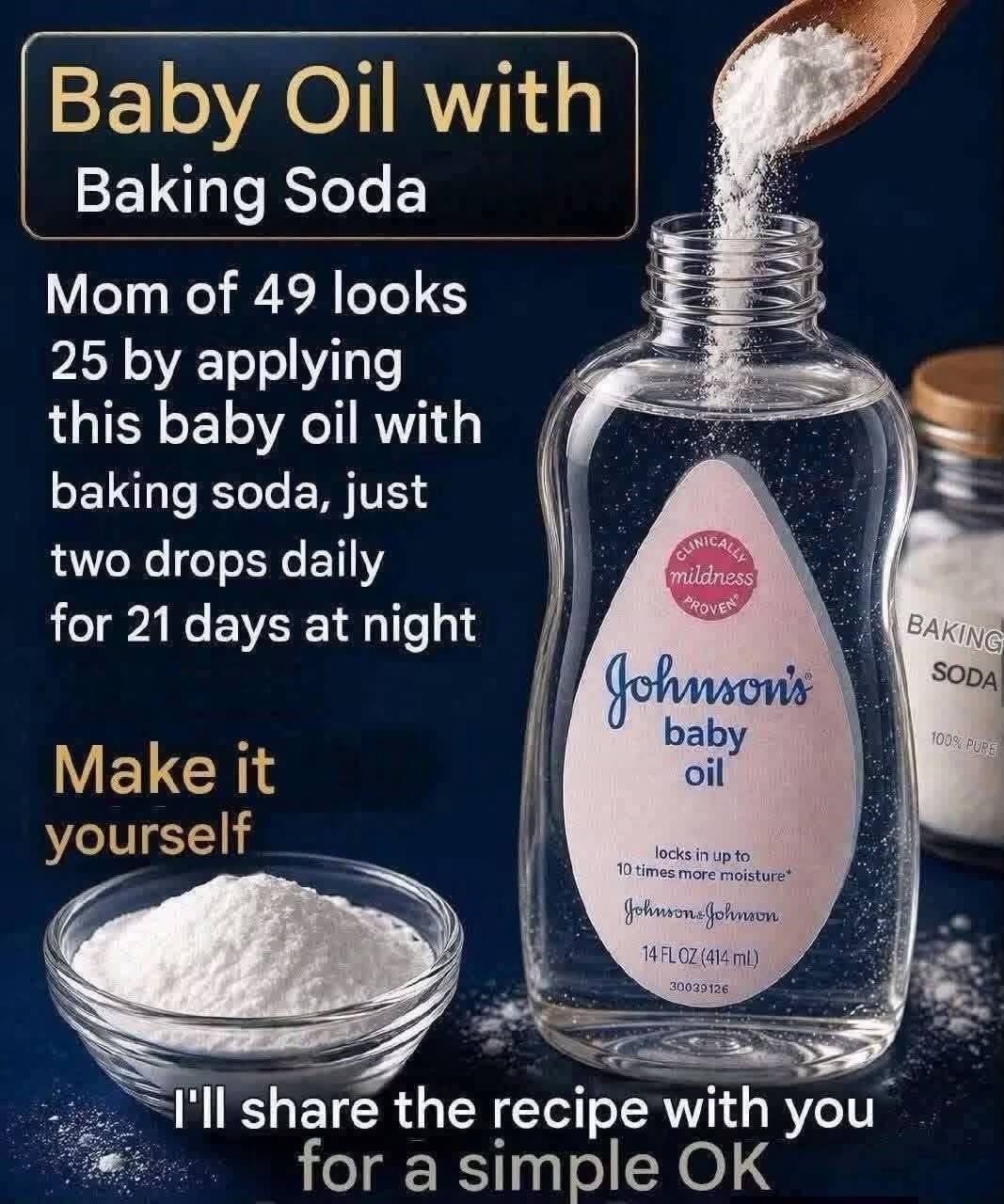
One combination attracting attention online is a body scrub made with baby oil and baking soda. Some versions also include petroleum jelly, commonly known by the brand name Vaseline.
Supporters claim this simple mixture can leave skin feeling smoother, softer, and more youthful-looking.
But does it actually work?
While baby oil and petroleum jelly are familiar moisturizing products, baking soda introduces an important concern because of its alkaline properties and potentially irritating texture.
Before trying this viral beauty trick, it’s worth understanding how the ingredients affect your skin and whether the mixture is appropriate for regular use.
What Is the Baby Oil and Baking Soda Body Scrub?
The popular DIY treatment combines two common household products: baby oil and baking soda.
Some variations include petroleum jelly to create a thicker mixture.
The idea is straightforward.
Baking soda provides a grainy texture intended to remove dead skin cells through physical exfoliation.
Baby oil helps reduce moisture loss and gives the skin a smoother feel.
Petroleum jelly, when included, forms a protective barrier that helps retain moisture.
Although the combination sounds simple, its ingredients serve different purposes and do not necessarily work better together.
There is also no established clinical evidence that this specific homemade mixture provides superior results compared with appropriately formulated skincare products.
Understanding the Ingredients
Baby Oil: A Moisture-Sealing Ingredient
Most traditional baby oils contain mineral oil, sometimes combined with fragrance or other ingredients.
Mineral oil is commonly used in skincare products because it helps reduce moisture loss.
When applied to slightly damp skin, it can create a soft, smooth feeling.
Cosmetic-grade mineral oil is generally well tolerated, although fragranced versions may irritate sensitive individuals.
Despite its name, baby oil should not automatically be considered suitable for every skin type or every purpose.
Baking Soda: A Different Kind of Ingredient
Baking soda, scientifically known as sodium bicarbonate, is commonly used for cooking and household cleaning.
Its fine particles can create a scrubbing effect.
However, baking soda is alkaline, with a pH around 8–9 when dissolved in water.
Healthy skin generally has a slightly acidic surface.
Using strongly alkaline products repeatedly may interfere with the skin barrier and contribute to dryness or irritation.
This makes baking soda a less suitable choice for routine body exfoliation, especially for people with sensitive skin.
Petroleum Jelly: A Protective Barrier
Petroleum jelly is an occlusive moisturizer.
This means it helps reduce water evaporation from the skin.
It is often used on dry areas such as elbows, hands, and heels.
When applied appropriately, plain petroleum jelly can help protect the skin barrier.
However, combining it with baking soda does not eliminate the potential for irritation caused by the abrasive or alkaline ingredient.
Why Exfoliation Can Make Skin Feel Smoother
The outermost layer of skin naturally sheds dead cells as part of its renewal process.
Occasionally, these cells accumulate unevenly, making the surface appear rough or flaky.
Exfoliation can help remove some of this buildup.
There are two main approaches.
Physical Exfoliation
Physical exfoliation uses mechanical action, such as a soft washcloth or a specially formulated scrub.
The friction helps remove surface debris and some dead skin cells.
However, excessive scrubbing can damage the skin barrier.
Chemical Exfoliation
Chemical exfoliants use ingredients such as lactic acid, glycolic acid, or salicylic acid.
These products are formulated to help loosen and remove dead skin cells.
The appropriate ingredient and concentration depend on individual skin type and sensitivity.
Neither approach is necessary for everyone.
People with dry or sensitive skin may benefit more from gentle cleansing and moisturizing than from frequent exfoliation.