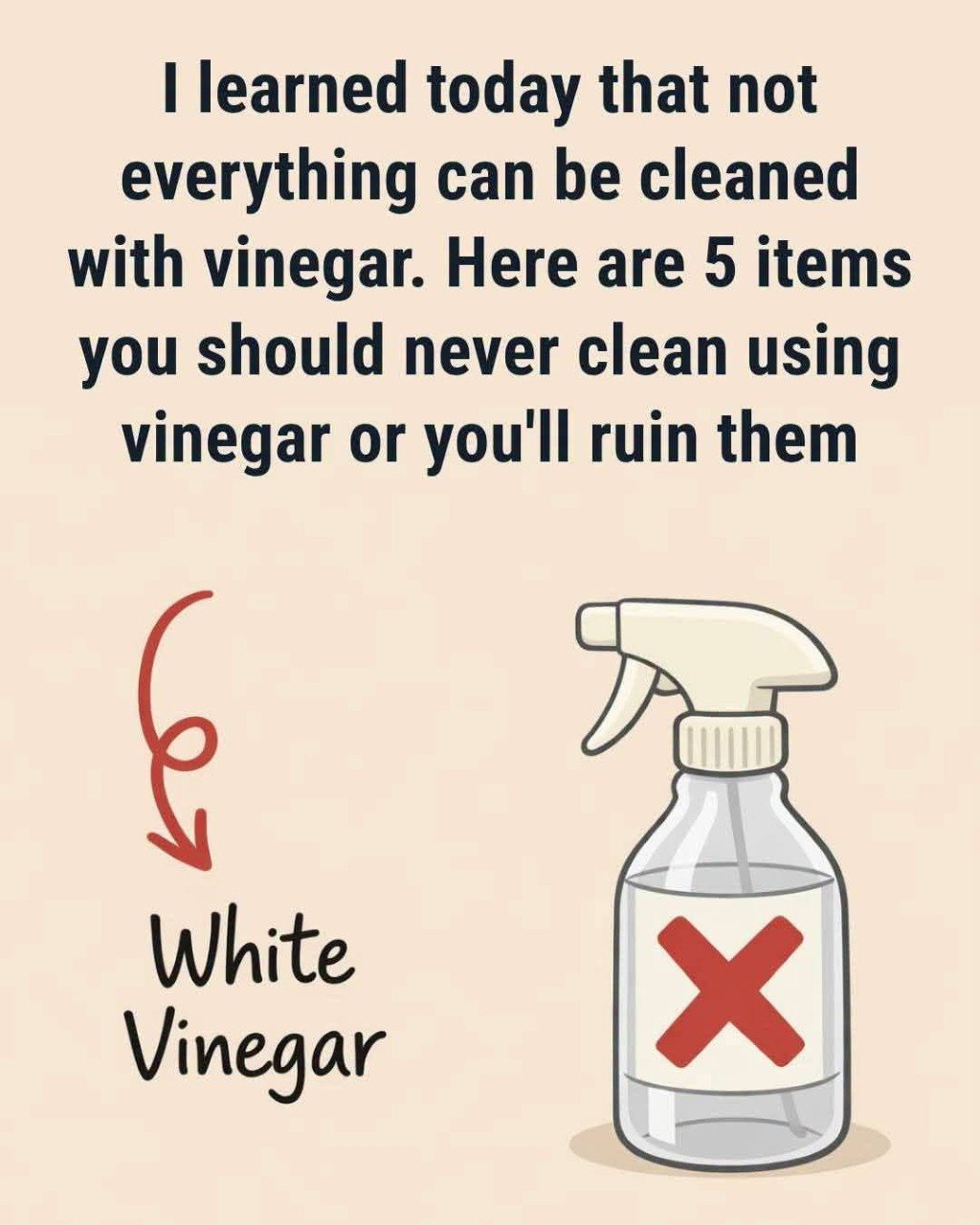
5 Things You Should Never Clean With Vinegar
Tips for Better Results
- Tip 1: Read the care label or manual before using any homemade cleaner.
- Tip 2: Test on a hidden spot first, and wait a few minutes before checking for damage.
- Tip 3: Use vinegar where it excels, such as glass, kettle limescale, and sink fixtures (not on stone).
- Tip 4: Dilute with water, typically 1:1, when it is safe to use.
- Tip 5: Rinse and dry surfaces after cleaning so residue doesn’t linger.
- Tip 6: Keep a pH-neutral cleaner on hand for stone and sealed surfaces.
- Tip 7: Never mix vinegar with bleach or other cleaners.
- Tip 8: Ventilate the room when cleaning with any strong-smelling product.
FAQ
What is the best way to clean surfaces where vinegar isn’t safe?
Use warm water with a drop of mild dish soap, or a cleaner made for that specific material.
How often can I use vinegar on safe surfaces?
Occasionally is fine. Frequent use on any sealed or coated surface can wear it down.
Can I use vinegar at home on everything else?
Not everything. It works well on glass, mirrors, and limescale, but it isn’t a universal cleaner, and it doesn’t disinfect as reliably as dedicated products.
What should I avoid?
Using it on stone, screens, rubber seals, cast iron, and never mixing it with bleach.
Conclusion
Vinegar is a useful, inexpensive cleaner, but it isn’t safe for every surface. Knowing where not to use it protects your stone, appliances, and cookware from costly damage. Check labels, test first, and pick the right product for each job. Next, read our guide to safe natural cleaners and what each one is best for.