Why Flight Attendants Sit on Their Hands During Takeoff and Landing – The Surprising Safety Reason
Why Flight Attendants Sit on Their Hands During Takeoff and Landing – The Surprising Safety Reason
Have you ever noticed something unusual about flight attendants just before an airplane takes off or lands?
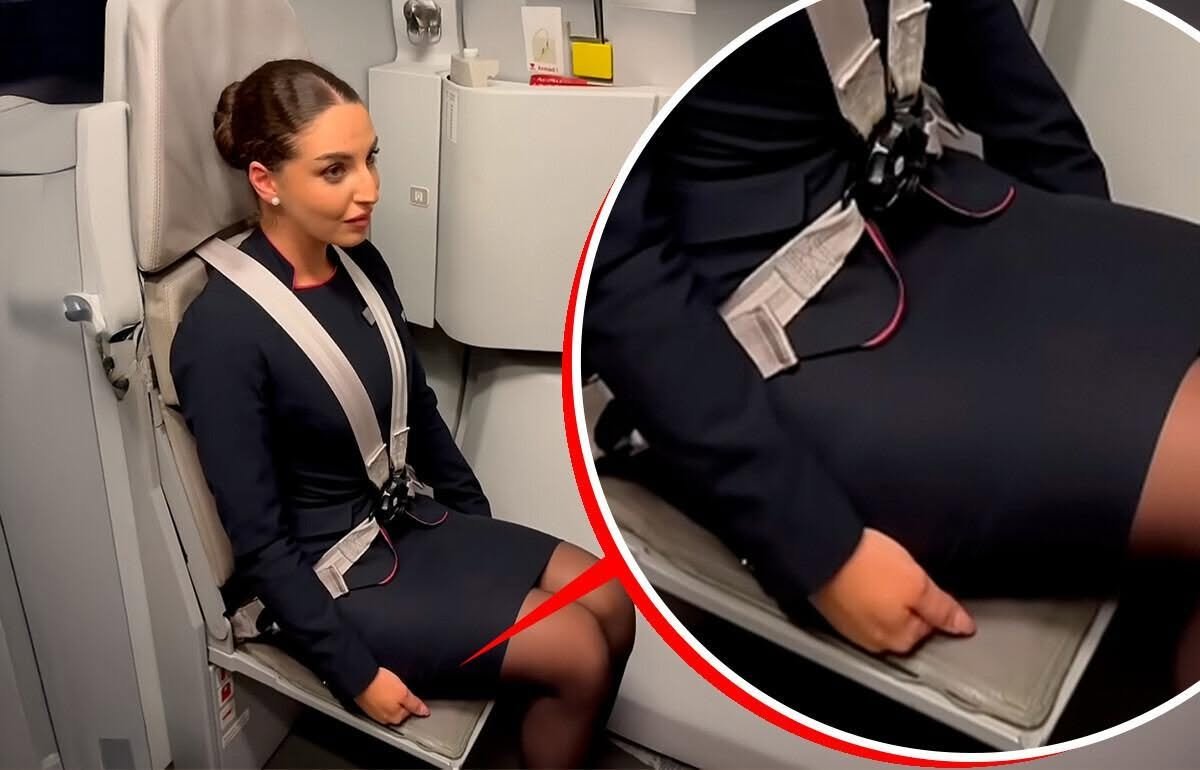
While passengers settle into their seats, some flight attendants sit upright in their special seats with their hands tucked underneath their thighs.
At first glance, it might seem uncomfortable or simply an unusual habit.
But this deliberate position has an important purpose: protecting cabin crew members and preparing them to respond to an emergency.
It’s part of a wider set of safety procedures that most passengers never notice.
1. It’s Part of a Safety Position
Flight attendants sit in specially designed seats called jump seats, which are often located near aircraft exits.
During takeoff and landing, cabin crew members must secure themselves according to their airline’s procedures.
Depending on the aircraft and airline, their position may involve:
- Fastening their seat belts and shoulder harnesses
- Keeping their backs firmly against the seat
- Positioning their heads correctly
- Keeping their feet properly supported
- Placing their hands beneath their thighs or in another approved position
This posture is sometimes described as a brace-ready position.
Its purpose is to reduce the risk of injury during sudden aircraft movements or unexpected impacts.
2. Why Do They Put Their Hands Under Their Thighs?
The placement of the hands is one of the most interesting details.
Some flight attendants tuck their hands beneath their thighs, with their palms facing upward and thumbs tucked.
This keeps their arms controlled instead of allowing them to move freely.
During sudden deceleration, unsecured limbs can move violently and strike nearby surfaces.
Proper positioning helps reduce that risk.
Protecting cabin crew members is particularly important because they may need to operate emergency exits and assist passengers immediately afterward.
However, not every airline requires flight attendants to sit directly on their hands.
Approved positions vary depending on aircraft design and operating procedures.
3. They’re Also Performing a Silent Safety Review
While flight attendants sit quietly, they may be doing something passengers cannot see.
It’s called the silent review, sometimes known as the 30-second review.
This is a mental exercise used to prepare for unexpected emergencies.
Crew members may review several important questions:
- Where are the nearest emergency exits?
- How are those exits operated?
- Where is the emergency equipment?
- What evacuation commands should be given?
- Which passengers might need assistance?
- What conditions outside could make an exit unsafe?
This preparation helps cabin crew remain focused during critical phases of flight.
Rather than waiting for an emergency to happen before thinking about their responsibilities, they mentally rehearse them in advance.
4. Why Takeoff and Landing Require Extra Attention
Takeoff and landing are particularly important phases of a flight because the aircraft is changing speed, altitude, or configuration.
During takeoff, the airplane accelerates along the runway before becoming airborne.
During landing, it descends, touches down, and slows.
Although serious incidents are uncommon, unexpected situations can occur.
These include rejected takeoffs, hard landings, runway excursions, and emergencies requiring evacuation.
That’s why flight attendants complete cabin safety checks and return to their assigned seats before these phases.
Their preparation is routine, even when everything is operating normally.