Which Banana Is Healthiest: Green, Yellow, or Brown?
Which Banana Is Healthiest: Green, Yellow, or Brown?
Green, yellow, or brown-spotted: bananas change dramatically as they ripen, and each stage has a different nutritional profile. None is “bad,” but one may suit your goals better than the others. This guide explains what changes during ripening, how to choose the right banana for your needs, and what the evidence really says.
Step 1: Understand What Changes as Bananas Ripen
What to do: Learn how ripening alters sugar, fiber, and starch before picking a side.
How to do it: Here is how the three stages compare:
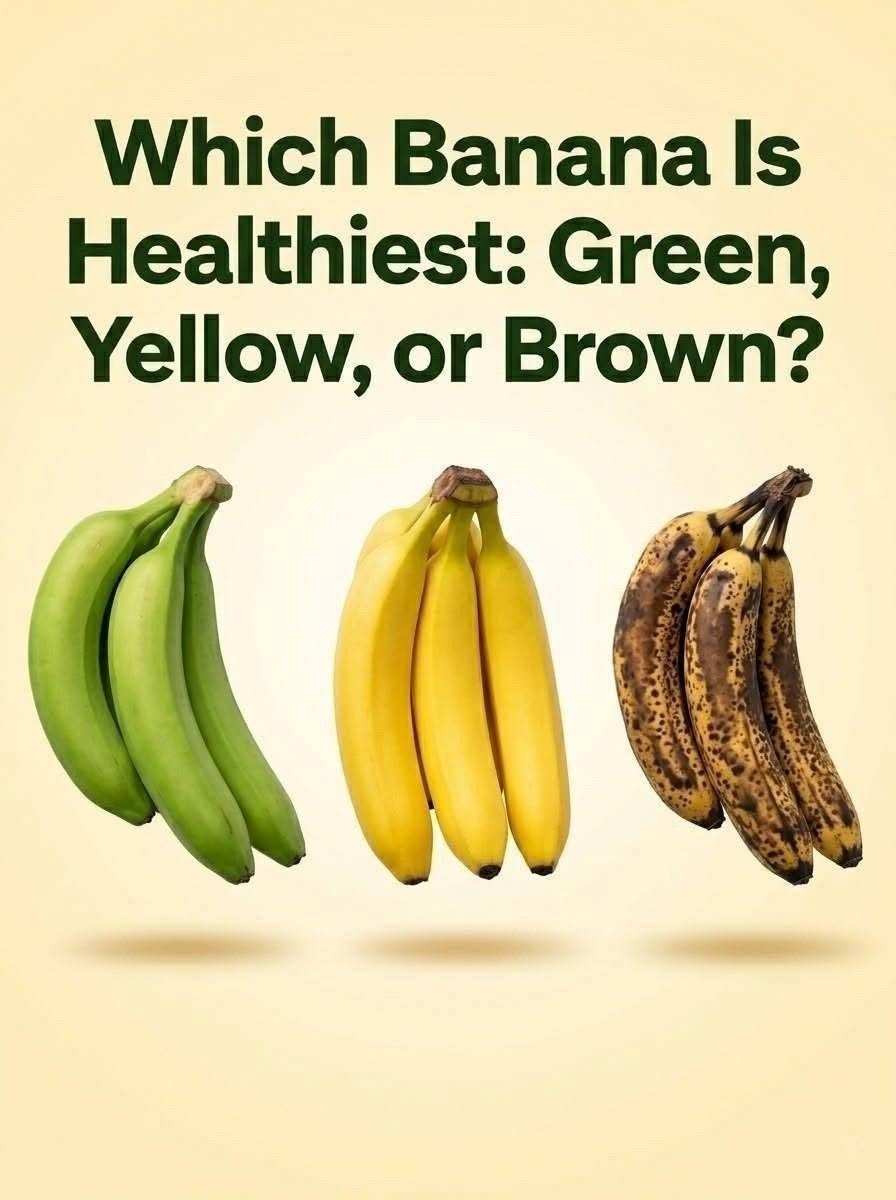
- Green (unripe): High in resistant starch, which acts like fiber and feeds gut bacteria. Lower in sugar, with a lower glycemic impact. Firmer and less sweet, and can be harder to digest for some people.
- Yellow (ripe): A balance of starch and sugar. Easy to digest, sweet, and rich in potassium, vitamin B6, and vitamin C.
- Brown-spotted (very ripe): Starch has largely converted to sugar, so it is sweetest and softest. Antioxidant levels are often higher, and it is easiest to digest.
Common mistake to avoid: Assuming one stage is a “superfood” and the others are unhealthy. Total calories, potassium, and most vitamins stay broadly similar across stages.
Step 2: Match the Banana to Your Goal
What to do: Choose the ripeness that fits your health needs.
How to do it:
- Managing blood sugar: Green or just-ripe bananas raise blood sugar more slowly.
- Gut health: Green bananas provide resistant starch.
- Quick energy before exercise: Yellow or spotted bananas are easy to digest and release energy faster.
- Sensitive stomach or recovery after illness: Very ripe bananas are gentlest.
- General everyday eating: Yellow is a good all-round choice.
Common mistake to avoid: Believing brown spots mean the banana is spoiled. Spots are a normal sign of ripening. Discard it only if it is moldy, leaking, or smells fermented.