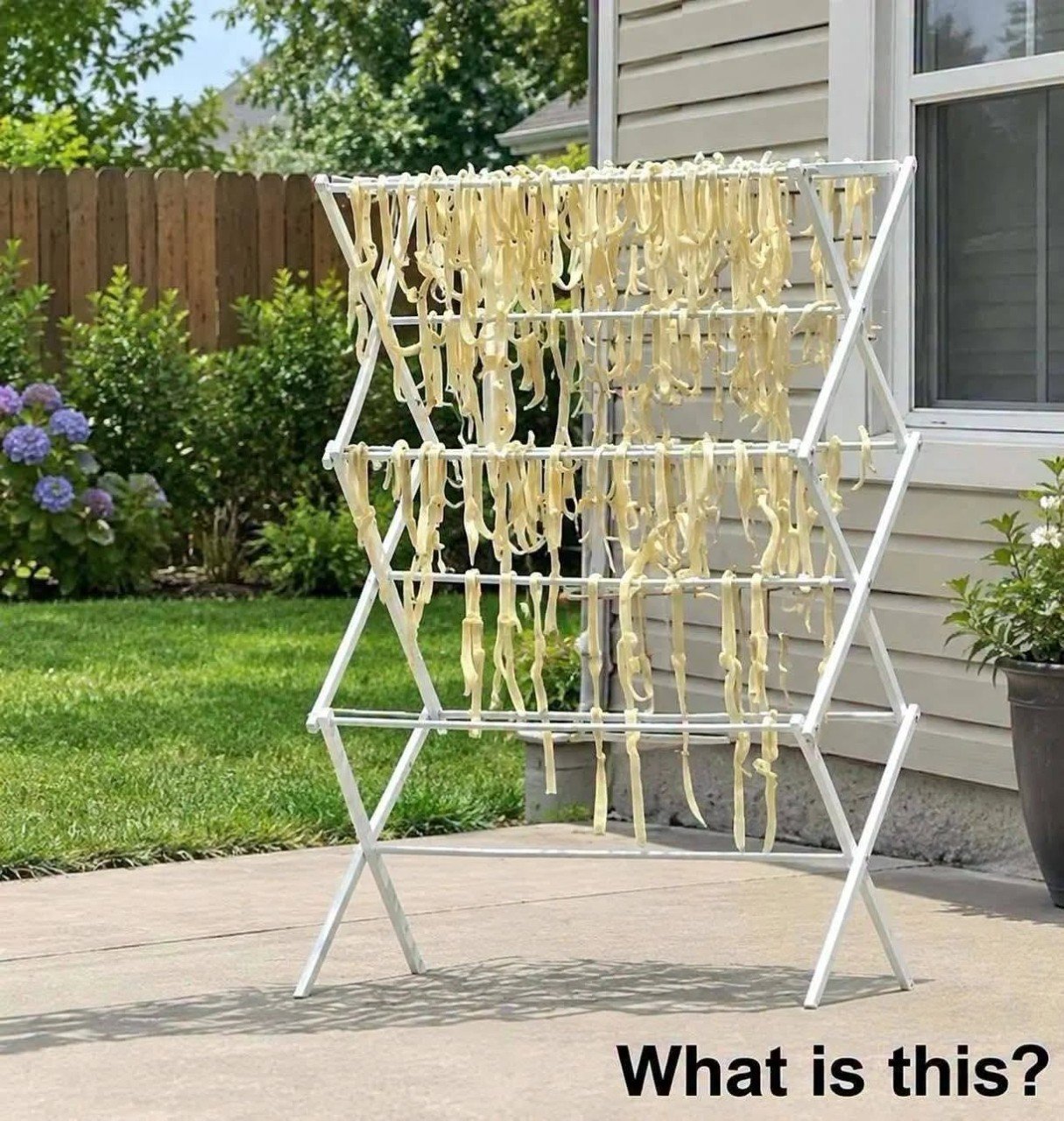
What Are Those Strips Drying on the Rack? (And How Homemade Drying Works)
What Are Those Strips Drying on the Rack? (And How Homemade Drying Works)
Spotting a laundry rack covered in mysterious pale yellow ribbons drying in a neighbor’s yard can leave anyone scratching their head. In most cases, those hanging strips are homemade pasta—such as tagliatelle or fettuccine—or traditional sun-dried vegetable ribbons like gourd or radish. Below, you will learn how to identify what is on the rack, why drying it outdoors requires care, and the right way to dry homemade noodles safely at home.
Step 1 — Prepare a Clean Rack in a Shaded, Breezy Spot
What to do: Set up a clean folding drying rack in a well-ventilated area before hanging fresh strips of dough or sliced vegetables.
How to do it: Wipe down every horizontal bar with warm soapy water and a clean towel, then place the rack somewhere with steady airflow—ideally indoors or on a covered porch rather than directly in harsh sunlight or near dusty lawns.
Short practical explanation: A standard laundry rack offers plenty of space for large batches, and steady airflow removes moisture evenly without baking or cracking the outer surface too quickly.
Step 2 — Drape the Strips Evenly Without Overlapping
What to do: Hang the cut noodles or vegetable ribbons across the bars in a single layer with small gaps between each strand.
How to do it: Dust fresh pasta lightly with semolina or flour first so it does not stick, then drape each ribbon over a rod so both ends hang freely without touching the strips below.
Common mistake to avoid: Never leave fresh egg pasta sitting outside in the sun for days or weeks. Prolonged outdoor exposure attracts insects, collects dust and pollen, invites moisture at night, and creates food-safety risks—properly ventilated pasta usually dries within 12 to 24 hours.
Step 3 — Check for Brittleness and Store Airtight
What to do: Test the strips once they feel firm and dry, then transfer them into sealed containers.
How to do it: Bend a single dried ribbon gently; if it snaps cleanly rather than bending like leather, the moisture is gone and it is ready for a glass jar or airtight bag.
Short practical explanation: Sealing the strips before all internal moisture evaporates can trap condensation inside the jar, leading to spoilage or mold during storage.
“Read the Next Page for More Details”
Pages: 1 2