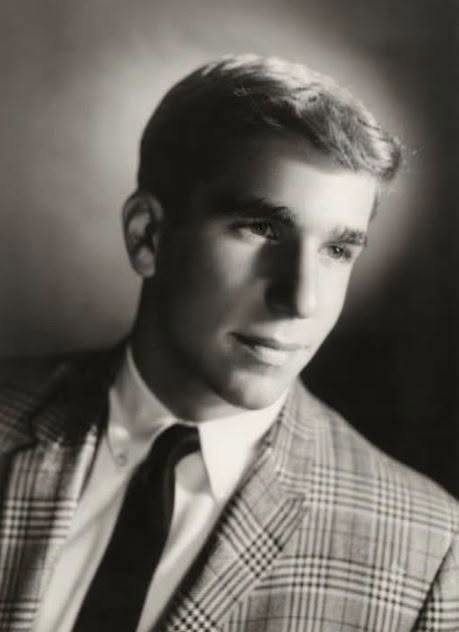
From Childhood Struggles to Hollywood Legend: Henry Winkler’s Inspiring Journey
From Childhood Struggles to Hollywood Legend: Henry Winkler’s Inspiring Journey
Millions of television viewers remember Henry Winkler as the effortlessly cool Arthur “Fonzie” Fonzarelli from the beloved sitcom Happy Days. With his leather jacket, confident smile, and unforgettable personality, he became one of the most recognizable faces in American entertainment.
But behind the confident character was a young man who had spent much of his childhood struggling with school, self-doubt, and a learning difficulty he did not yet understand.
Long before becoming a Hollywood legend, Henry Winkler was a student who often felt that he wasn’t good enough.
His journey from academic difficulties to television stardom is a powerful story about perseverance, self-discovery, and finding success through unexpected paths.
A Childhood Shaped by High Expectations
Henry Winkler was born on October 30, 1945, in Manhattan, New York.
His parents, Harry and Ilse Winkler, were Jewish immigrants who had escaped Nazi Germany before the Second World War.
Having experienced significant upheaval, they wanted their children to build secure and successful lives in America.
Education was especially important in the Winkler household.
However, young Henry struggled to meet the academic expectations placed upon him.
Reading assignments took considerable effort, spelling was difficult, and ordinary classroom activities often became sources of frustration.
While other children seemed to complete their schoolwork with relative ease, Henry found himself working hard without achieving the results everyone expected.
His difficulties were frequently misunderstood.
At the time, awareness of learning differences was far more limited than it is today.
The Learning Difficulty Nobody Recognized
Winkler was living with dyslexia, a learning disorder that primarily affects reading and related language skills.
Dyslexia does not indicate low intelligence or a lack of motivation.
People with dyslexia may have difficulty recognizing written words accurately, decoding unfamiliar vocabulary, or spelling consistently.
For Winkler, these challenges affected his confidence throughout childhood.
He has spoken publicly about feeling inadequate because of his academic performance and the criticism he received.
Without an explanation for his difficulties, he internalized many of those negative experiences.
Why Understanding Dyslexia Matters
Today, educators increasingly recognize that students can possess strong intellectual and creative abilities while experiencing significant reading difficulties.
Appropriate instruction, accommodations, and emotional support can help students develop their skills.
However, Winkler grew up during a period when his particular challenges were not properly identified.
He would not discover the explanation for his struggles until adulthood.
Rejection Did Not End His Ambitions
Despite his academic difficulties, Winkler remained interested in performing.
Acting offered an opportunity to express himself through movement, emotion, humor, and imagination.
His path into higher education was not straightforward.
According to accounts of his life, he applied to 28 colleges and was accepted by only two.
Rather than abandoning his ambitions, he attended Emerson College in Boston.
Although academic challenges continued, he pursued his passion for drama.
In 1967, he graduated from Emerson College.
He then continued his training at the prestigious Yale School of Drama, earning a Master of Fine Arts degree in 1970.
This achievement was particularly meaningful given the obstacles he had encountered throughout his education.
His experience demonstrated that difficulties with reading and writing did not prevent him from developing his artistic abilities.
The Audition That Helped Change His Life
One memorable story from Winkler’s education concerns his audition for Yale.
He has explained that memorizing written material was extremely challenging.
During his audition, he struggled with the lines of a Shakespearean monologue.
Instead of allowing that difficulty to end his performance, he relied on improvisation and his instincts as an actor.
He was admitted to the program.
That moment illustrated an important part of his approach to acting: the ability to adapt creatively when conventional methods proved difficult.
His years of professional training would eventually prepare him for the role that changed his life.