How to Grow an Avocado Tree in a Pot and Encourage It to Bear Fruit
How to Grow an Avocado Tree in a Pot and Encourage It to Bear Fruit
Growing an avocado tree in a pot is easier than most people think, yet getting that potted tree to actually produce fruit is where many gardeners stall. While sprouting a grocery-store pit makes a lush houseplant, fruiting in a container takes the right variety, soil, and care. In this guide, you will learn how to start your tree, keep its roots healthy, and encourage real avocado blooms and fruit at home.
Step 1 — Start With the Right Tree and Fast-Draining Soil
What to do: Plant a grafted dwarf avocado sapling—or start a sprouted pit with plans to graft it later—into a container with plenty of drainage holes and coarse, airy soil.
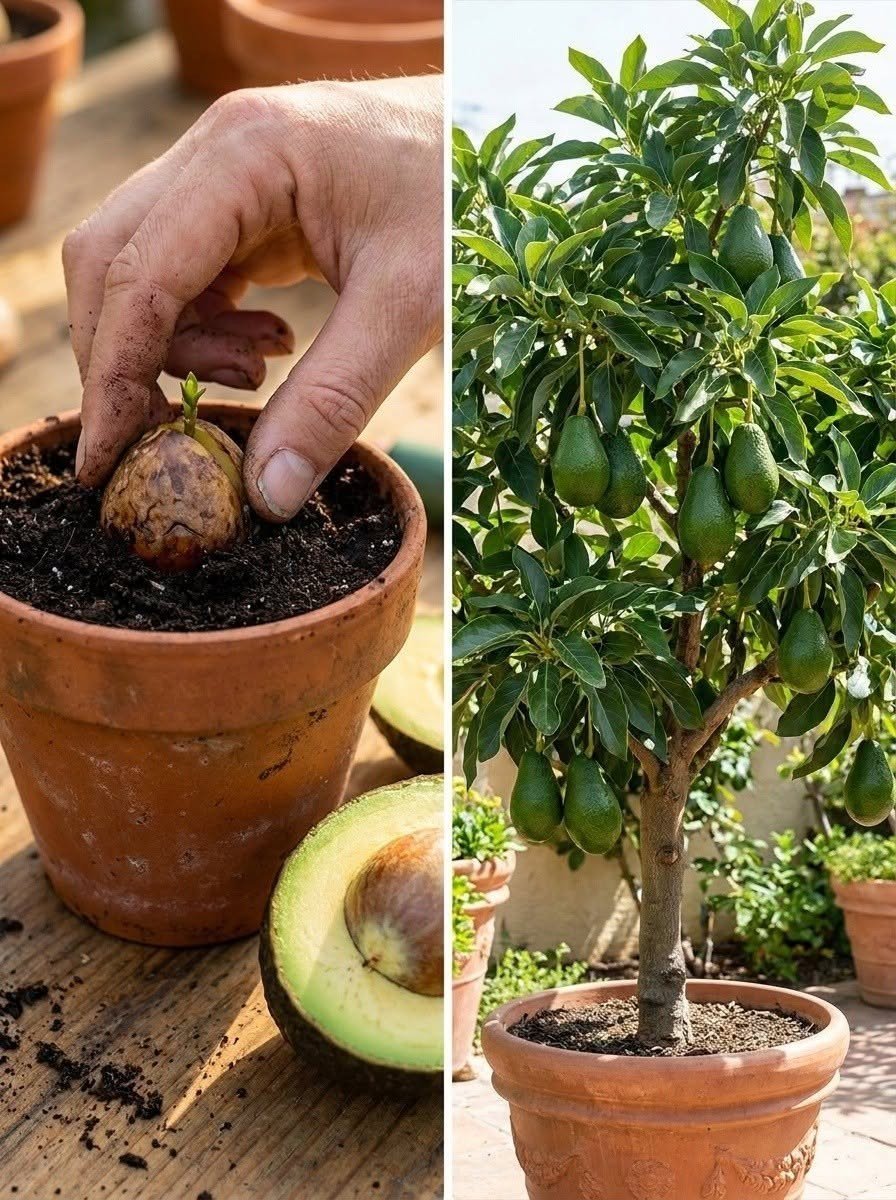
How to do it: Choose a 12-to-15-inch pot for a young nursery tree (or a small 6-inch pot for a sprouted pit, leaving the top third of the seed exposed above the soil). Fill the pot with a citrus or cactus potting mix blended with extra perlite or coarse pine bark.
Short practical explanation: Grafted dwarf varieties (such as ‘Wurtz’ or ‘Little Cado’) stay compact for patios and can fruit in 2 to 4 years, whereas seed-grown trees often take 7 to 15 years to bloom and may never fruit reliably. Airy soil protects sensitive roots from rot.
Step 2 — Provide Bright Sun, Deep Watering, and Balanced Feeding
What to do: Place the pot in a bright, sunny spot, water deeply only when the top few inches dry out, and feed during the growing season.
How to do it: Give your tree 6 to 8 hours of direct sunlight daily, bringing it indoors before temperatures drop near freezing. Water thoroughly until excess runs out the bottom, wait until the top 2 to 3 inches of soil feel dry before watering again, and feed every few weeks from spring through late summer with a citrus/avocado fertilizer containing zinc and iron.
Common mistake to avoid: Never let the pot sit in a saucer full of standing water or keep the potting mix constantly soggy. Avocado roots suffocate quickly in wet soil and are highly prone to root rot.
Step 3 — Prune Lightly and Support Pollination
What to do: Shape the young tree to build sturdy branches and help flowers pollinate once it begins blooming.
How to do it: Pinch or trim back overly tall, leggy shoots in spring to encourage bushy side branching. When flowers open, move the pot outdoors where bees and pollinators can visit—or gently transfer pollen between open blossoms using a soft paintbrush—and pair a Type A and Type B cultivar nearby if you have room.
Short practical explanation: A compact, well-branched tree supports the weight of developing avocados without snapping, and assisted pollination significantly increases fruit set.
“Read the Next Page for More Details”
Pages: 1 2