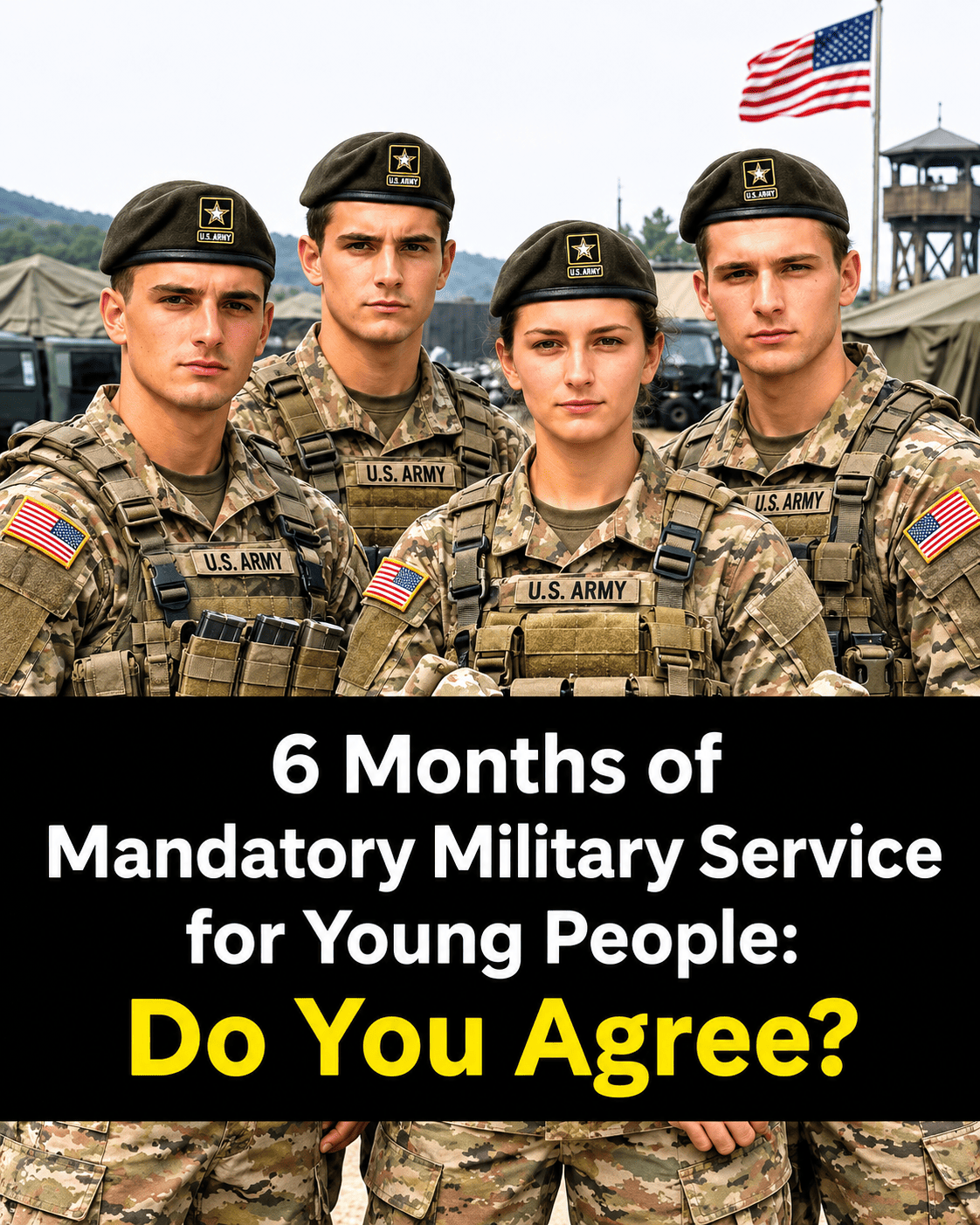
Six Months of Mandatory Military Service for Young People: Would You Support the Idea?
Six Months of Mandatory Military Service for Young People: Would You Support the Idea?
Should young people be required to complete six months of military service before beginning the next chapter of their lives?
This question has sparked debate in Italy and other European countries, bringing together different opinions about national security, personal freedom, responsibility, and the transition into adulthood.
Some people believe that a short period of military training could help young adults develop practical skills, discipline, and teamwork.
Others argue that compulsory service would interfere with education, employment, and the freedom to make personal decisions.
But what would a six-month military service program actually involve, and what are the main arguments for and against making it mandatory?
Understanding the issue requires examining Italy’s military history, recent political proposals, and the practical consequences such a policy could have.
Is Military Service Currently Mandatory in Italy?
Italy previously required eligible young men to complete military service.
For generations, conscription was a familiar part of life, with many individuals entering the armed forces before beginning their professional careers.
However, the Italian government gradually moved toward a professional military model.
Law No. 226 of August 23, 2004, suspended compulsory military conscription beginning on January 1, 2005.
Since then, Italy has relied primarily on professional military personnel and volunteers.
The suspension did not erase every legal provision concerning potential military obligations in exceptional circumstances.
Nevertheless, ordinary compulsory military service has not been operating as a general requirement for young Italians.
As of November 2026, a universal six-month mandatory military service requirement has not been established in Italy.
The subject remains part of wider discussions about national defense and youth participation.
Why Has the Debate Returned?
Several European governments have been reconsidering military recruitment and national preparedness.
Security concerns, changing international relationships, and the need to maintain sufficient military personnel have contributed to these conversations.
In Italy, political proposals have explored different possibilities for introducing new forms of national service.
In 2024, the League party promoted a proposal involving six months of compulsory military or civilian service for young adults.
The idea generated debate because it would represent a significant change from Italy’s existing volunteer-based model.
In November 2025, Defense Minister Guido Crosetto also discussed introducing a new military service program, but emphasized a voluntary approach rather than mandatory conscription.
These are different policy ideas and should not be confused with an enacted law.
What Could a Six-Month Program Include?
A hypothetical six-month national service program could involve several types of activities.
The precise structure would depend on the legislation adopted, the available funding, and the program’s objectives.
Basic Military Training
Participants might receive instruction in physical fitness, teamwork, military organization, and emergency procedures.
Such training could introduce young adults to the responsibilities and operational requirements of the armed forces.
Emergency Preparedness
A program could include practical instruction in first aid, disaster response, and community emergency assistance.
These skills might also be useful outside military settings.
Civic Education
Some proposals emphasize citizenship, public institutions, and community responsibilities.
However, the content and effectiveness of any educational component would depend on how the program was designed.
Civilian Service Alternatives
A national service model could provide nonmilitary options involving environmental projects, community organizations, or public assistance.
Such alternatives would raise additional questions about eligibility, supervision, funding, and equal treatment.
Arguments Supporting Mandatory Service
Supporters of compulsory national service present several reasons for considering it.
Developing Discipline and Responsibility
Some believe that structured training could help young adults develop punctuality, teamwork, and personal responsibility.
A shared program might expose participants to routines and expectations different from those encountered in school or at home.
However, these outcomes would not be automatic.
Their effectiveness would depend on training quality, leadership, and participants’ experiences.
Encouraging Social Connections
A national service program could bring together young people from different social, economic, and regional backgrounds.
Supporters argue that shared experiences might encourage greater understanding and cooperation.
Improving National Preparedness
Another argument concerns the ability to prepare a larger number of people for potential emergencies.
Some supporters view basic military training as a way to develop additional personnel with introductory defense-related skills.
Whether six months would provide adequate training for specific military roles would require professional assessment.