This Forgotten Laundry Tool Was Once Found in Almost Every Home: Do You Remember It?
This Forgotten Laundry Tool Was Once Found in Almost Every Home: Do You Remember It?
Imagine walking through a yard sale and discovering an unusual old metal device sitting among antique furniture, dusty picture frames, and forgotten household treasures.
It has a sturdy frame, two large rollers, and a handle on the side. At first glance, it might look like a piece of farming equipment or a mysterious workshop tool.
Yet decades ago, this simple machine played an important role in countless households.
The object is an old-fashioned laundry wringer, a practical invention that helped families wash and dry their clothing long before modern laundry appliances became commonplace.
For many people, seeing one today brings back memories of grandparents, washday routines, and a time when keeping clothes clean required considerable physical effort.
But how exactly did this unusual machine work, and why was it once so important?
What Is an Old-Fashioned Laundry Wringer?
A laundry wringer is a mechanical device designed to squeeze excess water from wet clothing.
Traditional models typically featured two cylindrical rollers positioned closely together inside a strong metal frame.
A hand-operated crank allowed users to rotate the rollers.
When wet fabric passed between them, the pressure squeezed water out of the material.
This reduced the amount of moisture remaining in the clothing before it was hung up to dry.
Although the mechanism seems simple by modern standards, it represented a significant improvement over squeezing and twisting heavy, wet garments by hand.
For families dealing with large amounts of laundry, the wringer could save both time and physical effort.
Why Were the Rollers So Important?
The rollers were the essential components of the machine.
They were commonly made from materials such as rubber and mounted within a durable supporting structure.
As the crank turned, the rollers moved together, pulling fabric through the narrow opening.
The pressure forced water out while allowing the clothing to pass through.
Many models included mechanisms for adjusting roller pressure.
However, improper operation could damage delicate fabrics or create serious safety hazards.
Despite these limitations, the design proved useful for generations.
Laundry Day Before Modern Washing Machines
Today, washing clothes often requires little more than loading a machine, adding detergent, and selecting a cycle.
For many households in the nineteenth and early twentieth centuries, the process was dramatically different.
Laundry day could involve several hours of demanding work.
Water sometimes had to be carried and heated manually, particularly in homes without convenient indoor plumbing.
Clothing was soaked, scrubbed, rinsed, and prepared for drying through a series of labor-intensive steps.
Washing Clothes by Hand
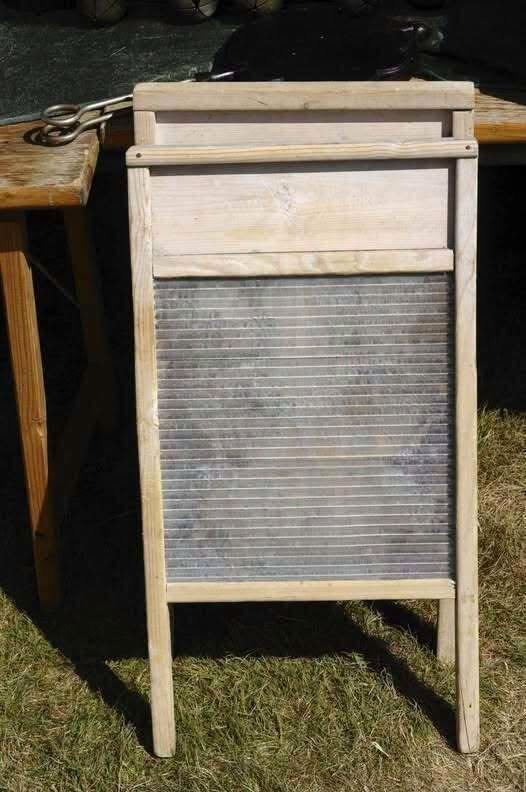
Families used washboards, large tubs, laundry soap, and brushes to remove dirt from clothing.
Stubborn stains required additional attention.
Heavily soiled fabrics sometimes underwent boiling or extended soaking, depending on the material and cleaning practices of the period.
Once the clothing was clean, it still contained substantial amounts of water.
Removing that water was another demanding task.
Twisting heavy garments by hand required strength and could place additional strain on the fabric.
The laundry wringer helped reduce this burden.
How the Wringer Changed Household Work
The invention and widespread adoption of mechanical wringers made one stage of laundry preparation considerably easier.
Instead of repeatedly twisting and squeezing garments, users could guide wet fabric through the rollers.
Water collected below the device, often returning to a tub.
The clothing emerged significantly less saturated.
This meant garments could generally dry more quickly when hung on outdoor clotheslines or indoor drying racks.
The wringer did not eliminate the work of washing clothes.
However, it improved a repetitive and physically demanding part of the process.
For households with several children, large families, or substantial laundry needs, that improvement could be especially valuable.
Different Types of Vintage Laundry Wringers
Not every laundry wringer looked exactly the same.
Manufacturers developed several designs to accommodate different household needs.
Hand-Cranked Wringers
These were operated manually using a rotating handle.
They were useful in households without electricity and could be attached to washing tubs or other supports.
Wringer Washing Machines
Later washing machines sometimes incorporated powered wringers mounted above or beside the washing tub.
Although the washing process became increasingly mechanized, clothing still had to be fed through the rollers.
Standalone Wringers
Some devices were constructed as separate units that could be positioned near wash tubs or work areas.
Their mobility and simple design made them useful in different household arrangements.